Free
Free Things to See in Cape Town
Ten places whose own records list no entry fee, from a mountain ledge above Kloof Nek to a tidal pool on the False Bay coast.

Discover iconic landmarks, beaches, nature reserves, cultural sites and memorable places across Cape Town and the Western Cape.
Free
Ten places whose own records list no entry fee, from a mountain ledge above Kloof Nek to a tidal pool on the False Bay coast.
On foot
Ten places in walking order, from the Castle at the eastern edge of the centre to the Bo-Kaap at the western one.
By road
Nine stops in driving order, down the Atlantic side of the peninsula and back up the False Bay coast.
When it rains
Museums, galleries and indoor places worth moving a day for, and what each one is actually like inside.
That is the editorial layer. The same collection, arranged by where it is.
Atlantic Seaboard
A broad Atlantic beach with the mountains behind and the city one road away
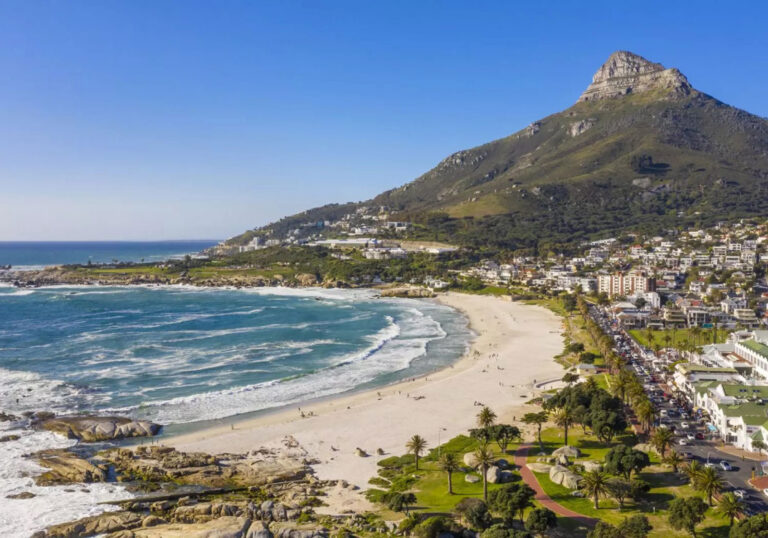
Camps Bay Beach is Cape Town's most accessible big Atlantic beach: one long, open sweep of pale sand with the Twelve Apostles rising behind the suburb and Lion's Head anchoring the northern end. A strip of lawn, palms and promenade separates the sand from a busy row of restaurants and cafés, which is what makes it feel social rather than remote. The water is colder than it looks, the beach is more exposed to wind than Clifton's coves, and sunset is part of the usual routine.
Explore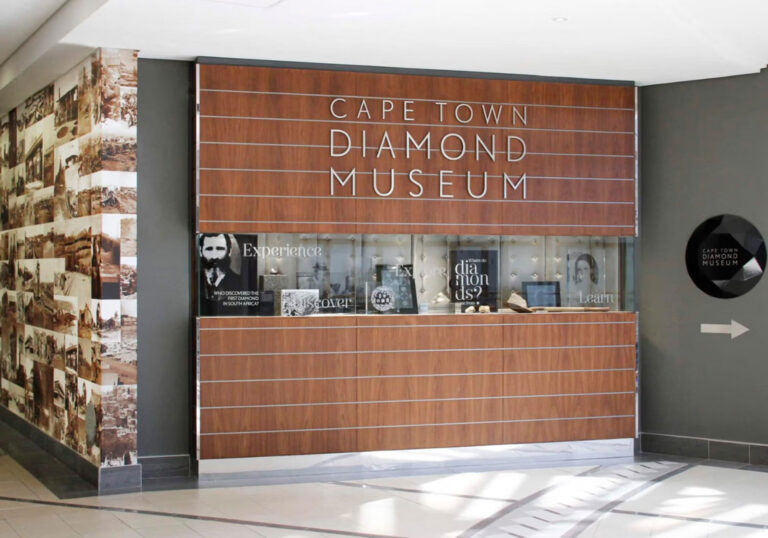
Atlantic Seaboard
South Africa’s diamond history, geology and craftsmanship in the V&A Waterfront Clock Tower
The Cape Town Diamond Museum traces diamonds from geological formation and historic discovery to cutting, polishing and finished jewellery through exhibits and guided demonstrations.
Explore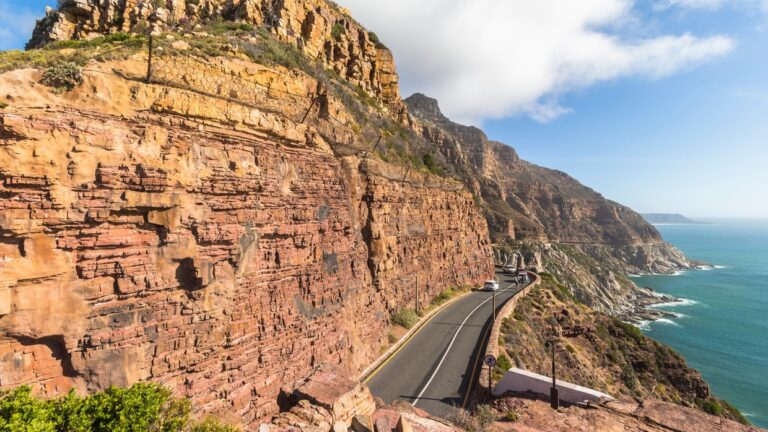
Atlantic Seaboard
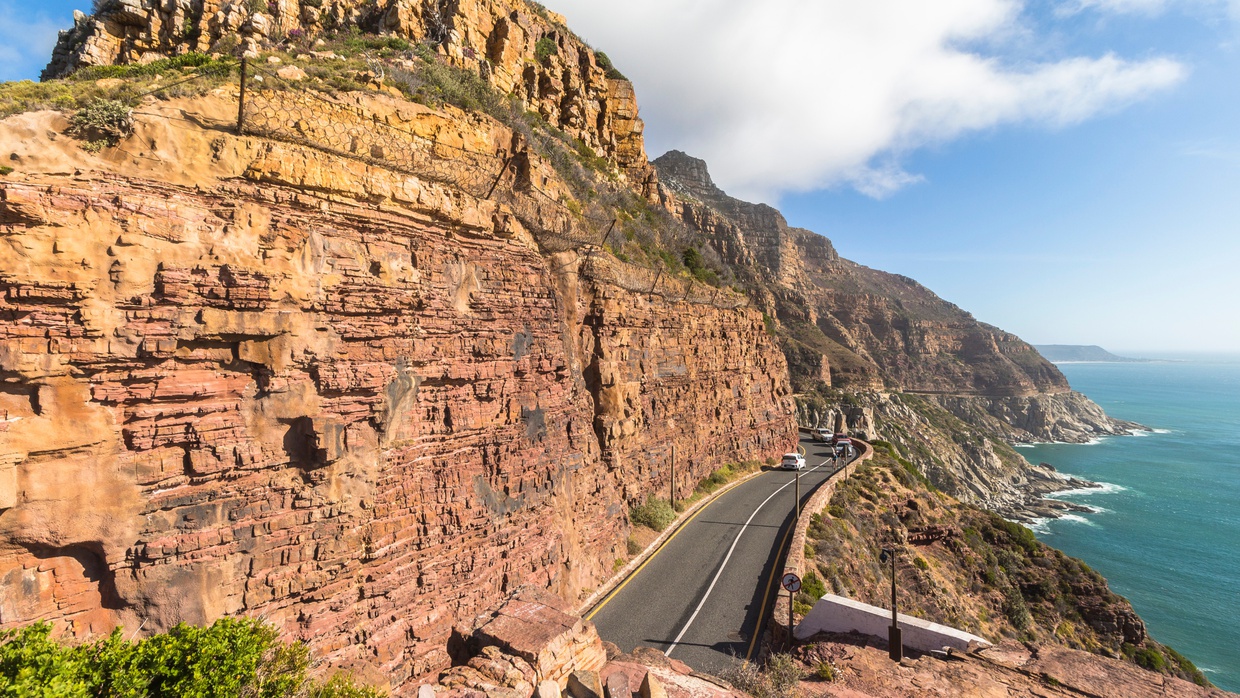
A world-famous coastal road where dramatic cliffs, ocean views and unforgettable scenery combine to create one of Cape Town's most iconic drives.
Chapman's Peak Drive is one of South Africa's most scenic journeys, offering breathtaking viewpoints, picnic spots and spectacular Atlantic Ocean panoramas between Hout Bay and Noordhoek.
Explore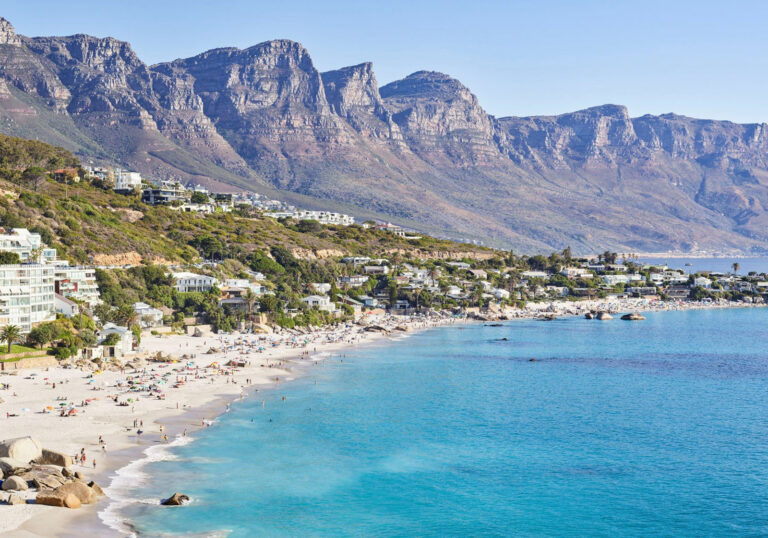
Atlantic Seaboard
Four sheltered coves of white sand and granite beneath the mountain
Clifton is a sequence of four small Atlantic coves, known as 1st to 4th Beach, separated by granite boulders and backed by steep residential slopes below Lion's Head. The sand is pale, the water is an improbable turquoise and colder than it looks, and the coves can feel calmer than Cape Town's more exposed Atlantic beaches. Each beach has its own stairway down from Victoria Road, and the climb back up is part of the deal.
Explore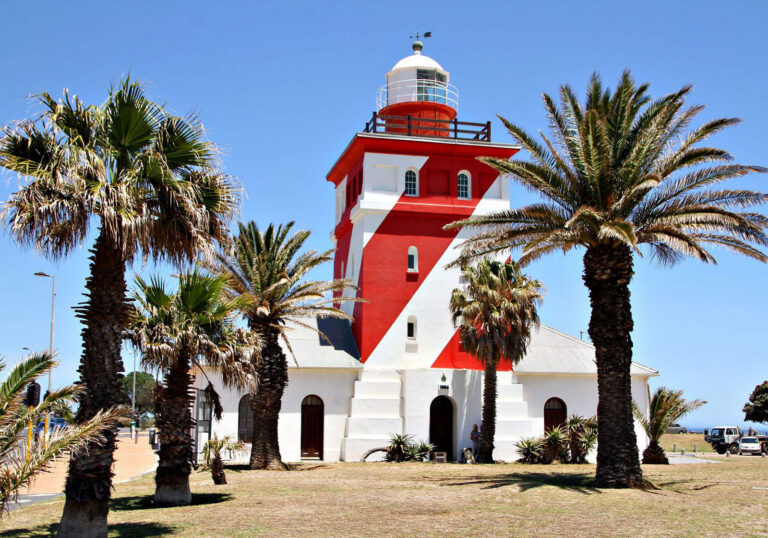
Atlantic Seaboard
South Africa’s oldest operational lighthouse, on the Mouille Point shore
Green Point Lighthouse is the red-and-white banded tower standing on the shoreline at Mouille Point, first lit in 1824 and still in service. It is the oldest operational lighthouse in South Africa and the first solid lighthouse structure built on the coast. It sits directly beside the Atlantic promenade, so it is easy to reach and to see close up, but it is a working navigational station rather than a visitor attraction and is not normally open inside.
Explore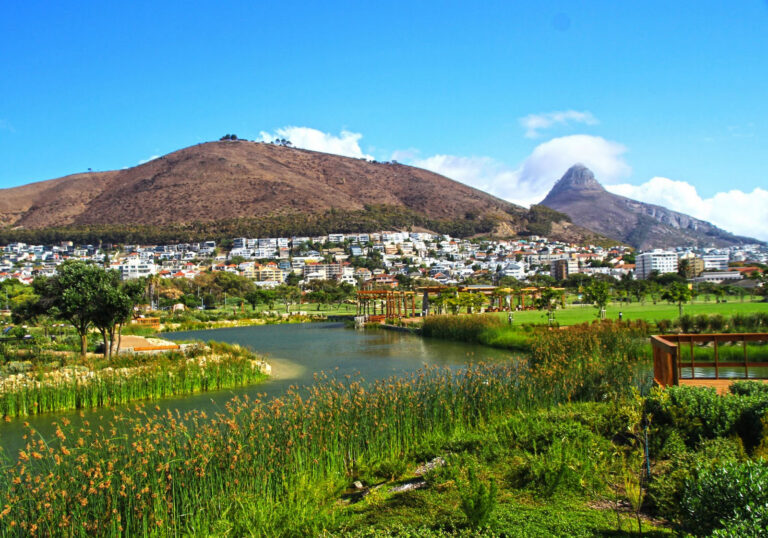
Atlantic Seaboard
Landscaped gardens, wetlands and picnic lawns beside Green Point Common, minutes from the V&A Waterfront
Green Point Urban Park is one of Cape Town’s best public parks, combining landscaped gardens, indigenous biodiversity, family recreation and open green spaces just minutes from the V&A Waterfront and Sea Point Promenade. Built as part of the Green Point Common precinct surrounding Cape Town Stadium, the park has become a favourite destination for picnics, walking, jogging, children’s play and relaxed outdoor afternoons.
Explore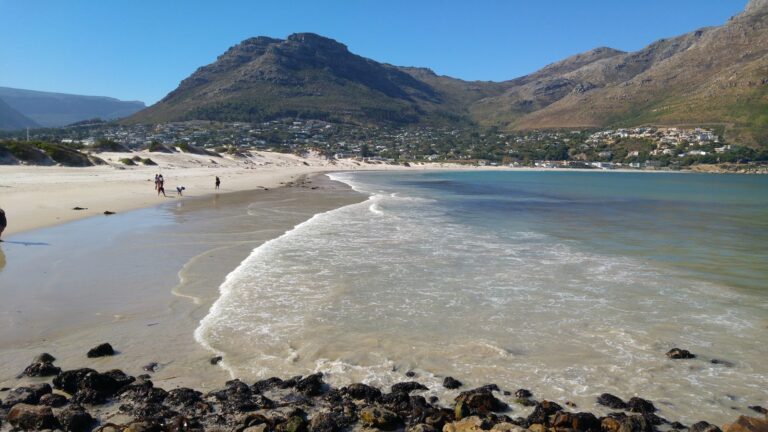
Atlantic Seaboard
A beautiful sandy beach where mountain scenery, calm waters and the working harbour create one of Cape Town’s most welcoming coastal destinations.
Hout Bay Beach combines spectacular mountain scenery, a long stretch of soft sand and a relaxed atmosphere, making it one of Cape Town’s favourite beaches for families, visitors and photographers.
Explore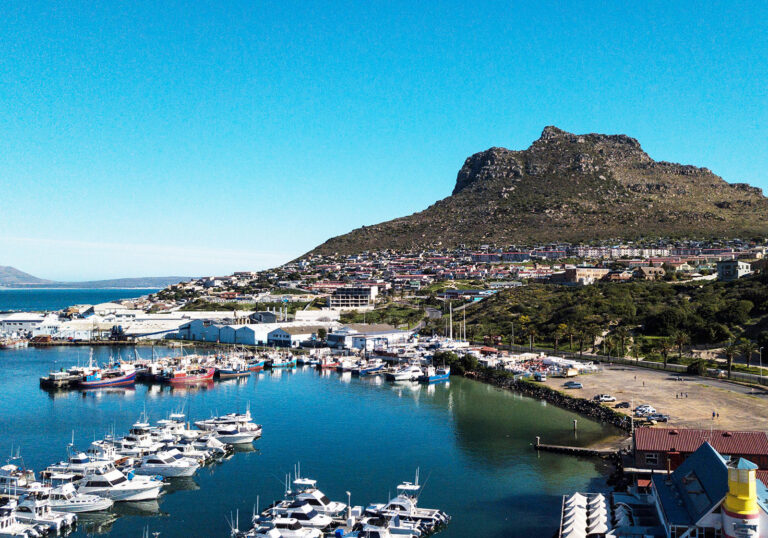
Atlantic Seaboard
Cape Town's working fishing harbour beneath the Sentinel
Hout Bay Harbour is Cape Town's busiest working fishing harbour, set beneath the Sentinel at the western end of Hout Bay. Fishing boats and trawlers line the quays, seals patrol the moorings, and boat trips, seafood and the Bay Harbour Market sit around a core that is still doing real work. It has not been polished into a waterfront development, and that is the appeal. About an hour, with no admission fee.
Explore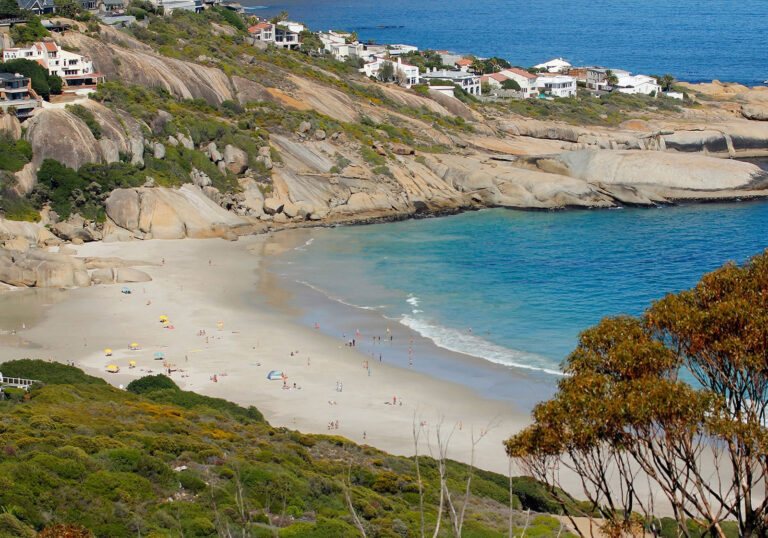
Atlantic Seaboard
A granite cove between Camps Bay and Hout Bay, with no beachfront strip behind it
Llandudno Beach is a single curve of sand at the head of a granite cove, closed in by enormous boulders at both ends and steep fynbos slopes behind. Houses sit on the hillside above, but there is no promenade, no lawns and no restaurant strip, so the Atlantic dominates in a way it does not at Camps Bay. The water is cold and the surf can be powerful, access is through residential streets, and late afternoon light on the granite is the best of it.
Explore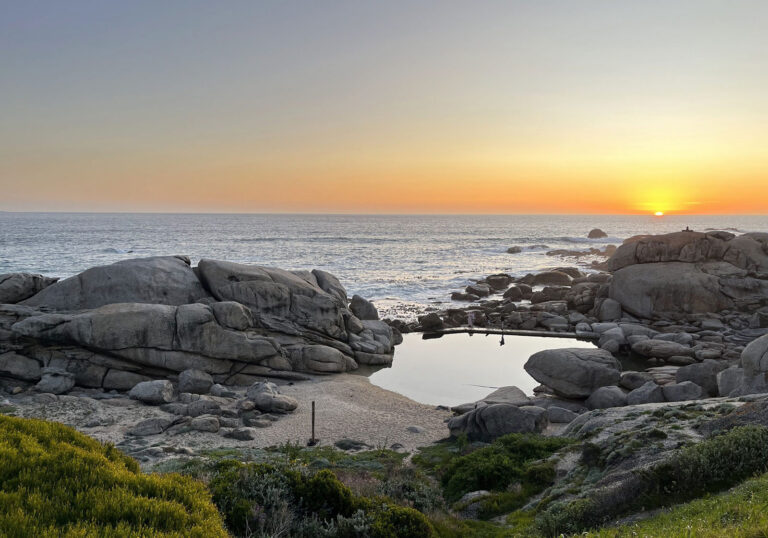
Atlantic Seaboard
Two rocky tidal pools between Clifton and Camps Bay with wide Atlantic views
Maiden’s Cove offers two tidal pools within a dramatic rocky shoreline between Clifton and Camps Bay, with an open outlook across the Atlantic.
Explore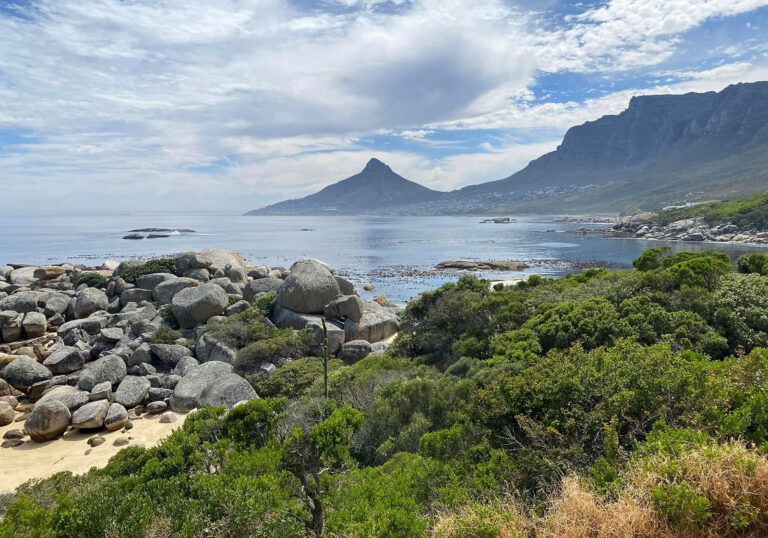
Atlantic Seaboard
A protected coastal reserve of granite coves, kelp forests and fynbos beneath the Twelve Apostles
Oudekraal Nature Reserve is a small protected coastal reserve on the Atlantic Seaboard, tucked between Camps Bay and Llandudno along Victoria Road. Part of Table Mountain National Park, it is known for its sheltered coves, granite boulders, indigenous fynbos and clear Atlantic waters. While many visitors simply drive past on their way to Cape Point, Oudekraal offers one of Cape Town’s most peaceful seaside escapes for swimming, picnics and quiet time in a natural setting.
Explore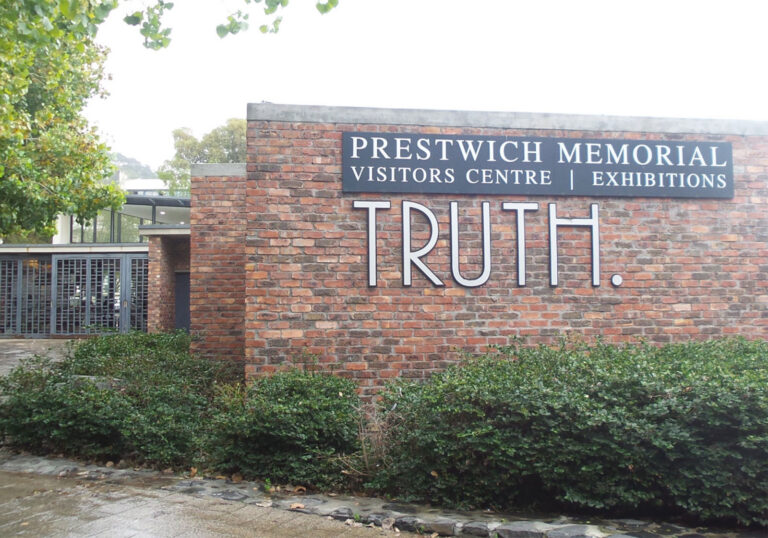
Atlantic Seaboard
An ossuary holding the remains of Cape Town’s unrecorded dead, and the argument over how they came to be here
The Prestwich Memorial on Somerset Road holds the remains of people exhumed from an unmarked burial ground a few streets away, uncovered by a building development in 2003. The ground had served those excluded from Cape Town’s formal cemeteries: enslaved and formerly enslaved people, the poor, sailors and the unclaimed dead, none of them recorded by name. The decision to exhume rather than leave them where they lay was fought through public meetings and two failed appeals, and anatomical study of the human remains was refused in 2005. The memorial is the settlement that followed, and it remains contested.
Explore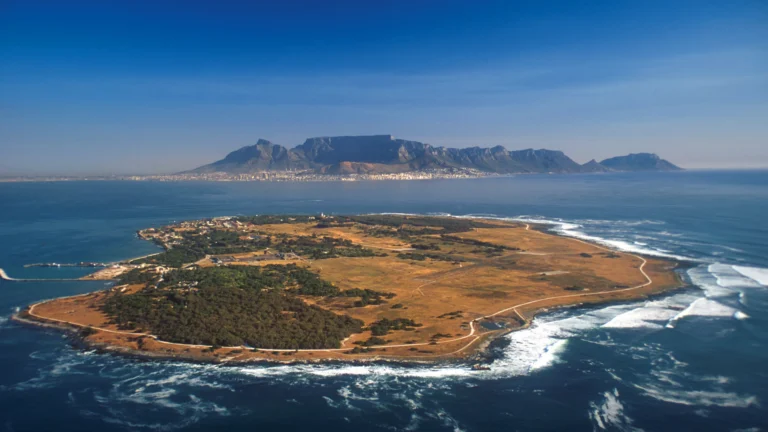
Atlantic Seaboard
The UNESCO World Heritage island where Nelson Mandela was imprisoned, in Table Bay.
A UNESCO World Heritage Site in Table Bay where Nelson Mandela was imprisoned, now one of South Africa’s most moving historical landmarks. Ferry tours from the V&A Waterfront are guided by a Robben Island Museum guide through the prison and Mandela’s cell.
Explore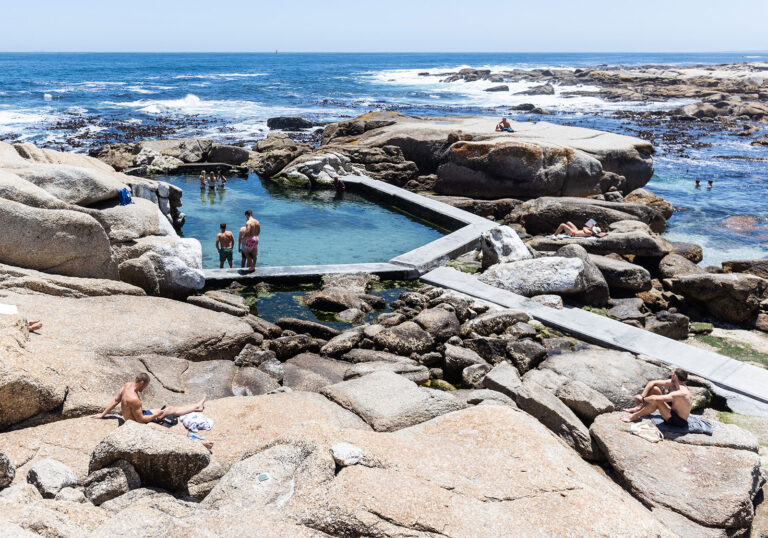
Atlantic Seaboard
A compact granite-framed tidal pool at the southern end of the Sea Point Promenade
Saunders’ Rock combines an intimate tidal pool among granite boulders with promenade access and a distinctive urban Atlantic setting.
Explore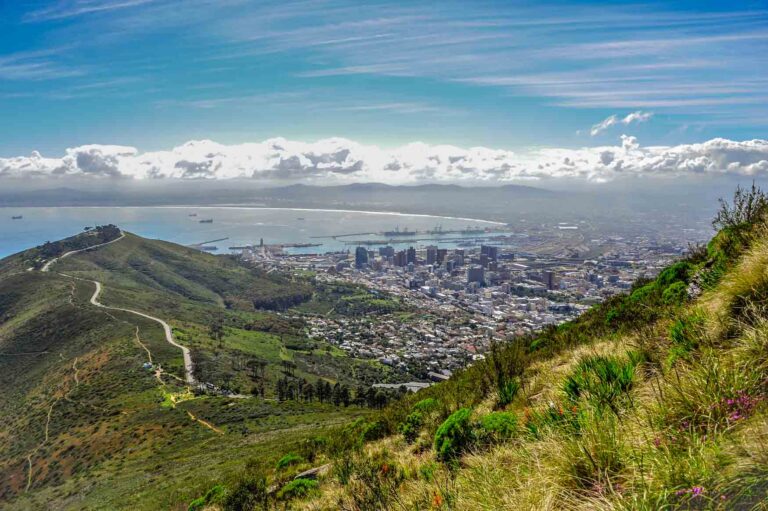
Atlantic Seaboard
A scenic viewpoint overlooking Cape Town, famous for its sunsets, panoramic views, the historic Noon Gun, and easy access by car.
Signal Hill offers some of Cape Town's most accessible panoramic views, making it a favourite spot for sunsets, photography, picnics, and watching the city come alive below.
Explore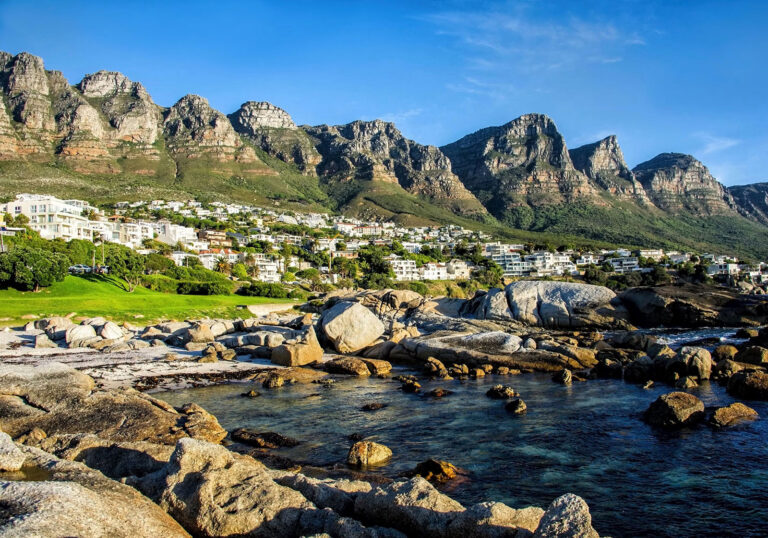
Atlantic Seaboard
Table Mountain's western wall above the Atlantic Seaboard
The Twelve Apostles are the chain of peaks and buttresses forming Table Mountain's western wall, rising above the Atlantic Seaboard between Camps Bay and Hout Bay. There is no single viewpoint: the range is seen from a series of public places along the coast, and the view changes as you move south. Late afternoon light is the classic time.
Explore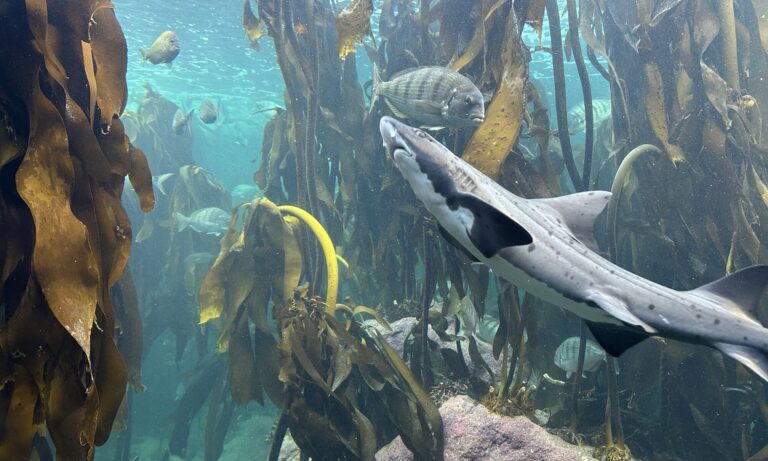
Atlantic Seaboard
A family favourite at the V&A Waterfront, showcasing marine life from two oceans.
One of Cape Town’s most popular family attractions at the V&A Waterfront, home to thousands of marine animals from the Atlantic and Indian Oceans. Highlights include the Ocean Exhibit, Kelp Forest, penguin feedings and interactive touch pools.
Explore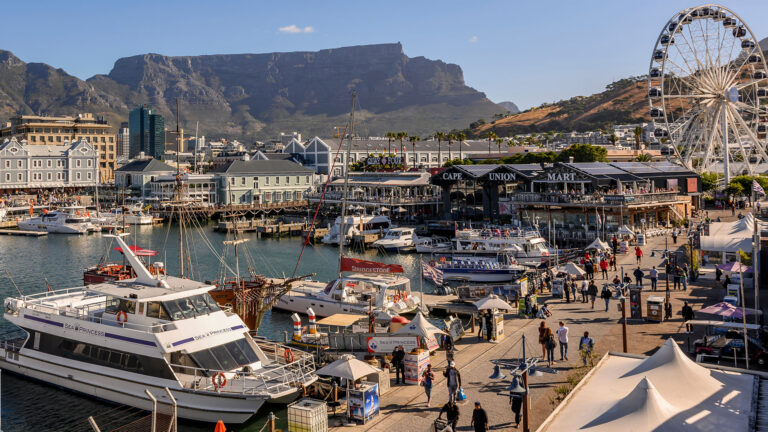
Atlantic Seaboard
A working harbour turned lively hub of shopping, dining and entertainment with harbour views.
Cape Town’s most-visited destination, a working harbour transformed into a vibrant hub of shopping, dining and entertainment. It is home to the Two Oceans Aquarium and the Cape Wheel, and the departure point for Robben Island ferries.
Explore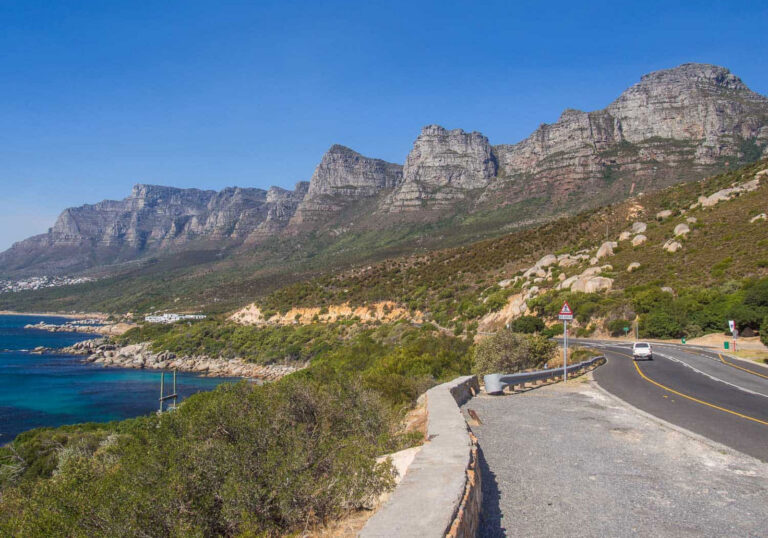
Atlantic Seaboard
The Atlantic coastal drive from Camps Bay to Hout Bay
Victoria Road runs south from Camps Bay to Hout Bay with the Atlantic on one side and Table Mountain's western wall on the other. It is an ordinary public road rather than a purpose-built tourist route, and the appeal is how completely the coastline changes over a short distance, from Camps Bay's open beachfront to the rugged rock around Oudekraal and the descent into Hout Bay. Best in late afternoon.
Explore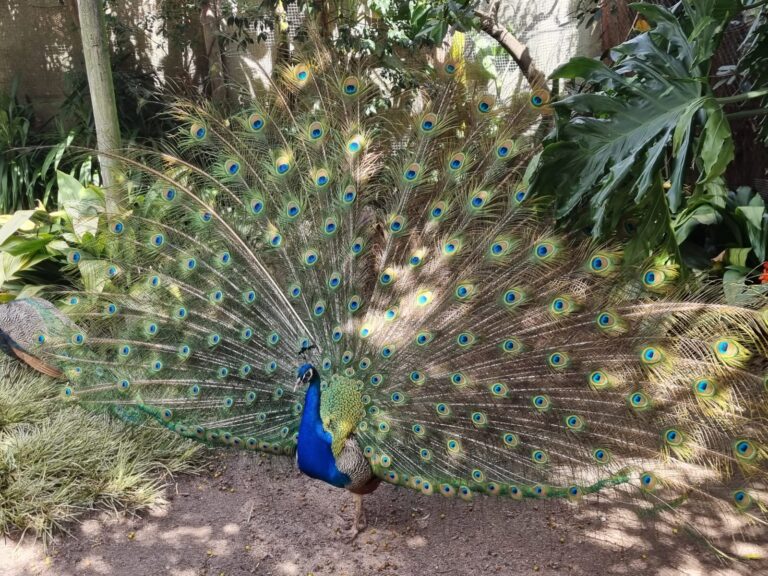
Atlantic Seaboard
Walk through spacious aviaries, discover extraordinary birdlife and meet small animals in a tropical garden setting beneath the mountains of Hout Bay.
World of Birds Wildlife Sanctuary and Monkey Park is one of Hout Bay’s best-known family attractions, offering close-up encounters with birds and small animals across a large network of landscaped walk-through aviaries.
Explore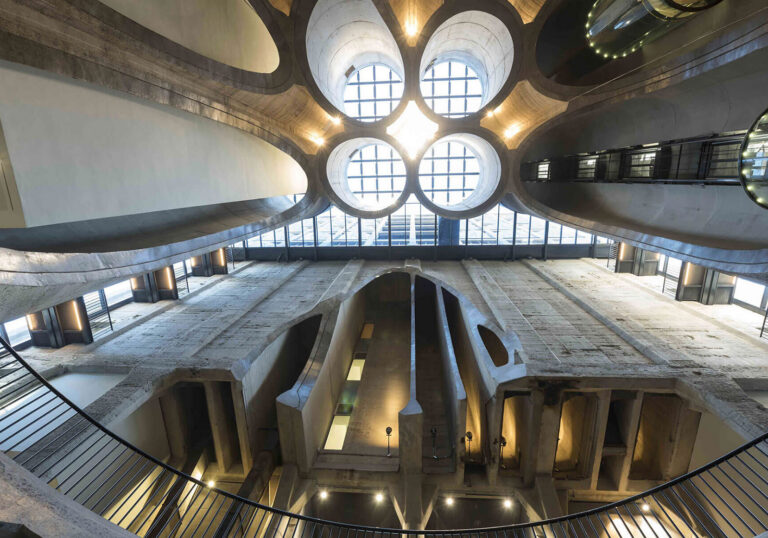
Atlantic Seaboard
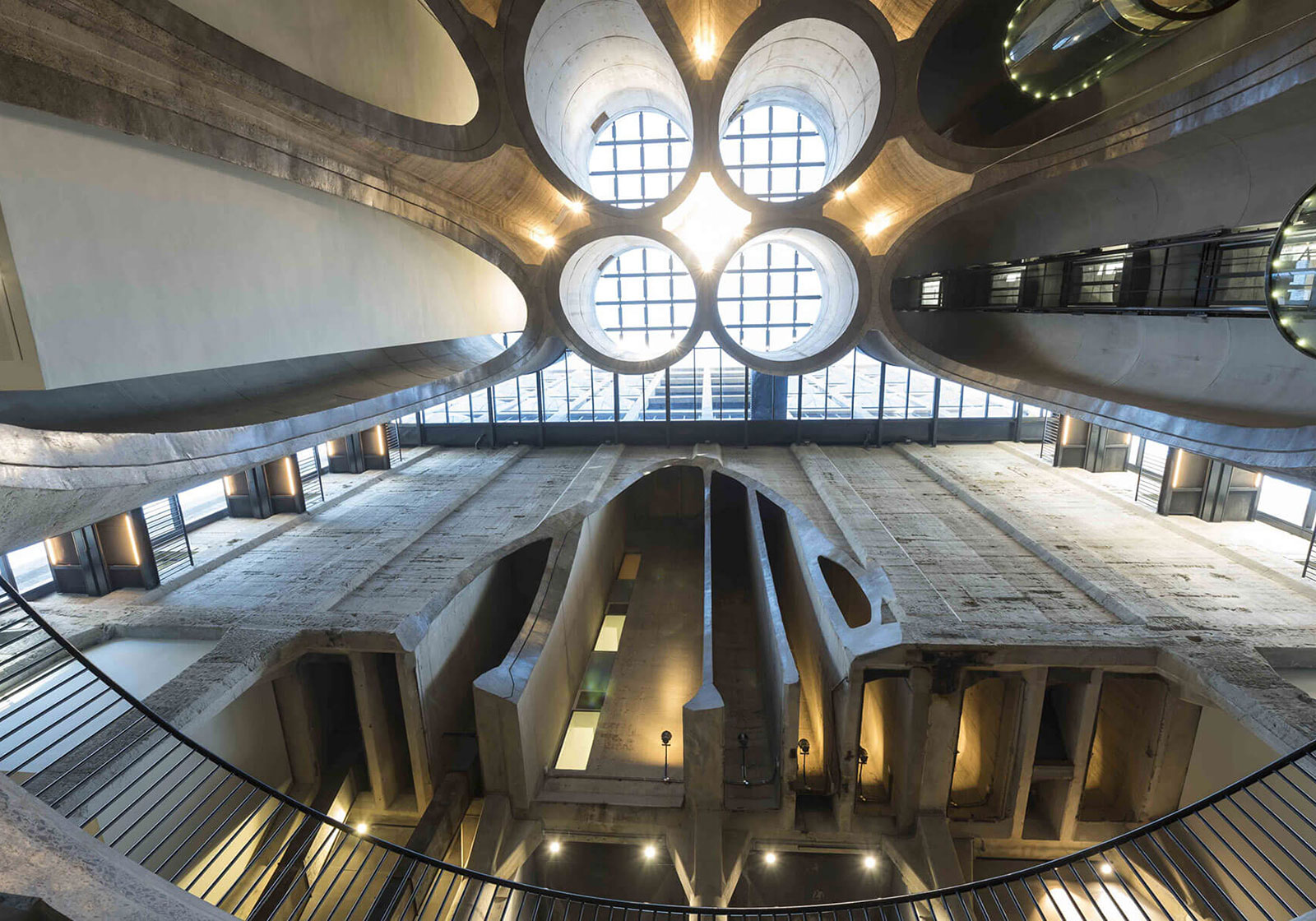
Contemporary African art inside Cape Town’s transformed historic grain silo
Africa’s leading contemporary art museum pairs changing exhibitions with the spectacular carved atrium and industrial architecture of the V&A Waterfront’s historic Grain Silo.
Explore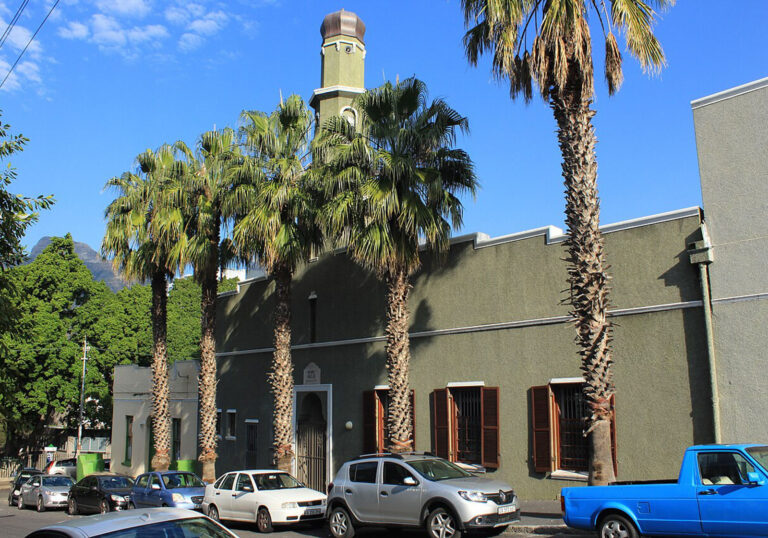
City Bowl
South Africa’s oldest mosque, still in daily use on a Bo-Kaap side street
Auwal Mosque on Dorp Street is the oldest mosque in South Africa and remains an active congregation rather than a historic interior kept for visitors. Muslim religious use of the site dates from 1794, the first madrasah in the country opened here a year earlier under Tuan Guru, and the teaching done in this building produced some of the earliest written Afrikaans. The mosque publishes no visiting hours, so seeing the interior depends on arranging it in advance or joining a Bo-Kaap tour that goes inside.
Explore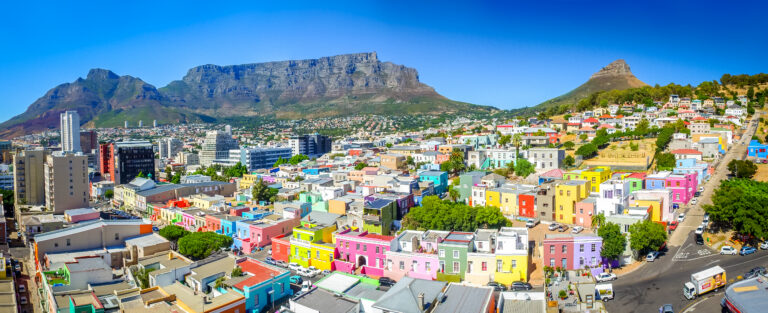
City Bowl
Cape Town's historic Cape Malay quarter
A historic, still-lived-in neighbourhood on the slopes of Signal Hill, and the heart of Cape Town's Cape Malay community and Islamic heritage.
Explore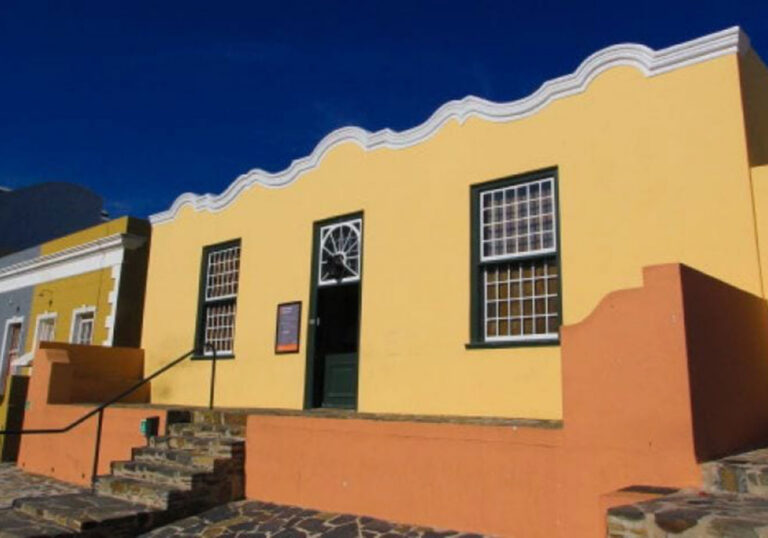
City Bowl
A restored 1760s home telling the story of Cape Town’s Cape Muslim community.
The Bo-Kaap Museum offers one of the best introductions to the history, culture and traditions of Cape Town’s Bo-Kaap community. Housed in one of the neighbourhood’s oldest surviving homes, the museum tells the story of the Cape Muslim community and the people who settled here after slavery was abolished, preserving a way of life that continues to shape the character of Bo-Kaap today.
Explore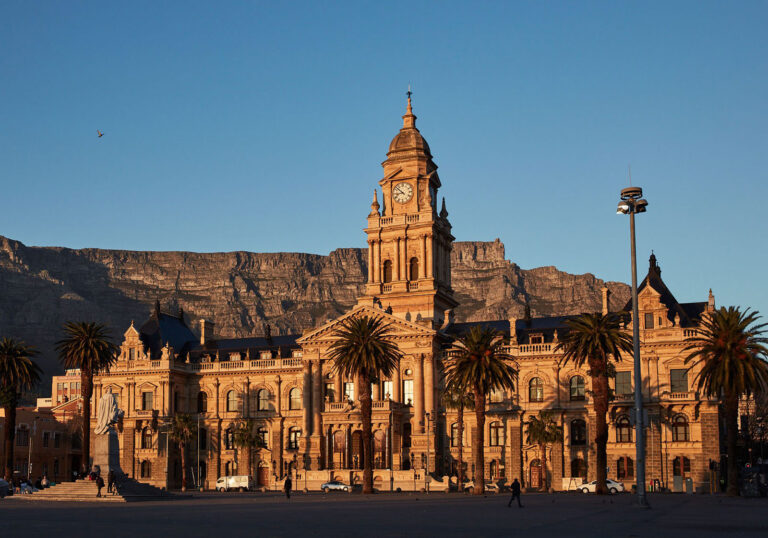
City Bowl
Cape Town’s Edwardian civic landmark, facing the oldest public square in the city
Cape Town City Hall faces the Grand Parade, the city’s oldest public square, with Table Mountain rising behind it. The Edwardian building opened in 1905, and its balcony is where Nelson Mandela made his first speech as a free man in 1990. Building and square work as a single landmark, and both can be appreciated entirely from the outside.
Explore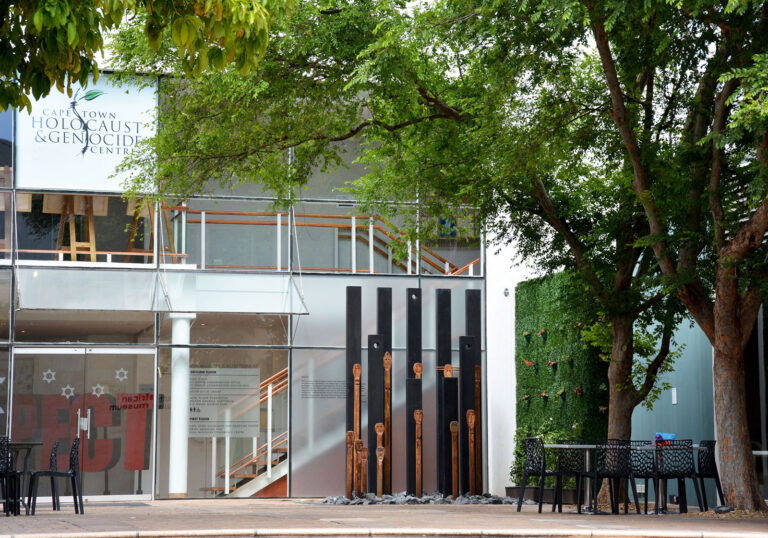
City Bowl
A centre of remembrance, human rights education and reflection in Cape Town’s historic Gardens precinct
The Cape Town Holocaust & Genocide Centre is one of South Africa’s most important museums dedicated to human rights, remembrance and education. Located in the historic Gardens precinct beside the South African Jewish Museum and the Great Synagogue, the centre presents the history of the Holocaust while encouraging visitors to reflect on prejudice, discrimination and genocide in both historical and contemporary contexts.
Explore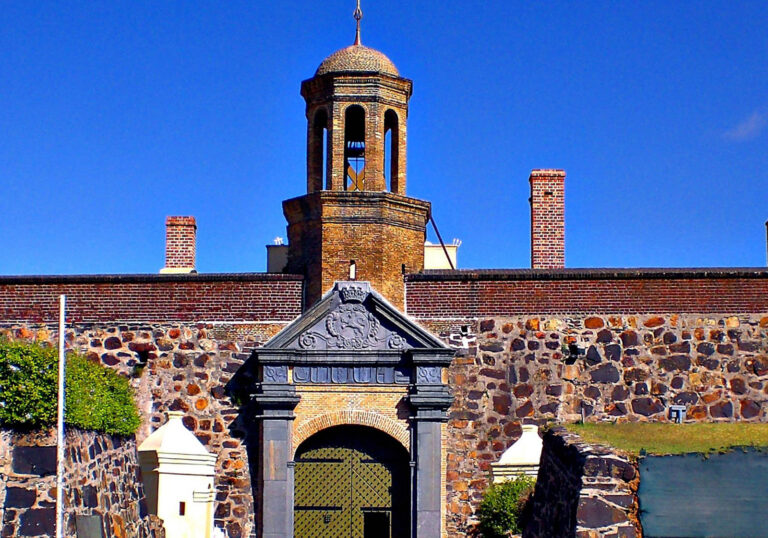
City Bowl
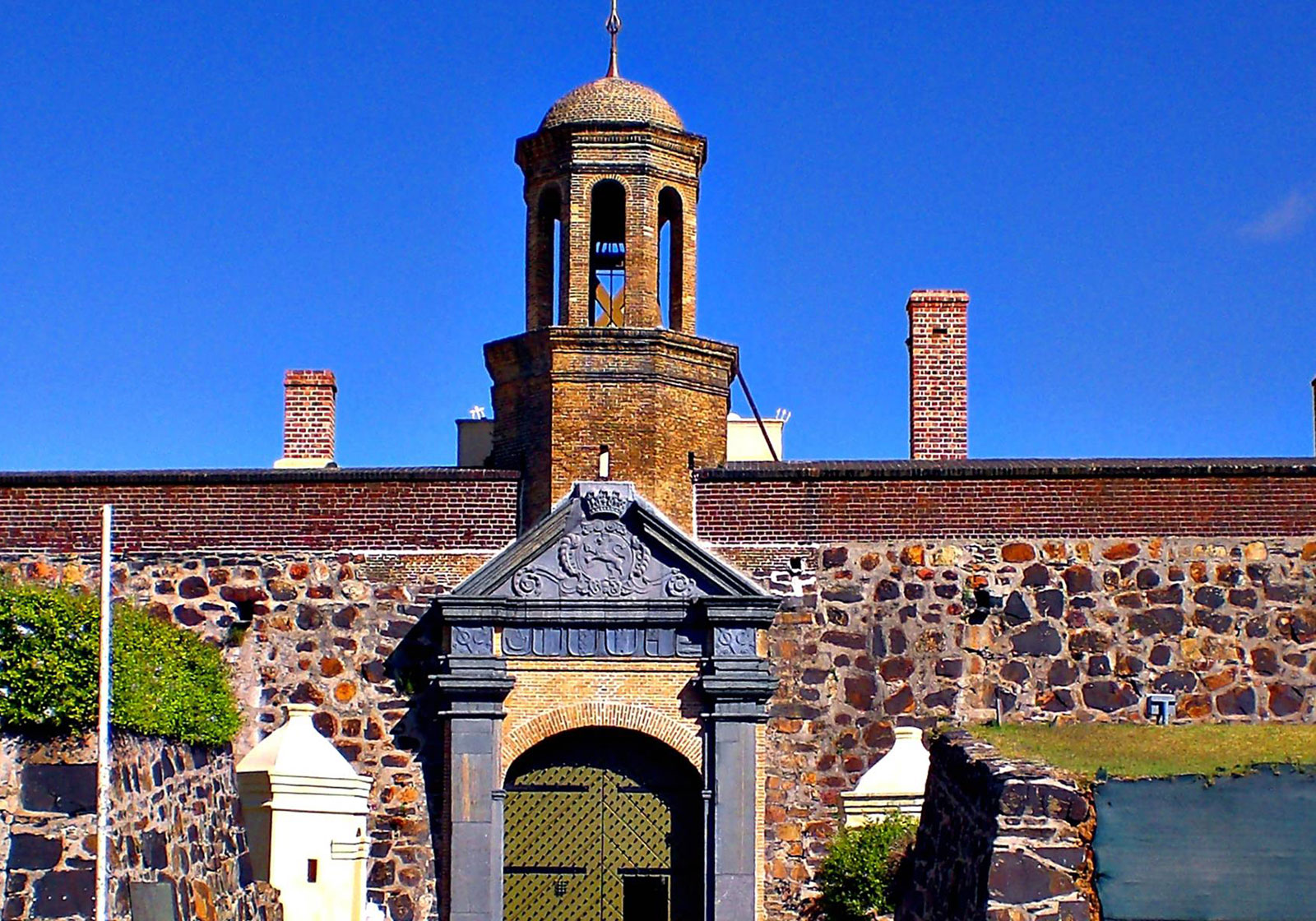
Cape Town’s 17th-century pentagonal fortress and a layered museum of colonial history
The Castle of Good Hope combines monumental VOC-era architecture, historic courtyards and museum displays within Cape Town’s oldest surviving colonial building.
Explore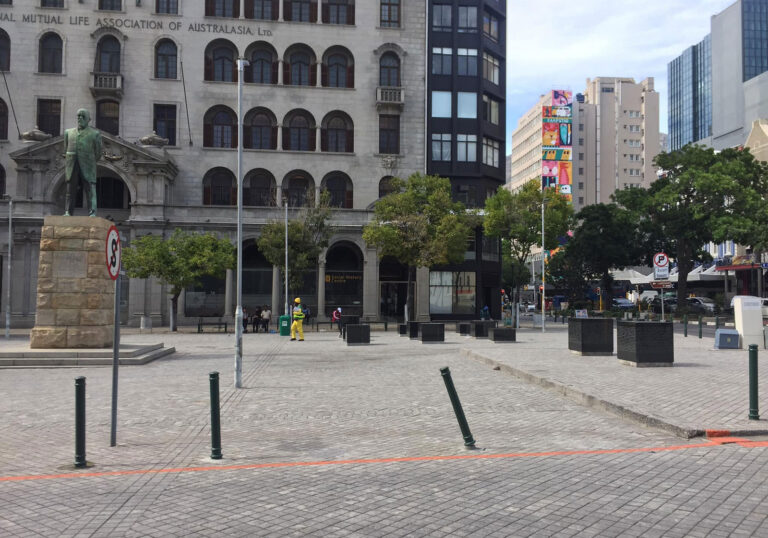
City Bowl
The city block where Cape Town’s church, courts and slave market met
Church Square is a small paved public square behind Groote Kerk, at the corner of Spin and Parliament Streets in central Cape Town. Enslaved people were sold at public auction on this corner in the decades before abolition, and a memorial of eleven granite blocks, unveiled in 2008, now stands on the paving. It is a short stop, valuable for what it explains rather than what it looks like.
Explore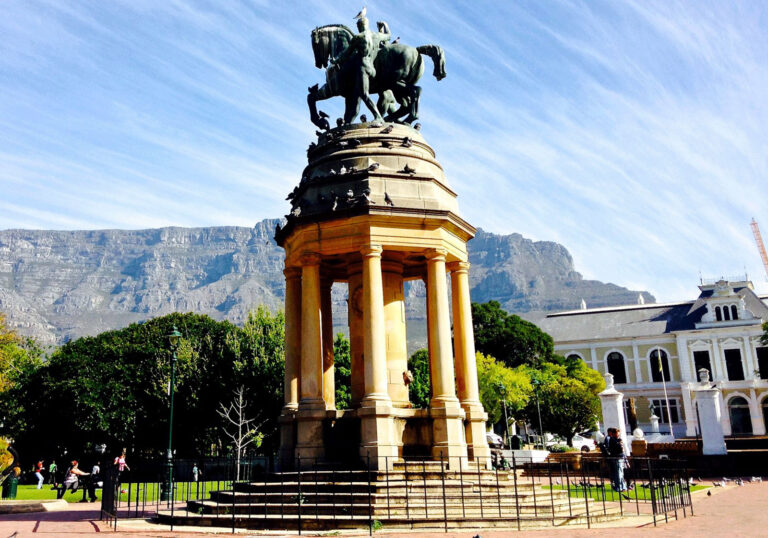
City Bowl
A historic green oasis in the heart of the city, dating back to 1652.
One of Cape Town’s oldest and most treasured public spaces, established in 1652 by the Dutch East India Company. Now a peaceful green oasis in the city centre, it is surrounded by museums, galleries and Parliament, with shaded walkways, lawns and a cafe.
Explore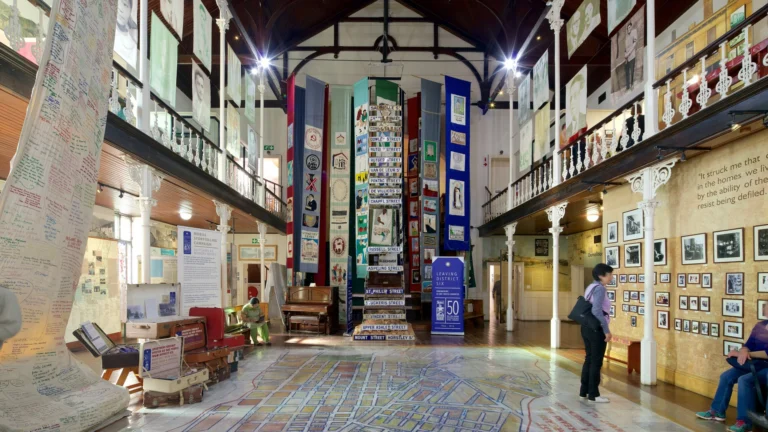
City Bowl
The story of District Six and the forced removals, told by the people who lived it.
A memorial museum in the old Methodist church on Buitenkant Street, recording the community of District Six and the forced removals that destroyed it. Opened in 1994 and shaped by the memories of former residents, who also lead its tours and site walks.
Explore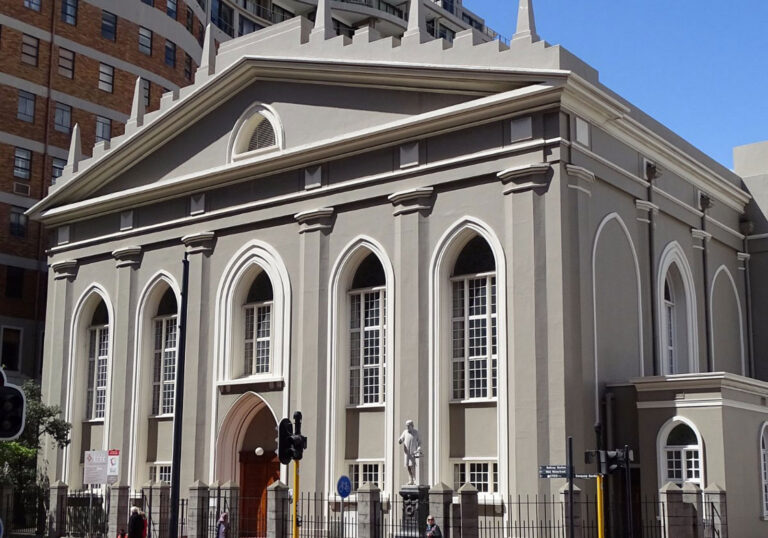
City Bowl
South Africa’s oldest congregation, in an 1841 church beside Church Square
Groote Kerk stands on Adderley Street at the edge of Church Square, in the oldest part of colonial Cape Town. The congregation dates from 1665 and is the oldest in South Africa, but the building visitors see was consecrated in 1841, and only the clock tower survives from the church that stood here before it. It is still an active congregation rather than a museum, and the interior is open for viewing at set hours.
Explore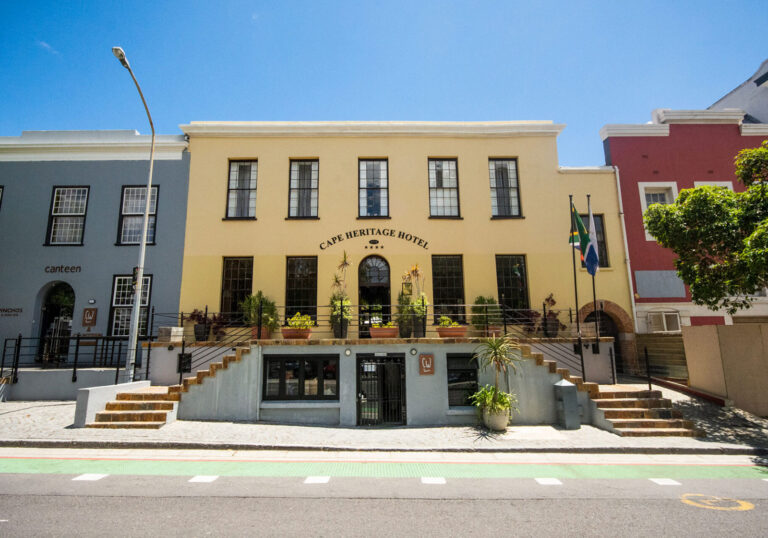
City Bowl
A block of the old town that Cape Town nearly cleared for a parking garage
Heritage Square is not a square but a city block, bounded by Bree, Shortmarket, Hout and Buitengracht Streets, holding what the Cape Town Heritage Trust calls the largest surviving group of eighteenth-century buildings in Cape Town. The whole block was to have been demolished for a parking garage under a ring road scheme. It was saved, donated to the Trust in 1996 and restored by 1998, deliberately keeping the evidence of two centuries of alteration rather than restoring to one invented date. It now works as a hotel, restaurants and shops around a courtyard with an old grapevine.
Explore
City Bowl
The most advanced digital planetarium in Africa, with 360 degree full dome shows.
A full dome digital theatre beside the Iziko South African Museum, described by Iziko as the most advanced digital planetarium on the African continent. Shows run to the official programme from Tuesday to Sunday, and tickets are separate from the museum.
Explore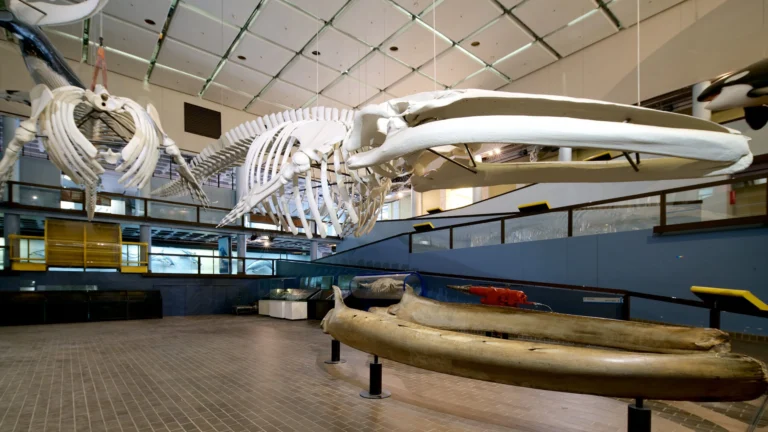
City Bowl
Natural history, the Whale Well and rock art in one of Africa's oldest museums.
Founded in 1825 in the Company's Garden, the Iziko South African Museum holds more than one and a half million specimens. Its galleries range from fossils and ancient insects to rock art, and the Whale Well remains its best known space.
Explore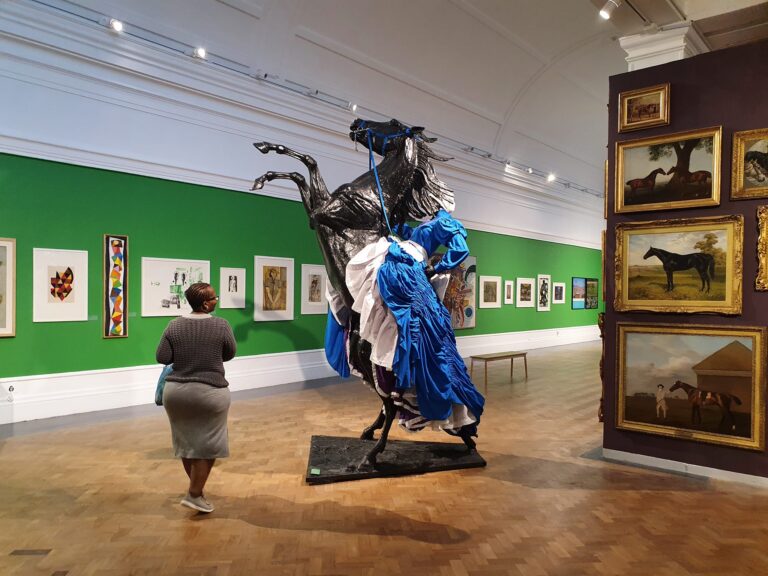
City Bowl
South Africa's national art museum, on Government Avenue in the Company's Garden.
The national art museum of South Africa, housed on Government Avenue in the Company's Garden. Exhibitions change through the year and cover historical and contemporary South African art alongside international work.
Explore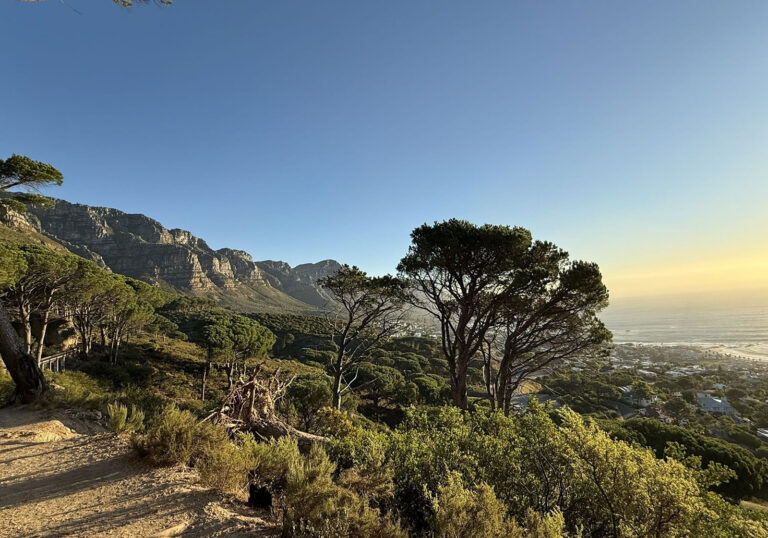
City Bowl
A mountainside panorama over the City Bowl, without the summit
Kloof Corner is a viewpoint on the lower slopes of Table Mountain, reached by a short uphill walk from Tafelberg Road above Kloof Nek. It looks out over Lion's Head, Signal Hill, the City Bowl and Table Bay, with the mountain's cliffs rising directly overhead. Free to visit, no facilities, and one of Cape Town's best golden hour viewpoints.
Explore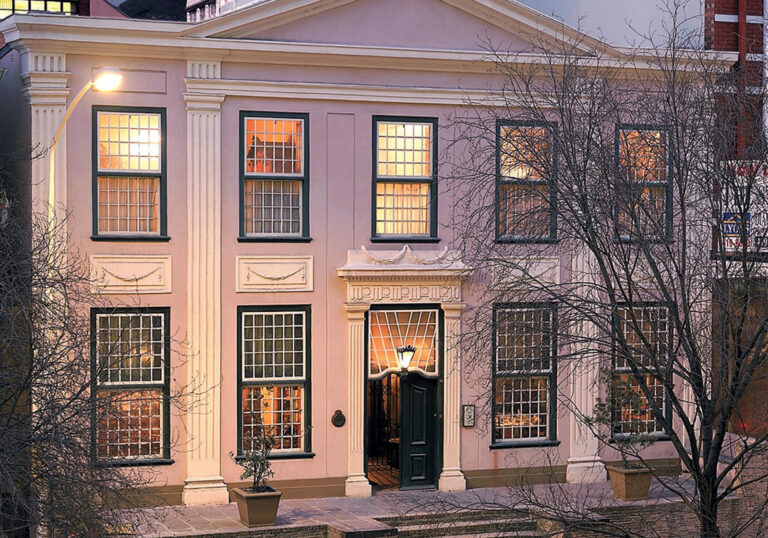
City Bowl
A Cape townhouse begun in 1699 and refronted in the 1790s, currently closed for conservation
Koopmans-de Wet House at 35 Strand Street is a Cape Town townhouse whose site was first built on in 1699 and which was given its present Neoclassical front in the 1790s. It was the De Wet family home from 1806, and Iziko Museums records by name the enslaved people held by that household. It opened in 1914 as what Iziko calls South Africa’s oldest house museum, named for Marie Koopmans-de Wet. The museum is currently closed to visitors while conservation work is underway, and the historic building can still be seen from Strand Street.
Explore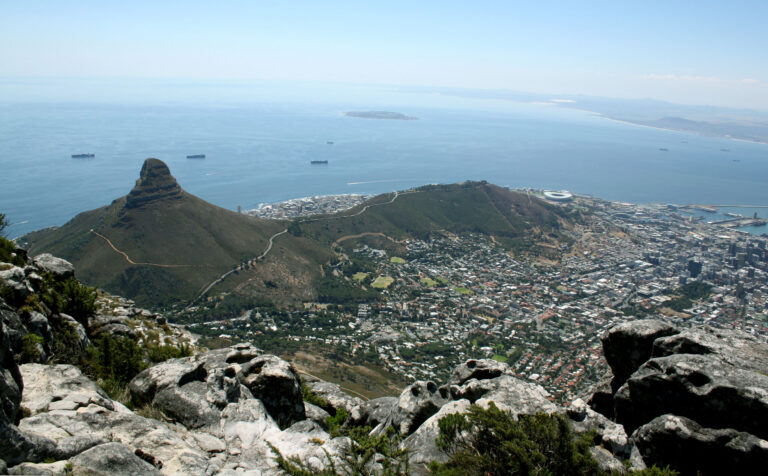
City Bowl
One of Cape Town's most iconic landmarks, offering panoramic city, mountain and ocean views from an unforgettable summit hike.
Lion's Head is one of Cape Town's most popular outdoor attractions, famous for its rewarding hike, spectacular 360-degree views, and unforgettable sunrise and sunset experiences.
Explore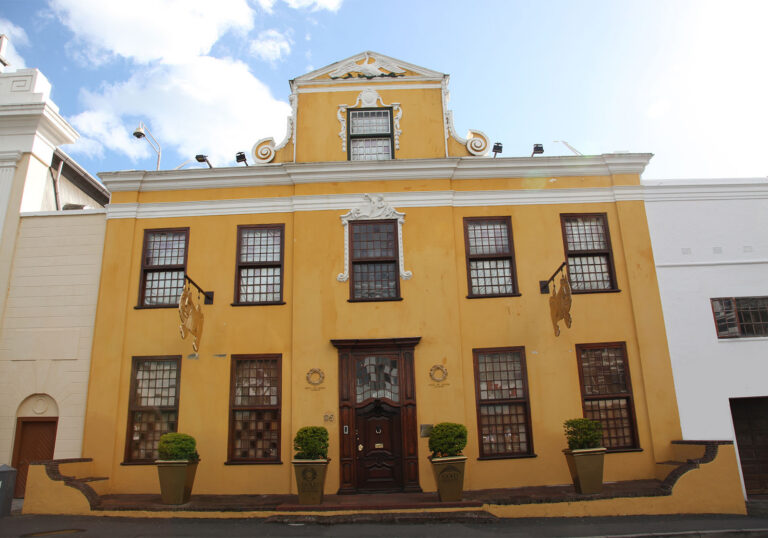
City Bowl
The Lutheran parsonage named after a man who never lived in it
Martin Melck House at 96 Strand Street was built in the early 1780s as the parsonage of the Lutheran congregation next door, on ground given by Martin Melck, who died in the year building began and never lived here. Above its carved teak door sits a dakkamer, a small gabled room on the roof that SAHRA’s 2013 gazette called the last of its kind in Cape Town. With the church and the Sexton’s House it forms a block declared a National Heritage Site in 2017. The house itself is seen from the street rather than entered.
Explore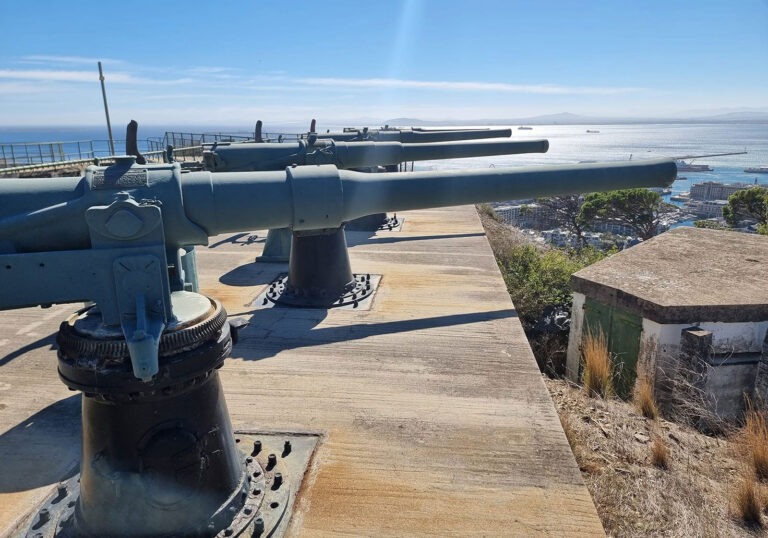
City Bowl
Cape Town's midday cannon, fired above the city since the 1800s
The Noon Gun is fired from the Lion Battery on the lower slopes of Signal Hill, a time-signal tradition kept up for more than two centuries and one of the oldest daily gun firings anywhere. It is a short, loud and distinctive experience, with views over the City Bowl, the harbour and Table Bay while you wait. It traditionally fires at 12:00 on firing days, so check current arrangements before making a special trip.
Explore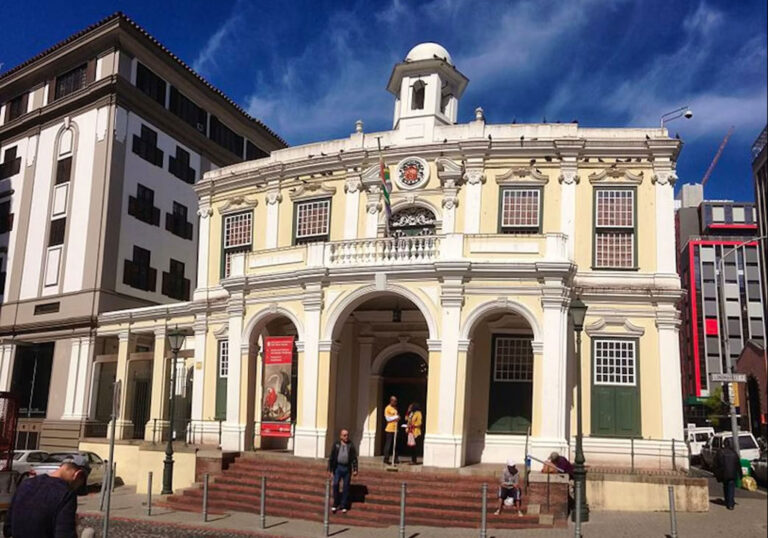
City Bowl
Cape Town’s first town hall on Greenmarket Square, home to the Michaelis Collection of Dutch and Flemish art.
The Old Town House is one of Cape Town’s oldest public buildings and a landmark on Greenmarket Square. Built in 1755 as the city’s first town hall, the elegant Cape Rococo building now houses the renowned Michaelis Collection, one of South Africa’s finest collections of 17th-century Dutch and Flemish art. It offers visitors the chance to experience both Cape Town’s colonial history and European master paintings within a beautifully preserved historic setting.
Explore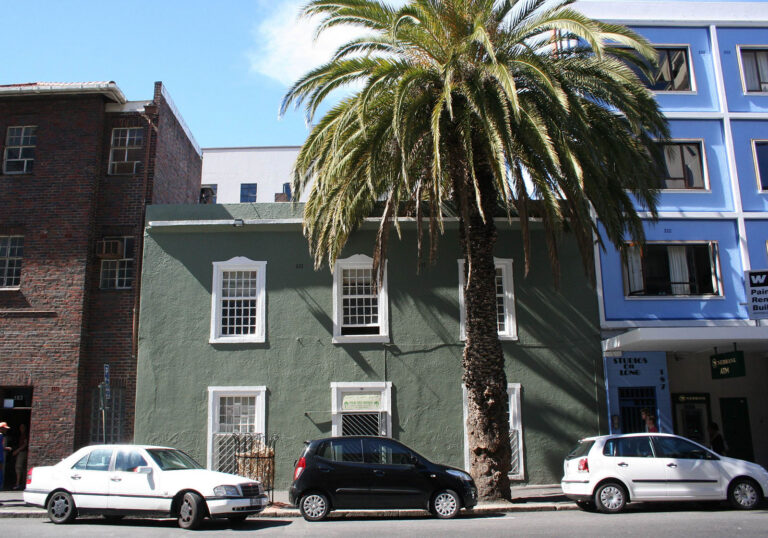
City Bowl
An eighteenth-century Long Street house that became Cape Town’s second mosque
Palm Tree Mosque is a green-painted house on Long Street that has served as a mosque since the early nineteenth century. The congregation dates from 1807, when a dispute over the succession at the Auwal Mosque led Frans van Bengalen and Jan van Bougies to buy the property and worship separately, but the building itself is an eighteenth-century private residence that was adapted afterwards. It is the only surviving house of its period on Long Street and remains an active mosque rather than a visitor attraction.
Explore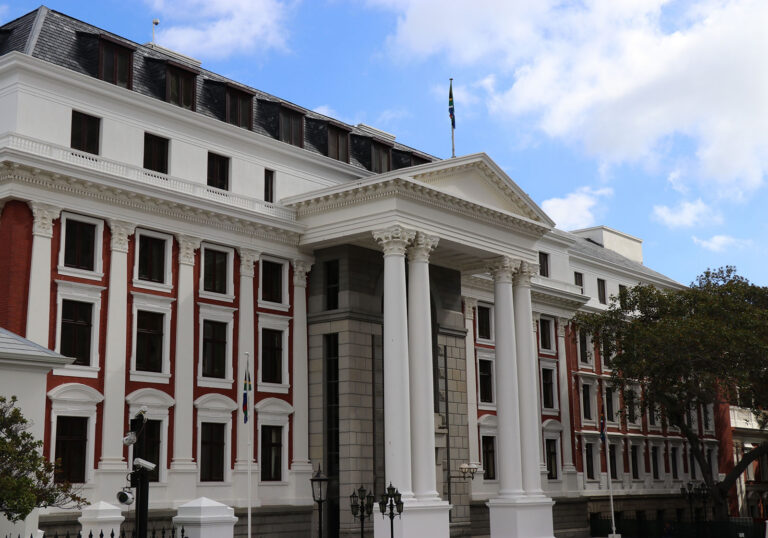
City Bowl
South Africa's legislative seat, in a walled precinct beside the Company's Garden
The seat of South Africa's national legislature occupies a precinct of historic buildings at the top of the city centre, beside the Company's Garden, the oldest of them completed in 1884. It is a working government complex rather than a museum, so most visitors experience it as a landmark seen from the surrounding public space.
Explore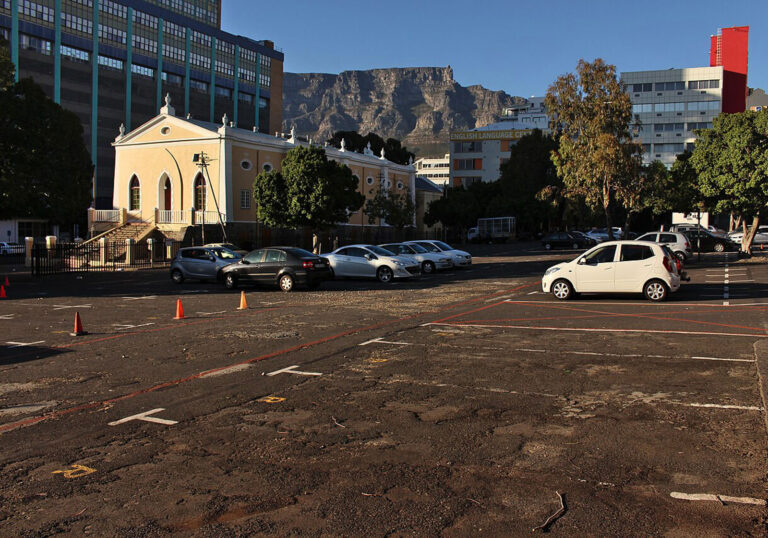
City Bowl
The farmers’ outspan that Cape Town grew around, now a car park between Bree Street and Buitengracht
Riebeeck Square is an open block in central Cape Town that was one of the squares the town expanded around during the eighteenth century. Farmers arriving from the country outspanned their wagons here and offloaded produce, and the ground was known as the Boerenplein before it took its present name in about the 1860s. The theatre built on its Bree Street edge in 1799 survives as St Stephen’s Church. Most of the square is now a car park, and it was declared a National Monument in 1961.
Explore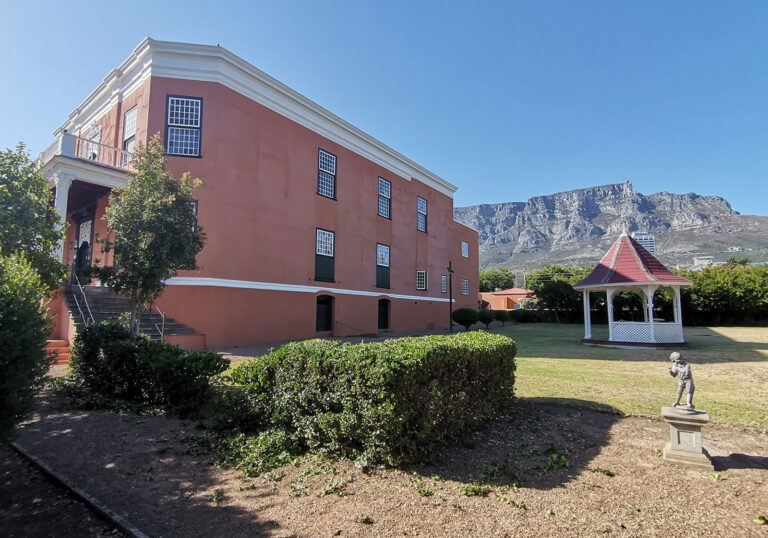
City Bowl
Cape Dutch architecture and works on paper in an intimate City Bowl museum
A beautifully restored 18th-century townhouse where Cape Dutch architecture and selected works from the William Fehr Collection create a quiet, intimate museum experience.
Explore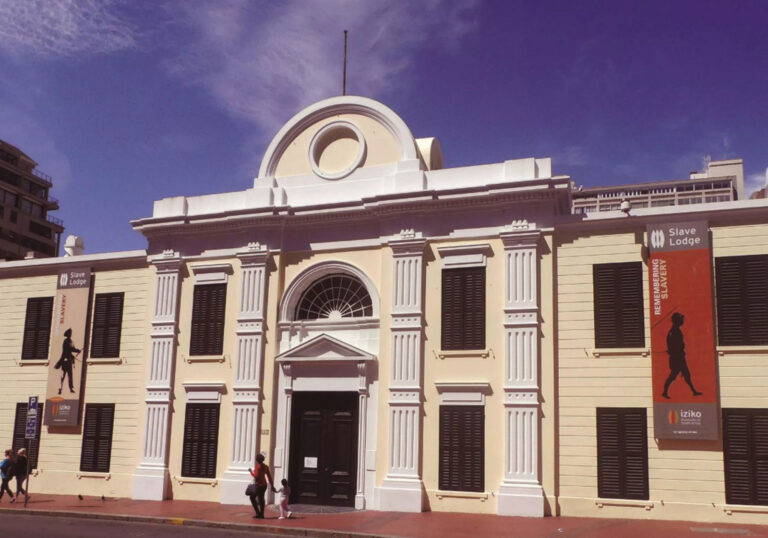
City Bowl
A powerful museum of slavery, colonialism, human rights and democracy in central Cape Town
One of South Africa’s oldest surviving buildings, the Slave Lodge presents the history of slavery at the Cape through personal stories, historic rooms and exhibitions on dignity, equality and justice.
Explore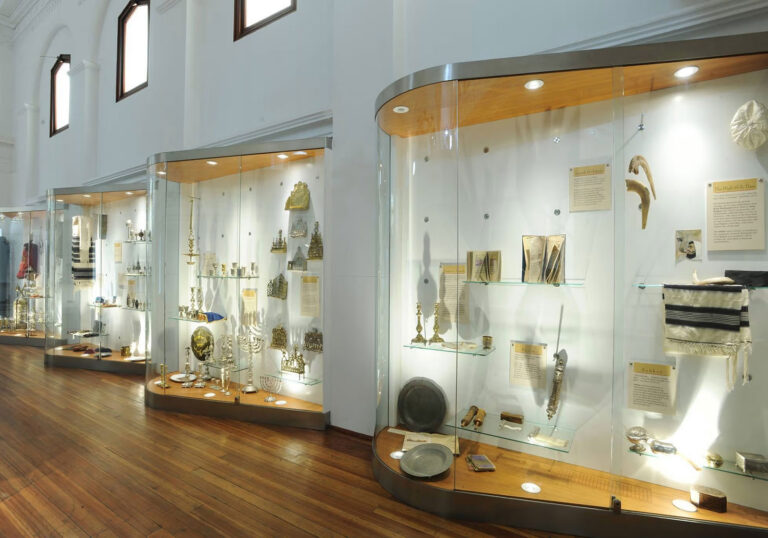
City Bowl
The story of South Africa’s Jewish community, told beside the country’s oldest synagogue.
The South African Jewish Museum tells the remarkable story of one of South Africa’s most influential immigrant communities through immersive exhibitions, multimedia displays and historic artefacts. Situated beside the country’s oldest synagogue in Gardens, the museum explores Jewish life, faith and culture while tracing the community’s contribution to South Africa’s social, economic, political and cultural development.
Explore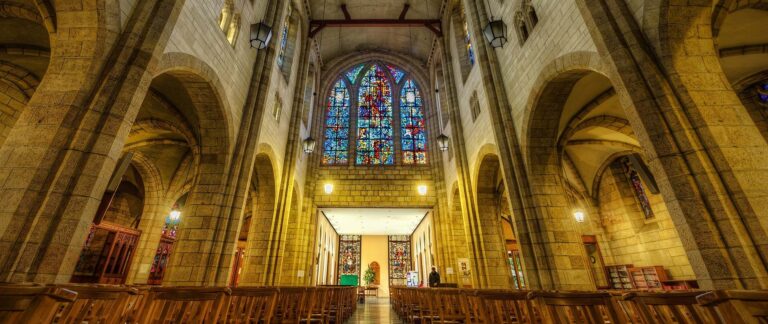
City Bowl
The oldest cathedral in southern Africa and a landmark of the anti-apartheid struggle.
The mother church of the Anglican Diocese of Cape Town, at the top of Wale Street beside the Company's Garden. Neo-gothic, cruciform and built around a courtyard labyrinth, it became known as the People's Cathedral during the struggle against apartheid.
Explore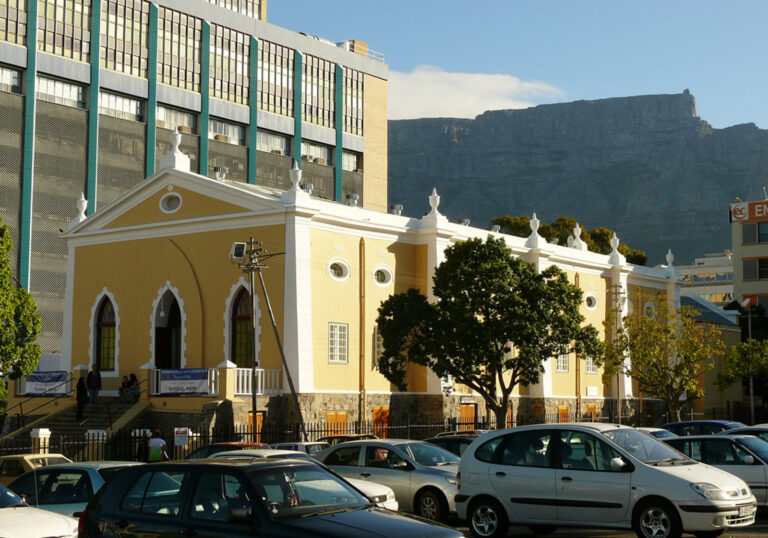
City Bowl
South Africa’s first purpose-built theatre, converted into a church for people freed from slavery
St Stephen’s Church on Riebeeck Square was built in 1800 as the African Theatre, the first purpose-built theatre in South Africa, at the instance of Governor Sir George Yonge. It staged the earliest recorded Shakespeare performance in southern Africa in 1801. After theatre-going fell out of favour the building was sold in 1839 and adapted as a school and church for people freed from slavery at the end of apprenticeship. It entered the Dutch Reformed Church in 1857 as a full congregation rather than a mission, remains one today, and still shows the oval windows and urn-topped buttresses of the theatre it began as.
Explore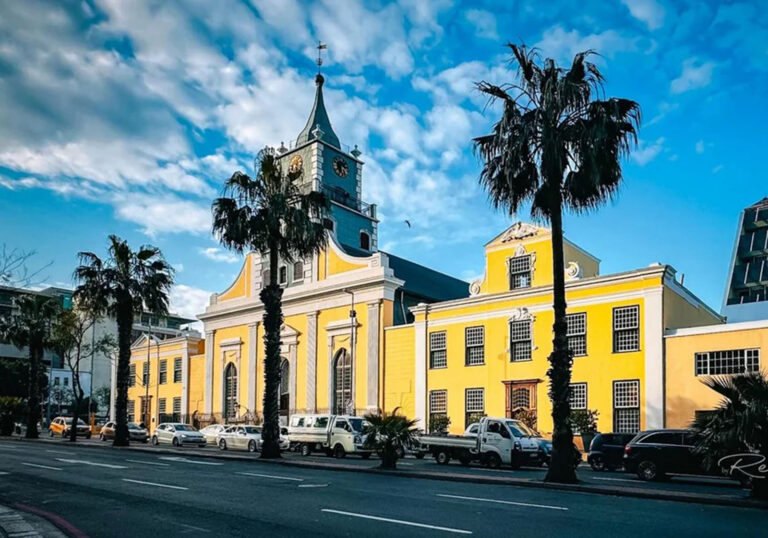
City Bowl
A warehouse built for Lutherans who were not allowed to build a church
The Strand Street Lutheran Church began in 1774 as a hall in the form of a warehouse, put up by Martin Melck at a time when the Dutch Reformed Church was the only publicly recognised denomination at the Cape. Lutherans worshipped in it from 1776, three years before the Heren XVII recognised them, and the recognition when it came forbade them a tower and an altar and required services in Dutch. Anton Anreith remodelled the interior between 1787 and 1792, and his pulpit survives. The building was rebuilt in 1818 to 1820, when the forbidden tower was finally added.
Explore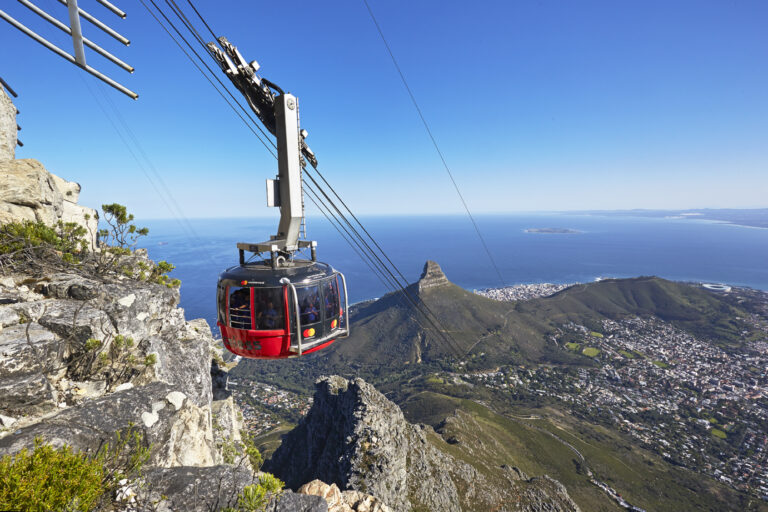
City Bowl
Cape Town's iconic flat-topped mountain, reached by one of the world's most scenic cableways.
Cape Town's defining landmark, rising more than 1,000 metres above the city with sweeping views across the Cape Peninsula.
Explore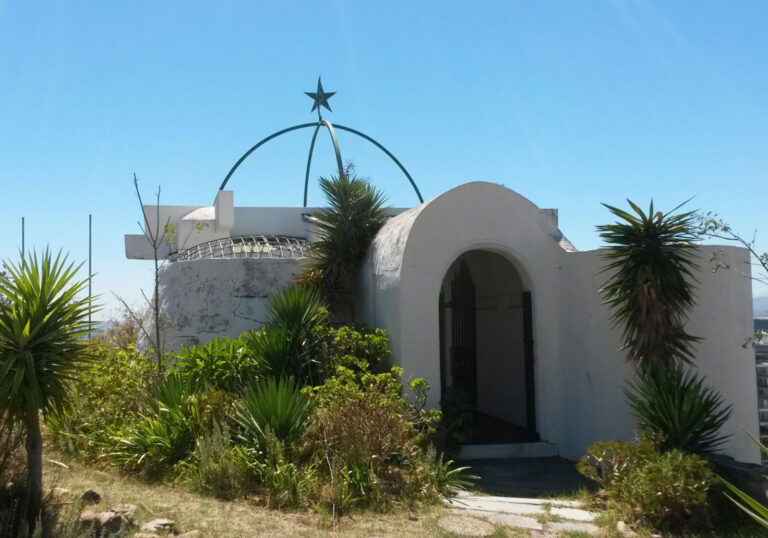
City Bowl
The burial ground of the founders of Islam at the Cape, on the slopes of Signal Hill
Tana Baru is a Muslim burial ground on the eastern slopes of Signal Hill, above the Bo-Kaap. Burials took place here from at least 1772 and the ground was formally granted in October 1805, making it what the Tana Baru Trust describes as the first officially recognised Muslim cemetery in South Africa. Tuan Guru and several other founding figures of Islam at the Cape are buried here, three of them in kramats. Its closure in January 1886 provoked one of the most serious confrontations between a Cape community and the colonial authorities of the nineteenth century. It remains a sacred site rather than a visitor attraction.
Explore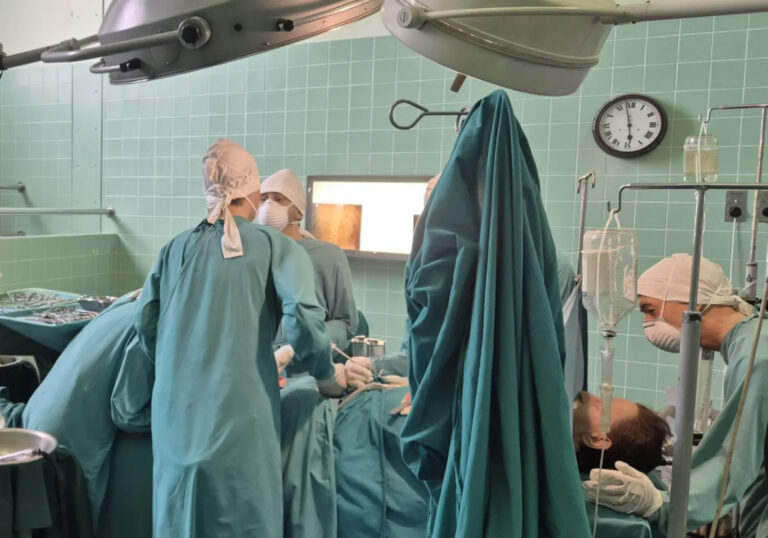
Southern Suburbs
Original operating theatres and the human story behind the world’s first successful heart transplant
Inside Groote Schuur Hospital, the Heart of Cape Town Museum uses original theatres, recreated rooms and guided interpretation to tell the collaborative story of the 1967 heart transplant.
Explore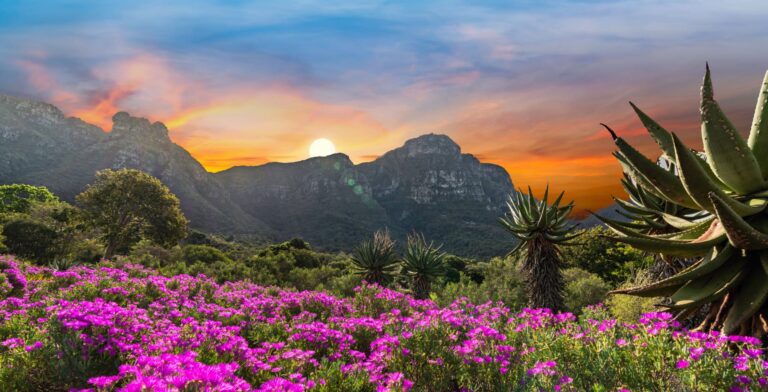
Southern Suburbs
One of the world's great botanical gardens, set against the eastern slopes of Table Mountain.
Kirstenbosch is one of the world's great botanical gardens, set against the eastern slopes of Table Mountain in Newlands. Famous for its indigenous fynbos, the Boomslang canopy walkway and summer concerts, it's a favourite for garden lovers, families and picnickers.
Explore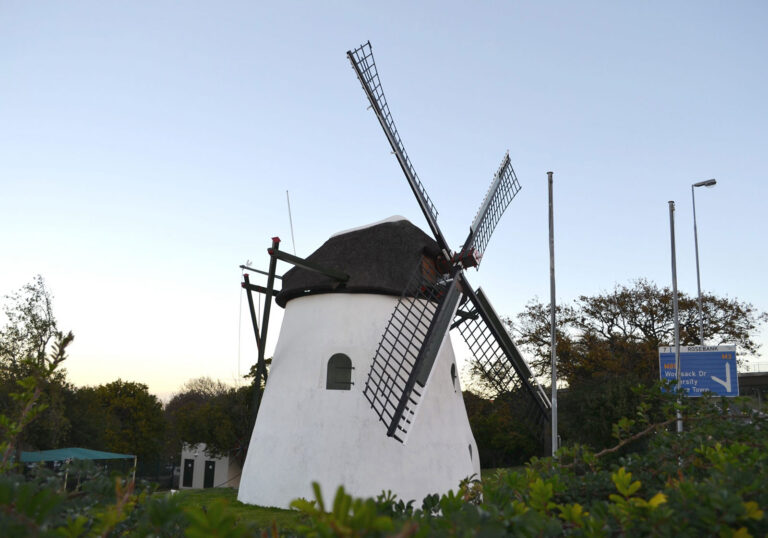
Southern Suburbs
Cape Town’s restored 18th-century working windmill on the slopes of Devil’s Peak
South Africa’s oldest surviving complete windmill is once again operational, demonstrating traditional wind-powered milling on scheduled monthly open days.
Explore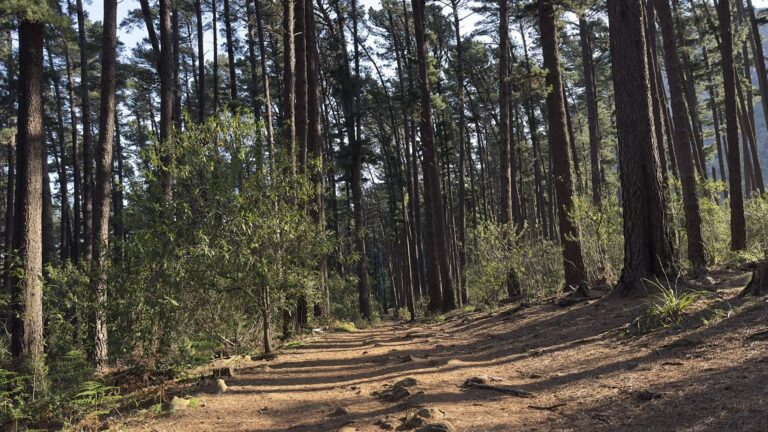
Southern Suburbs
Shaded walking trails, mountain streams and indigenous woodland on Table Mountain’s eastern slopes
Newlands Forest is one of Cape Town’s most popular natural escapes, offering shaded walking trails, mountain streams and peaceful woodland on the eastern slopes of Table Mountain. Just minutes from the city centre, it provides an easy introduction to Table Mountain National Park without the steep climbs associated with the mountain’s summit routes. Whether you are looking for a gentle stroll, a trail run or the starting point for a longer hike, Newlands Forest is a favourite year-round destination for both locals and visitors.
Explore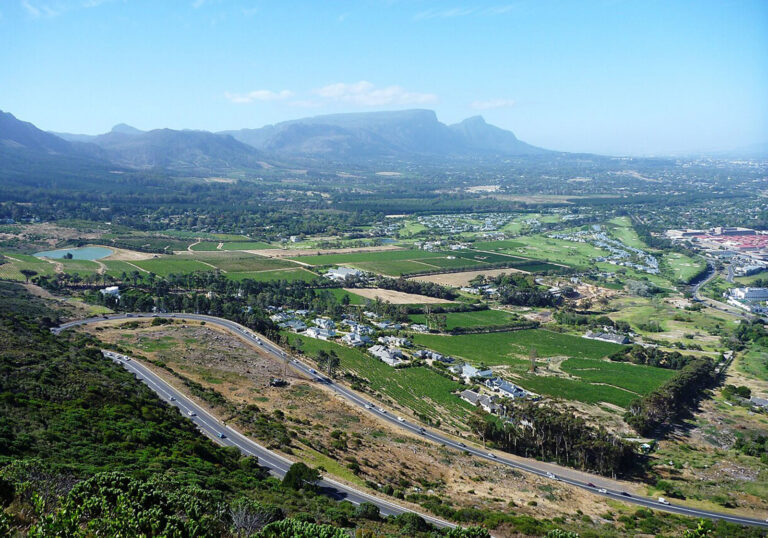
Southern Suburbs
The mountain pass linking the southern suburbs with the southern peninsula
Ou Kaapse Weg is the mountain crossing between Cape Town's southern suburbs and the southern peninsula, climbing from the Tokai and Steenberg side through the Silvermine mountain landscape and dropping into the Noordhoek valley. The appeal is the crossing itself rather than any single viewpoint: about fifteen minutes of driving that makes the city's mountain geography suddenly obvious.
Explore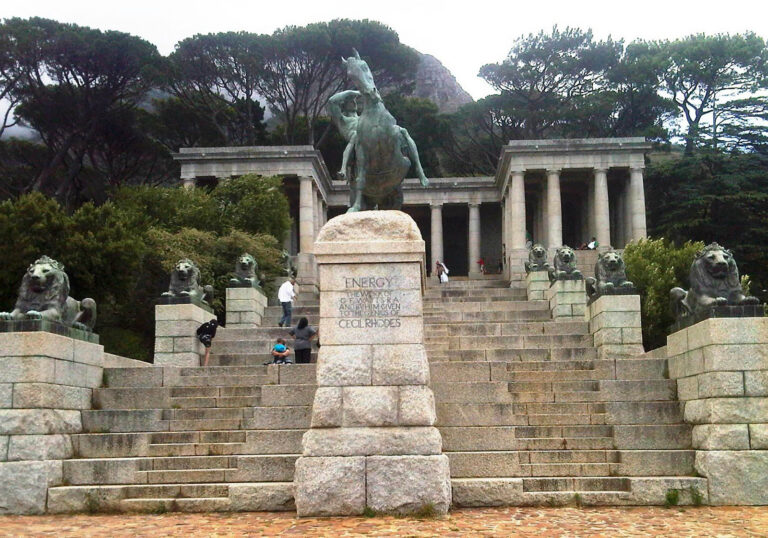
Southern Suburbs
Monumental architecture, panoramic views and a contested colonial legacy on Devil’s Peak
A major Cape Town landmark where grand early-20th-century architecture and sweeping views meet the complex, contested legacy of Cecil John Rhodes.
Explore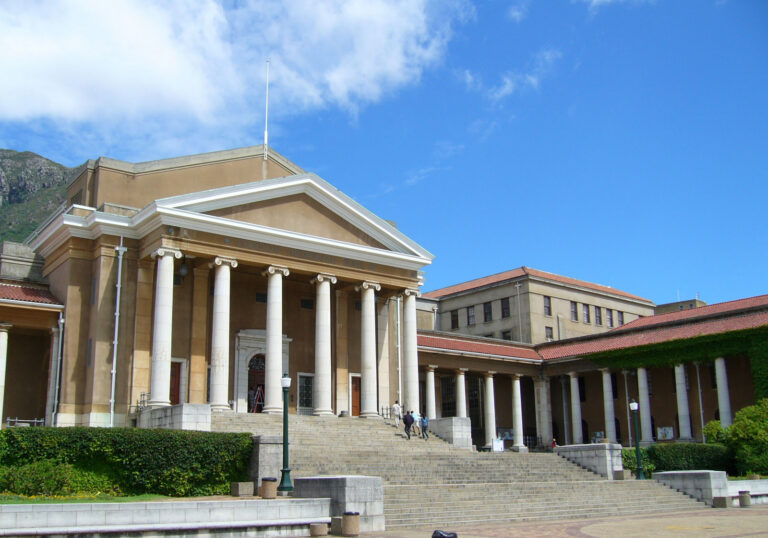
Southern Suburbs
Historic sandstone architecture and panoramic city views beneath Devil’s Peak
Explore UCT’s landmark Upper Campus, where historic architecture, mountain scenery and academic heritage meet on the slopes of Devil’s Peak.
Explore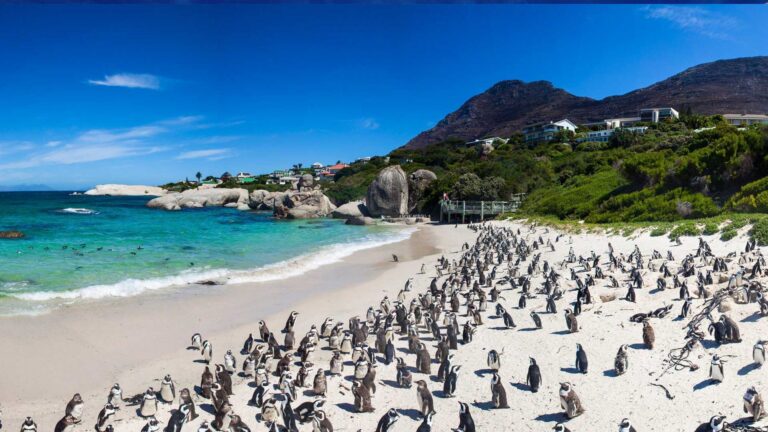
Cape Peninsula
The African penguin colony in Simon’s Town, viewed from boardwalks inside Table Mountain National Park
Boulders Beach in Simon’s Town holds a resident colony of African penguins, viewed from boardwalks. It is a Table Mountain National Park pay point, where a daily conservation fee applies and the gate takes cards only. SANParks lists swimming among the activities for the section.
Explore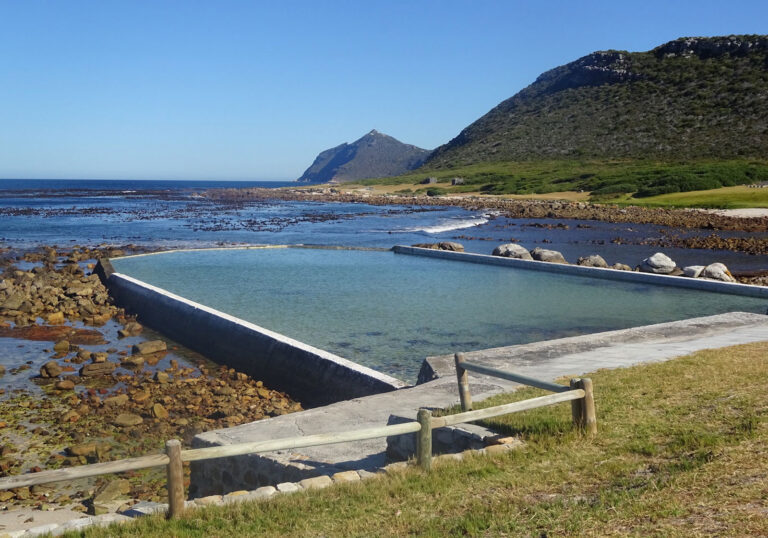
Cape Peninsula
A remote tidal pool on the False Bay side of the Cape Point reserve
Buffels Bay pairs a tidal pool with a wild reserve coastline, mountain views and access controlled by Cape Point opening times and conservation rules.
Explore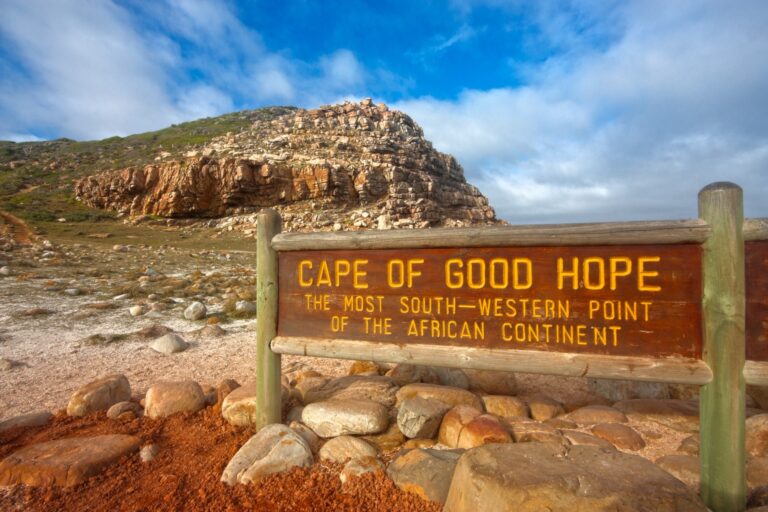
Cape Peninsula
One of South Africa's most famous landmarks, with towering sea cliffs at the wild tip of the Cape Peninsula.
The Cape of Good Hope sits within the Cape Point Nature Reserve at the wild tip of the peninsula, known for towering sea cliffs, dramatic ocean views and rich biodiversity. It's a symbolic, must-visit landmark for anyone exploring Cape Town.
Explore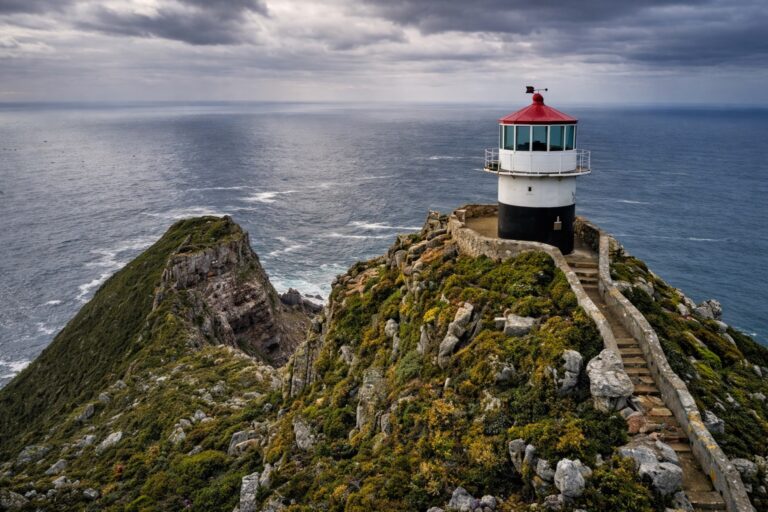
Cape Peninsula
A clifftop lighthouse viewpoint with spectacular panoramic views across the Cape Peninsula.
Two historic lighthouses stand at Cape Point, the most south western point in Africa, one of them still fully operational. The lighthouse viewpoint is reached on foot up the paved path from the car park, with panoramic views over the Cape Peninsula.
Explore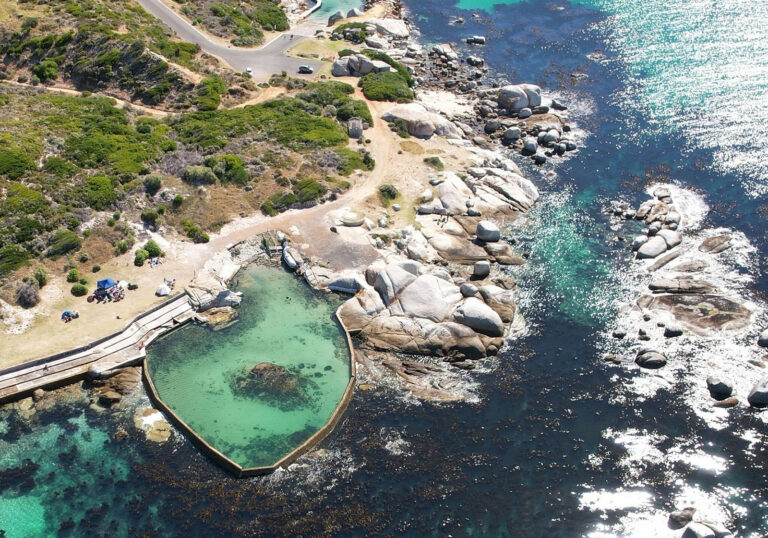
Cape Peninsula
A granite-framed tidal pool on the quieter coast south of Simon’s Town
Miller’s Point offers a distinctive tidal pool among granite rocks, with clear coastal scenery and a quieter setting on the road south of Simon’s Town.
Explore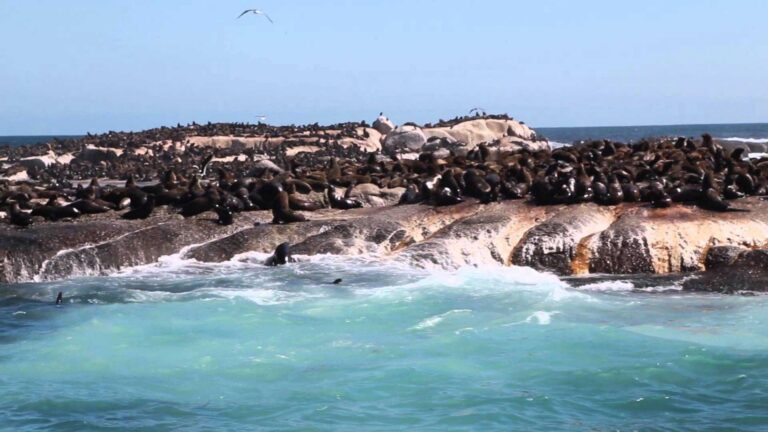
Cape Peninsula
A rocky island just offshore from Hout Bay where thousands of Cape fur seals gather, offering one of Cape Town’s most memorable marine wildlife experiences.
Seal Island is one of Hout Bay’s most iconic natural attractions. Located a short boat ride from the harbour, the island is home to a large colony of Cape fur seals and is best experienced on a guided cruise.
Explore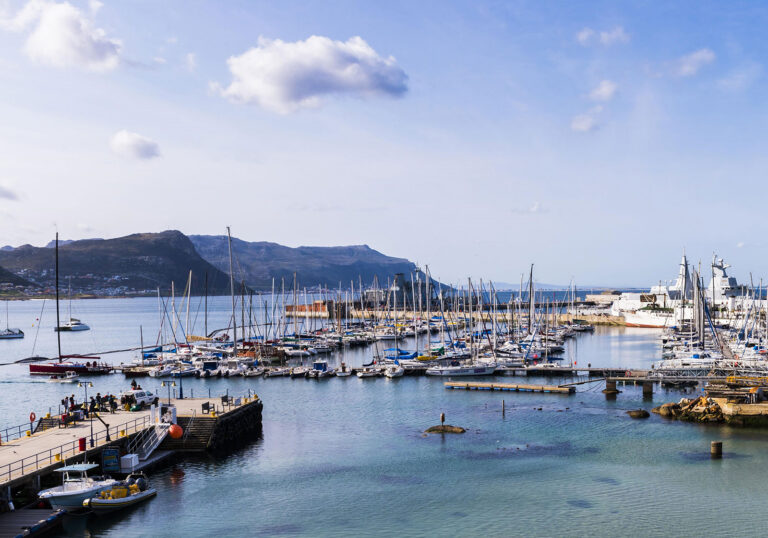
Cape Peninsula
Cape Town's naval and maritime waterfront on False Bay
Simon's Town Harbour is Cape Town's naval and maritime harbour, set in a sheltered corner of False Bay beneath steep mountains. Yachts and working boats fill the marina, grey naval vessels are often visible across the water, and the town's whole character comes from centuries of life alongside the sea. Naval facilities themselves are operational rather than open to visitors, so the experience is one of walking and looking from the public waterfront. Under an hour for the harbour itself.
Explore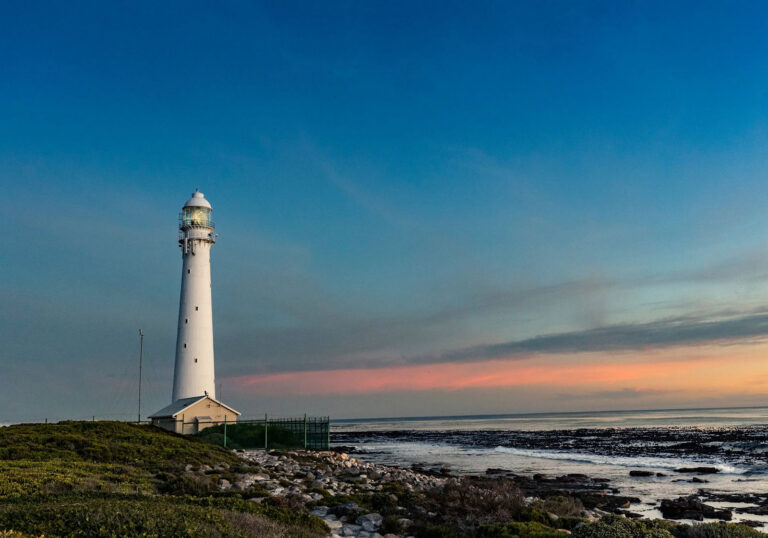
Cape Peninsula
South Africa’s tallest cast-iron lighthouse, on the Kommetjie coast
A thirty-three metre cast-iron lighthouse on the exposed Atlantic edge of the Cape Peninsula, still working, and usually open to climb on weekdays.
Explore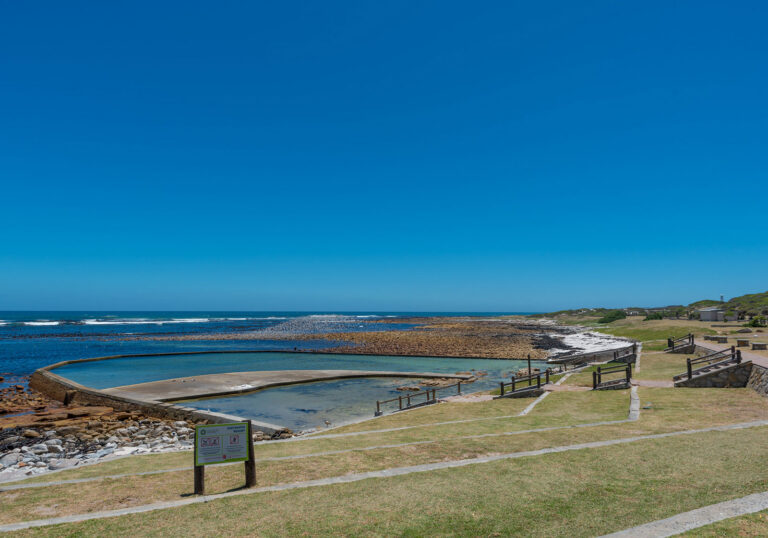
Cape Peninsula
An open coastal tidal pool beside lawns near Kommetjie
Soetwater combines a broad tidal pool with an exposed Atlantic shoreline and grassy recreation space on the Cape Peninsula’s south-west coast.
Explore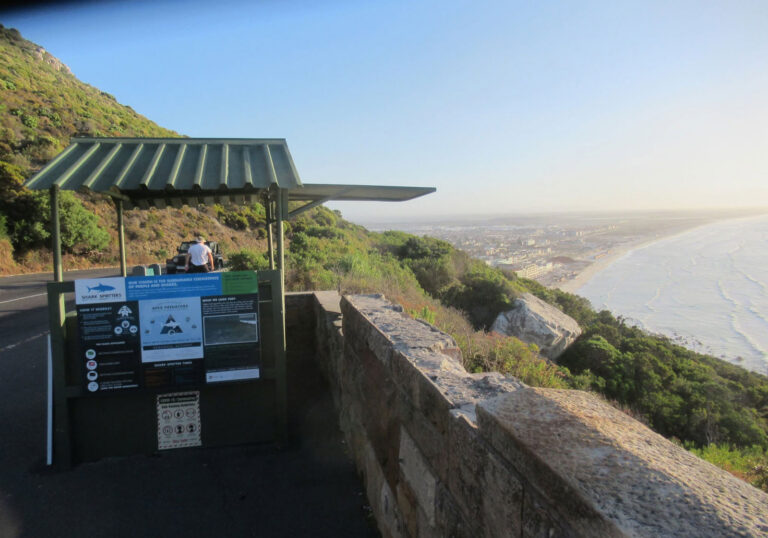
False Bay
The elevated scenic road above Muizenberg, St James and Kalk Bay
Boyes Drive runs along the mountainside above Muizenberg, St James and Kalk Bay, high enough that False Bay becomes something you look across rather than out at. The appeal is perspective rather than drama: the beachfront, Zandvlei, the coastal suburbs and the bay all readable as one landscape, with good odds of spotting whales from above in season. Short, free and easily folded into a False Bay day.
Explore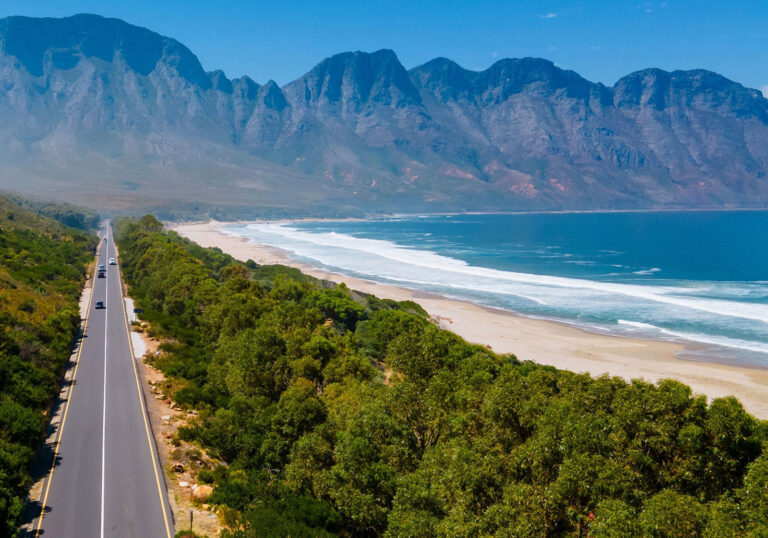
False Bay
The R44 coastal mountain drive from Gordon's Bay to Rooi-Els
Clarence Drive is the R44 as it runs from Gordon's Bay to Rooi-Els along the eastern edge of False Bay, held between mountain slopes and the sea. The appeal is the drive itself: the town falls away within minutes, the coastline turns increasingly wild through Kogel Bay, and the Cape Peninsula recedes across the water behind you. Around half an hour without stopping, on a free public road.
Explore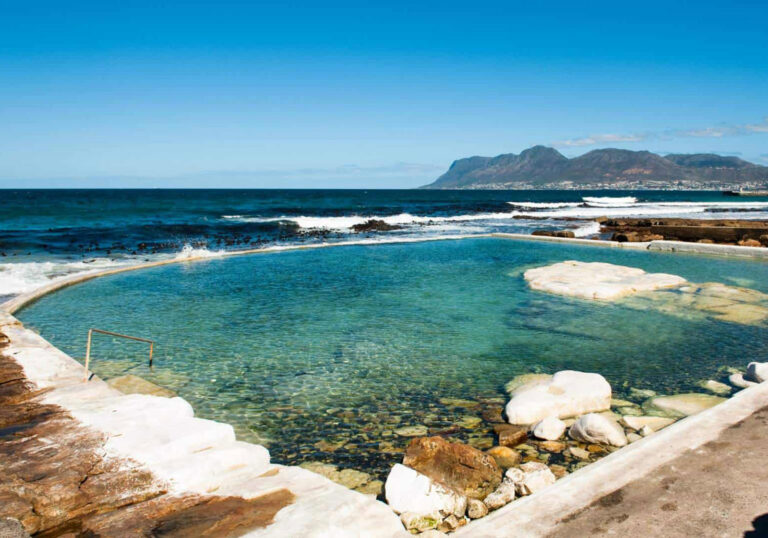
False Bay
A historic False Bay tidal pool between St James and Kalk Bay
Dalebrook Tidal Pool combines a sheltered coastal setting with more than a century of local swimming history, reached through a subway beneath the railway line.
Explore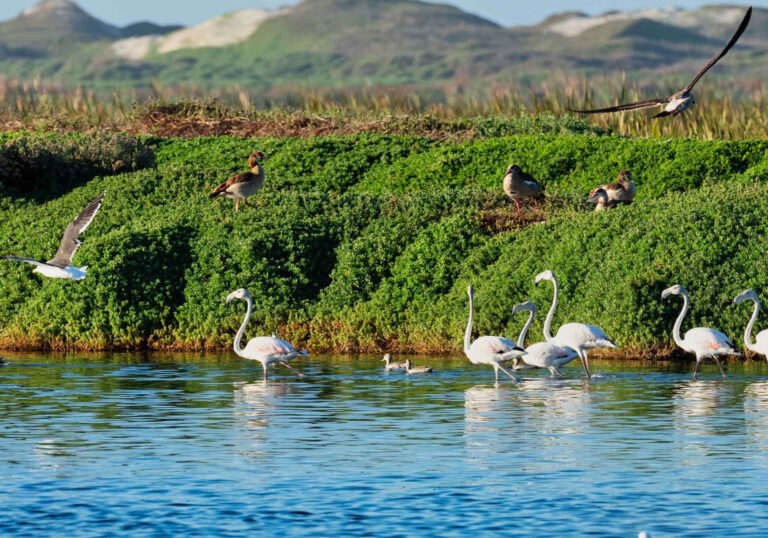
False Bay
A 39 hectare Cape Flats wetland reserve that exists because one botanist gave land in 1955 to save a plant found nowhere else
Edith Stephens Nature Reserve protects 39 hectares of seasonal Cape Flats wetland at Philippi. It began in 1955, when the botanist Edith Stephens donated land specifically to protect Isoetes capensis, a quillwort the City describes as occurring nowhere else in the world, and the City later added surrounding ground to form the reserve. Today it works as a small conservation and environmental education site with a wetland boardwalk, a medicinal garden, picnic areas and rewarding birdlife. Entry is free.
Explore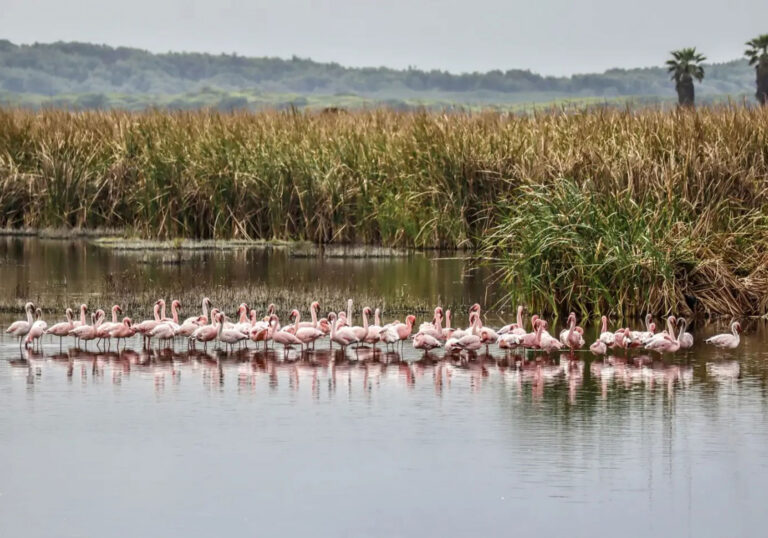
False Bay
Six linked wetland, coastal and conservation sections managed as one reserve on the northern shore of False Bay
False Bay Nature Reserve is not a single site but a system. The City of Cape Town manages six parts as one reserve on the northern shore of False Bay: the Rondevlei, Zeekoevlei, Strandfontein Birding, Pelican Park, Slangetjiebos and Zandwolf Coastal sections, all of which form part of the greater False Bay Ecology Park. Between them they hold permanent and seasonal wetlands, Cape Flats sand fynbos and Cape Flats dune strandveld, and some of the most productive bird habitat in the city. Visitor access is concentrated at Rondevlei, a bird sanctuary since 1952, and at Zeekoevlei, where water sports, camping and self catering accommodation are on offer.
Explore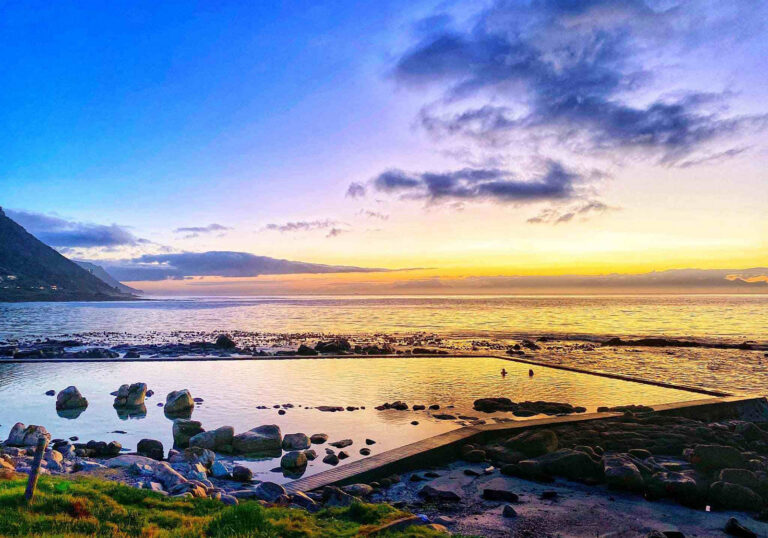
False Bay
A quieter tidal pool beside Glencairn Beach with open False Bay views
Glencairn Tidal Pool offers an ocean-facing swim beside Glencairn Beach, with broad views across False Bay and a quieter coastal setting.
Explore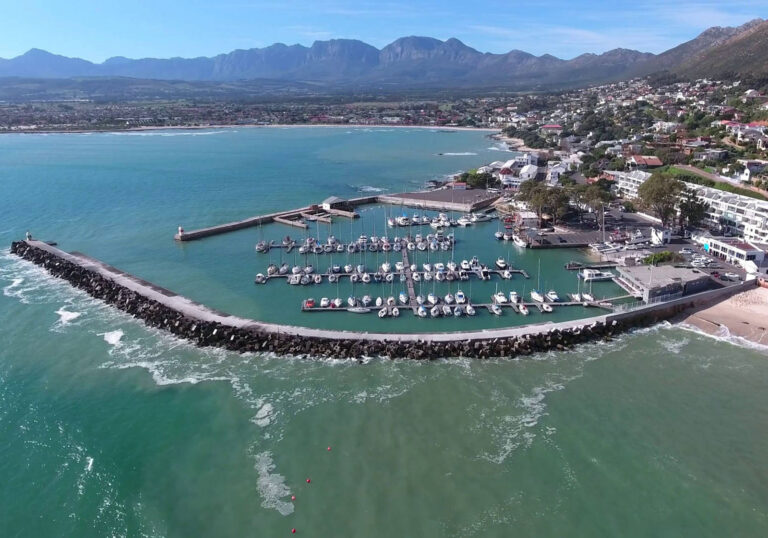
False Bay
A small recreational harbour where False Bay meets the mountains
Gordon's Bay Harbour is a small recreational harbour in the eastern corner of False Bay, sheltered behind a breakwater with the mountains rising steeply behind it. Yachts and small leisure boats sit on their moorings, the bay opens out to the west, and the whole appeal is the combination of boats, sheltered water and mountain backdrop in a single view. It is a short, easy waterfront stop rather than a half-day attraction, and it pairs naturally with Clarence Drive.
Explore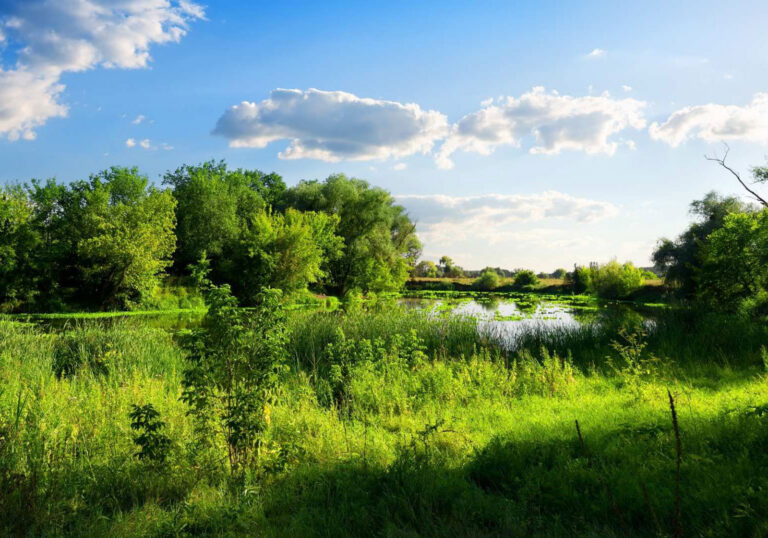
False Bay
Nine hectares between Strand and Gordon’s Bay holding one of the last stands of critically endangered Lourensford alluvium fynbos
Harmony Flats Nature Reserve is the smallest reserve in the City of Cape Town network and one of the most significant. Its nine hectares between Strand and Gordon’s Bay support more than 220 plant species, over 30 of them endangered, and conserve critically endangered Lourensford alluvium fynbos, a vegetation type with less than seven percent of its original extent left in the world. Spring turns the reserve into a display of rare bulbs and orchids, including a plant thought to survive nowhere else. Entry is free and the reserve is open every day.
Explore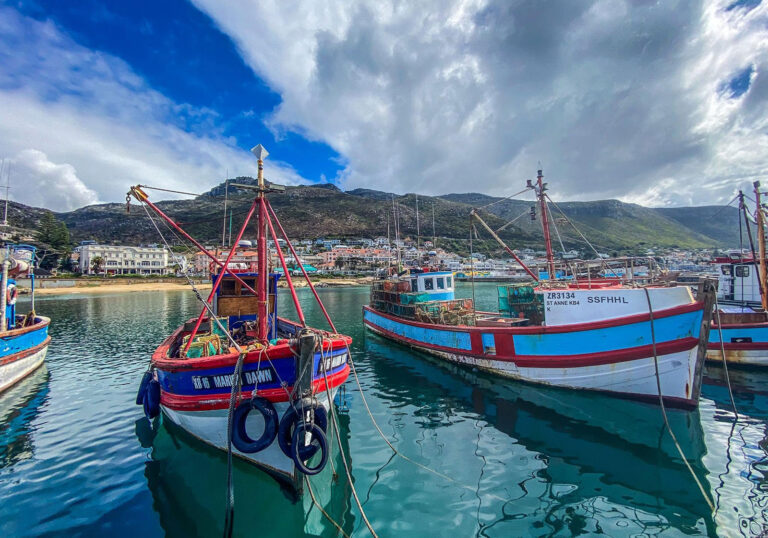
False Bay
A small working fishing harbour set into Kalk Bay village
Kalk Bay Harbour is a compact working fishing harbour built into the middle of Kalk Bay village on the False Bay coast. Painted wooden boats moor a few metres from the quay, fish are sold on the spot when the boats come in, seals drift around the moorings, and restaurants sit almost over the water. Everything is within a two-minute walk, which is exactly what gives it its character. Twenty minutes to half an hour for the harbour itself.
Explore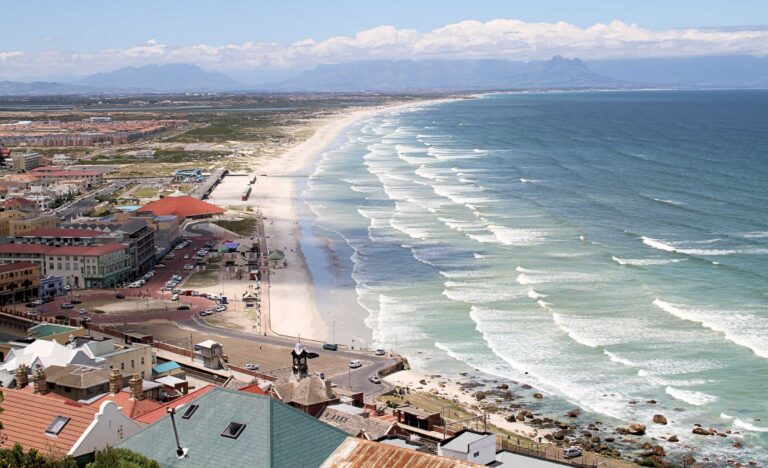
False Bay
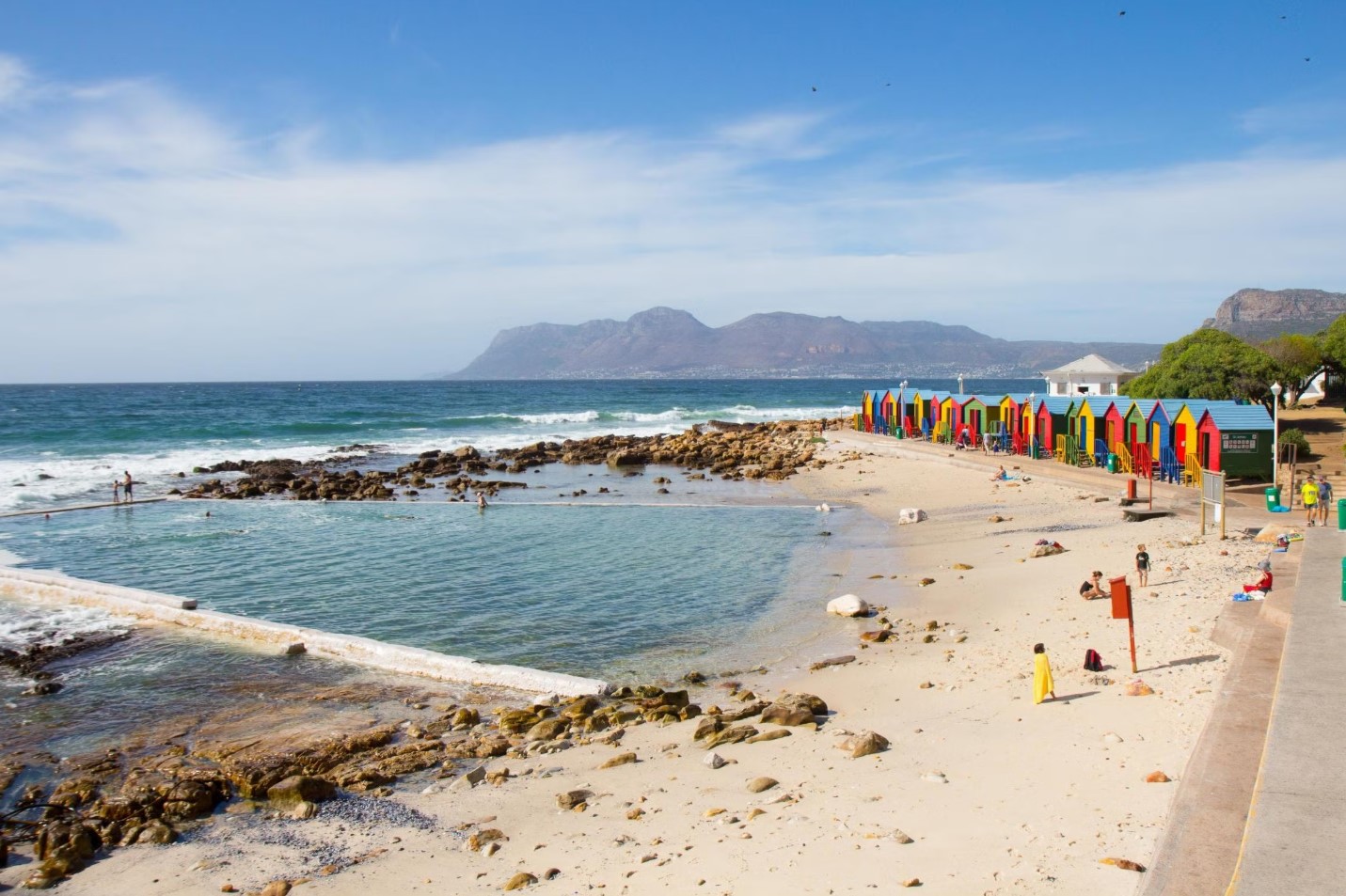
Colourful huts, long sandy stretches and beginner-friendly waves in Cape Town's surf capital.
Muizenberg is Cape Town's most welcoming beach, known for its rainbow beach huts and gentle waves. As the birthplace of local surf culture, it's the go-to spot for first-time surfers, families and long promenade walks.
Explore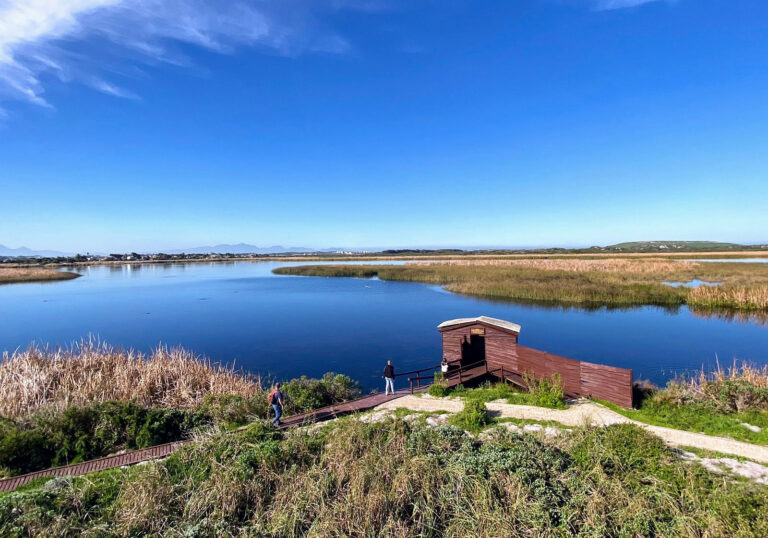
False Bay
A 290-hectare Cape Flats wetland of bird hides, reed beds and resident hippos
Rondevlei Nature Reserve is one of Cape Town’s most important freshwater wetlands and a haven for birdlife within the False Bay Nature Reserve. Covering 290 hectares around Rondevlei vlei, it protects an exceptional variety of wetland habitats and supports a remarkable diversity of waterbirds. Visitors can enjoy peaceful footpaths, well-positioned bird hides and viewing towers, and the chance to experience one of the city’s richest natural ecosystems only a short drive from central Cape Town. Officially managed by the City of Cape Town, the reserve combines conservation, education and quiet outdoor recreation.
Explore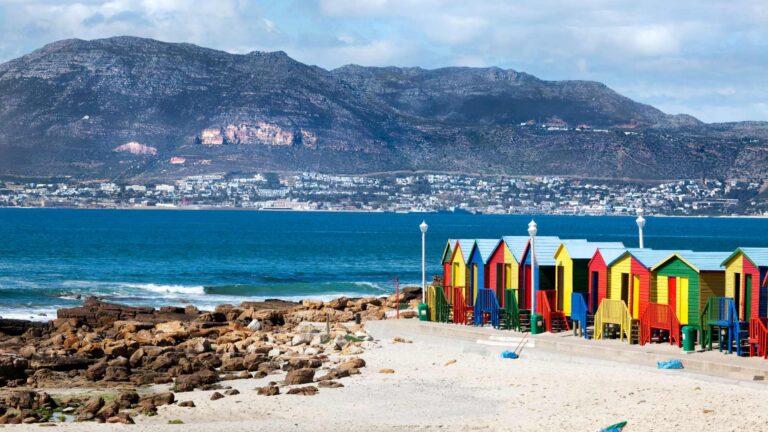
False Bay
A relaxed False Bay seaside village with colourful bathing boxes, a coastal walkway and welcoming cafes.
St James is a small, sheltered False Bay village best known for its row of colourful bathing boxes. A sea wall walkway links it to Muizenberg and Kalk Bay, making it an easy place to wander, photograph the coast and stop for coffee.
Explore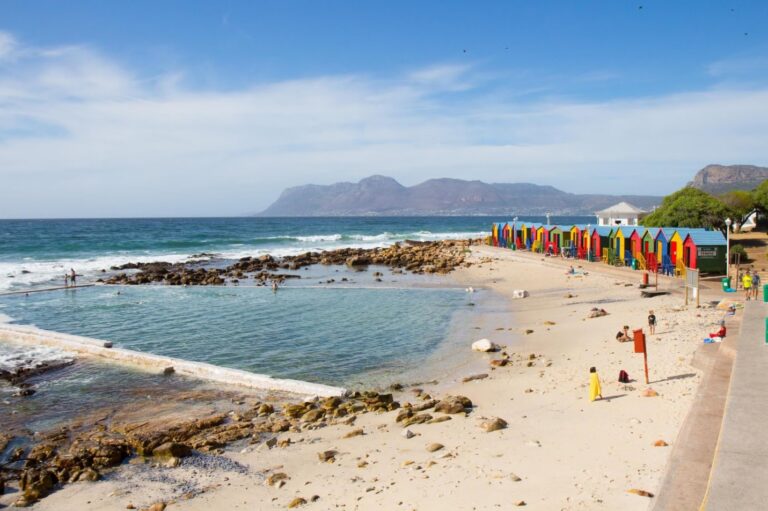
False Bay
A protected tidal pool with calm water, ideal for families, gentle swimming and sunrise photography.
A protected tidal pool on the False Bay coast between Muizenberg and Kalk Bay, holding calm water that suits children and gentle swims. Rocks around the edges shelter small marine life, and beach access alongside makes it easy to spend a morning.
Explore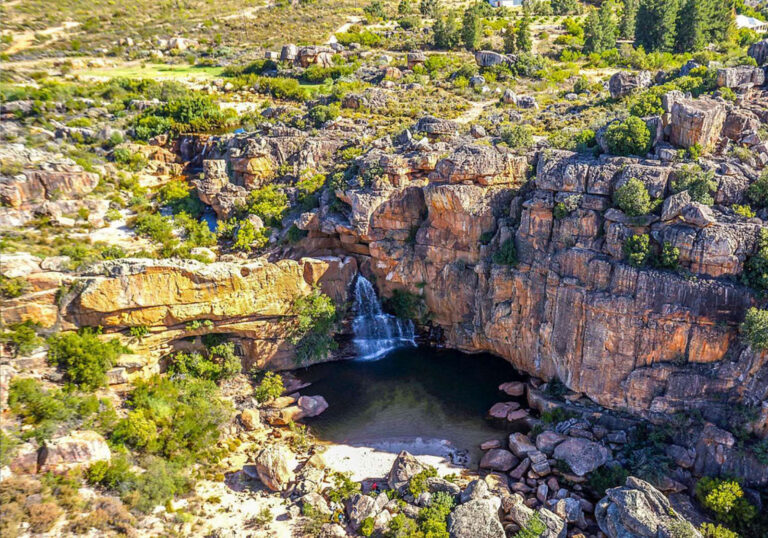
False Bay
8 400 hectares of mountain catchment above Gordon's Bay
Steenbras Nature Reserve protects roughly 8 400 hectares of Hottentots Holland mountain catchment above Gordon's Bay, off the R44. It combines the Steenbras River gorge, the reservoirs that help supply Cape Town's water, and exceptional mountain fynbos within the Kogelberg Biosphere Reserve. Entry is free and there are three hiking trails, but access is managed and the Crystal Pools route needs a permit arranged in advance.
Explore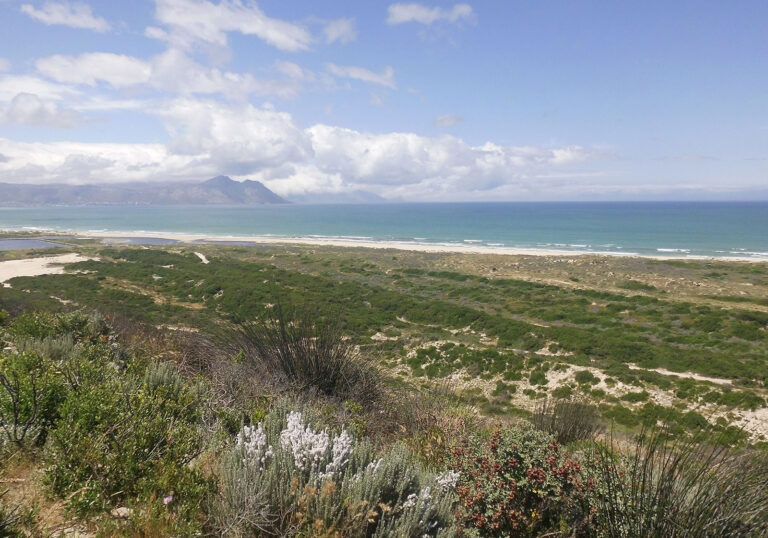
False Bay
262 hectares of limestone cliff, dune and coastal strandveld on the False Bay shore, named for a fossil hyena den 45 000 years old
Wolfgat Nature Reserve protects 262 hectares of limestone cliff, dune and coastal strandveld on the False Bay shoreline at Mitchells Plain, between Mnandi and Monwabisi. It takes its name from the strandwolf, or brown hyena, after a fossil den dating back roughly 45 000 years was found in the cliffs in 1962. Entry is free, the reserve keeps weekday office hours, and the City asks visitors to stay on the paths and to walk in groups.
Explore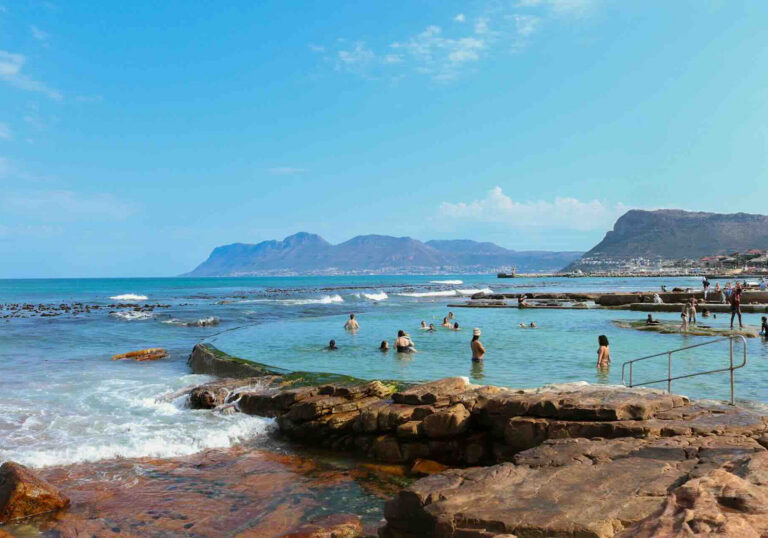
False Bay
A spacious tidal pool set among the rocks with broad views across False Bay
Woolley’s Tidal Pool is a large, ocean-facing rock pool near Kalk Bay, distinguished by its broad False Bay views and rugged coastal setting.
Explore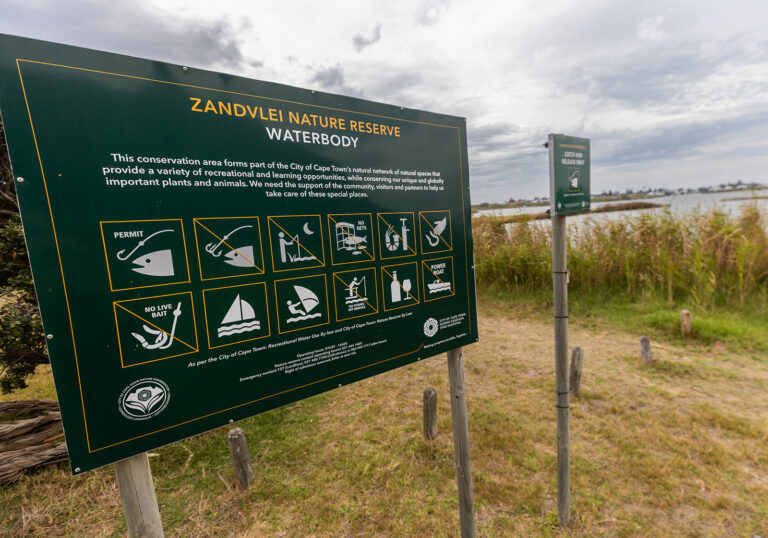
False Bay
Estuary, open water and outdoor life behind Muizenberg
Zandvlei Estuary Nature Reserve protects around 200 hectares of vlei, estuary and wetland behind Muizenberg, where the water flows out into False Bay. It is the reserve where Cape Town's conservation and recreation overlap most openly, with boating, windsurfing and a jetty alongside bird hides, picnic sites and walkways. Entry is free and the reserve is within walking distance of Lakeside and Steenberg stations.
Explore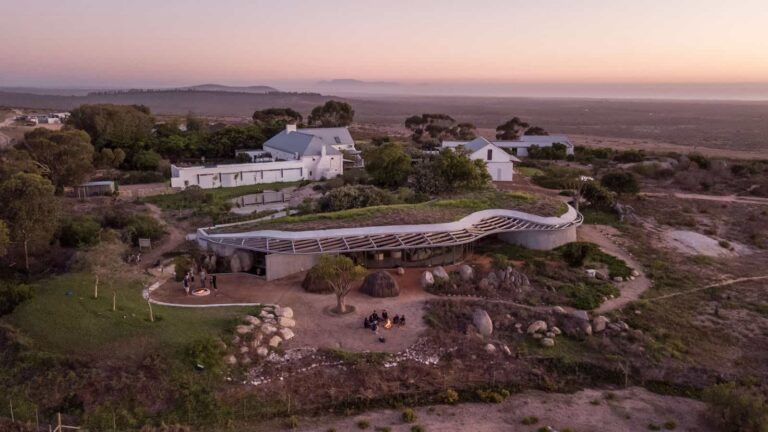
West Coast
Experience one of the world's oldest living cultures through authentic San storytelling, museums and wildlife on the West Coast.
!Khwa ttu San Heritage Centre preserves and shares the heritage of the San people on an 850 hectare nature reserve around 70 km north of Cape Town. Guided by San guides, it offers heritage tours, museum exhibitions, trails and a restaurant.
ExploreWest Coast
A Cape gannet breeding colony off Lamberts Bay, reached on foot along the harbour breakwater.
CapeNature describe Bird Island as one of only six sites in the world where Cape gannets breed, and the only one of those that is easily accessible to the public. You walk to it. A breakwater runs out from the harbour to the island, and at the end of it a lookout hide puts you close enough to watch the birds go through their mating dances. Cape cormorants and kelp gulls nest here too. It is roughly four hours north of Cape Town, which makes it a destination rather than a detour, and the drive runs up the N7 towards Clanwilliam and then west on the R364.
Explore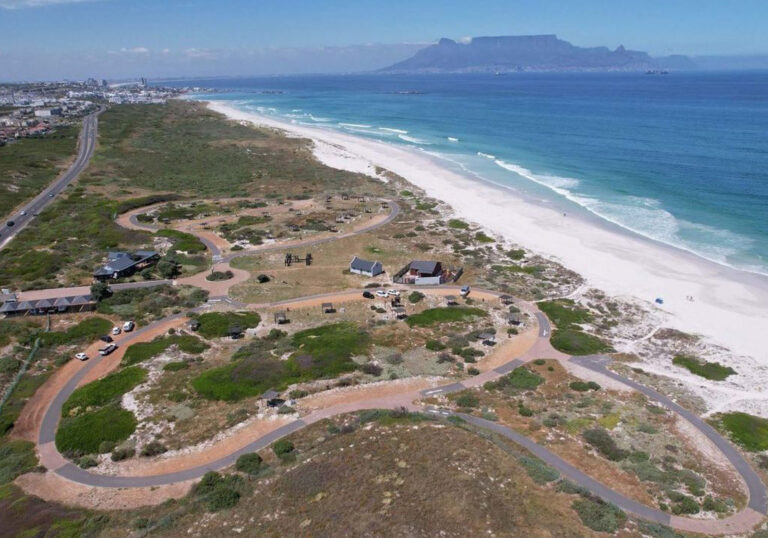
West Coast
1 445 hectares north of Cape Town where coastal fynbos, seven kilometres of shoreline and the Battle of Blaauwberg battlefield meet
Blaauwberg Nature Reserve protects 1 445 hectares roughly 25 kilometres north of central Cape Town, at the point where the city gives way to West Coast flora. It conserves three highly threatened lowland vegetation types in a single reserve, more than 560 plant species and over 140 bird species, along with seven kilometres of rocky and sandy coastline. Blaauwberg Hill at its centre is one of the few viewpoints on earth from which two World Heritage Sites, Table Mountain and Robben Island, can be seen at once, and the ground below it holds shell middens some 15 000 years old and the site of the 1806 Battle of Blaauwberg.
Explore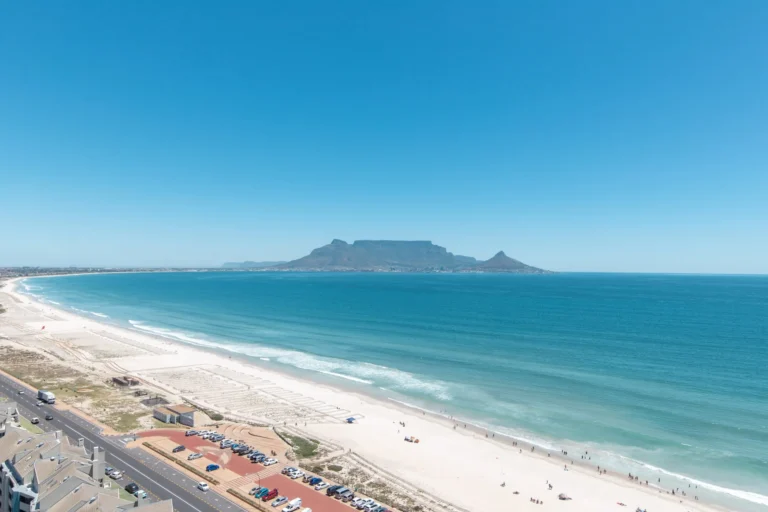
West Coast
Cape Town's iconic Table Mountain view, world-class kiteboarding and unforgettable Atlantic sunsets.
Bloubergstrand Beach is one of Cape Town's most recognisable stretches of coast, known for its panoramic view of Table Mountain across Table Bay. Popular with surfers and kitesurfers, it is also ideal for beach walks, beachfront meals and spectacular sunsets.
Explore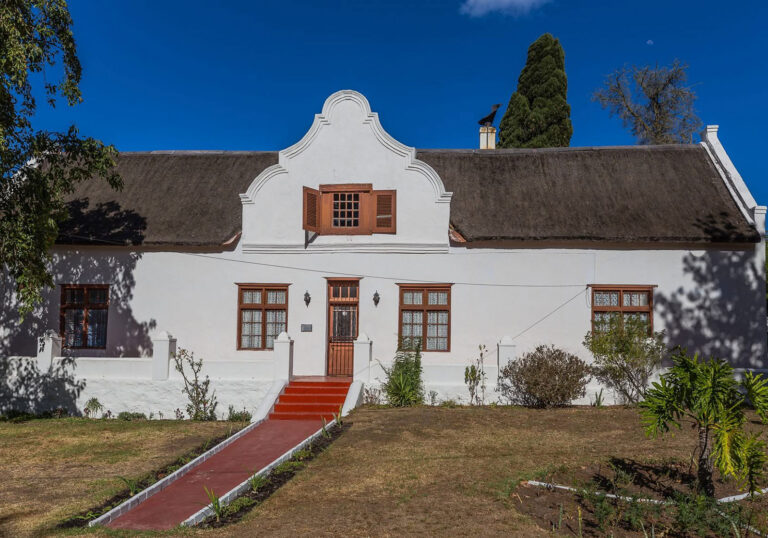
West Coast
A surviving Moravian mission werf, and the community that grew around it
A Moravian mission settlement north of Cape Town where the church, parsonage, barracks, cook house, school and water mill still stand together, on ground occupied long before the mission arrived.
ExploreWest Coast
A seasonal coastal vlei north of Velddrif with three bird hides and 183 species on the list.
Rocherpan is the West Coast reserve built for birdwatching rather than one that happens to have birds. CapeNature record 183 species here, about 70 of them water birds, and there are three hides, two on the south western side of the vlei and one on the north western side. The honest caveat comes from CapeNature themselves: the birding depends on how much water is in the pans, and it is not guaranteed. The pan fills in winter and dries through the summer. The reserve sits 25 kilometres north of Velddrif on the coastal road, and the eight self-catering cabins are named after the birds you come to see.
ExploreWest Coast
A working seabird hospital in Table View that runs guided tours through the wards, every hour of the day.
SANCCOB rescues, rehabilitates and releases seabirds that arrive ill, injured, abandoned or oiled, and African Penguins make up much of the intake. What makes it a visitor proposition rather than a charity you read about is that the doors are open. Tours run on the hour from nine in the morning to three in the afternoon, seven days a week, and a guide takes you behind the scenes through the facility for three quarters of an hour or so. Booking ahead is preferred, though walk-ins are taken if you are willing to wait for the next group. There is no handling and nothing is performed. You are watching a hospital work.
Explore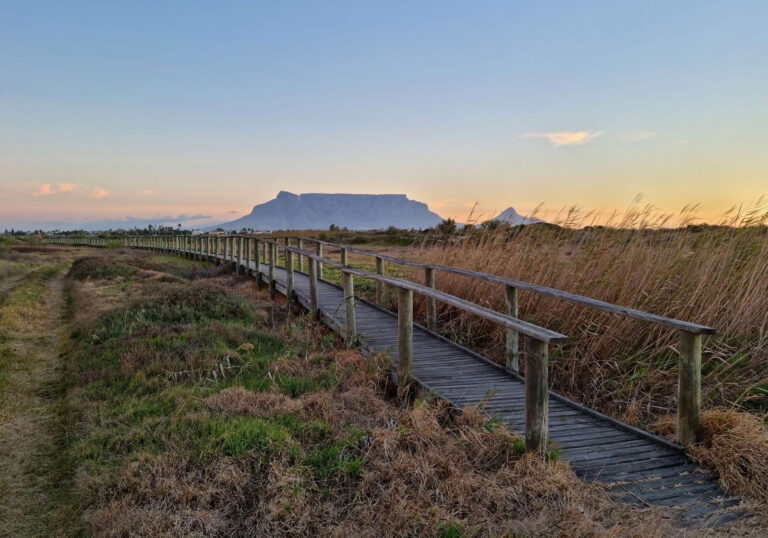
West Coast
880 hectares of wetland, river and lowland fynbos on Cape Town's northern edge
Table Bay Nature Reserve is a conservation system rather than a single site, covering 880 hectares across seven parts from the Rietvlei Wetlands and the Diep River to Milnerton Lagoon, Milnerton Beach and the Parklands Fynbos Corridor. For visitors the way in is Rietvlei, off Grey Avenue in Table View, where walkways, picnic areas, exceptional birdwatching and dedicated water sports hours make the wider system easy to experience.
ExploreWest Coast
The park wrapped around Langebaan Lagoon, where migrant waders arrive in their thousands and one hide looks straight onto the mudflats.
SANParks counts 281 bird species inside the park, and the lagoon it surrounds is a Ramsar wetland of global significance for wetland birds. Most of the waders are Palearctic migrants, which makes the birding calendar here unusually specific. September is when they arrive worn out from the flight south, and March is when they gather to feed heavily before going back. The Geelbek hide is where to stand, and the trick is to arrive from low tide and let the incoming water push the birds towards you. Out at the mouth of the lagoon the coastal islands are breeding grounds for Cape Gannets, African Penguins and both Kelp and Hartlaub Gulls. The park sits just inland from Saldanha Bay, about an hour and a half from the middle of Cape Town.
Explore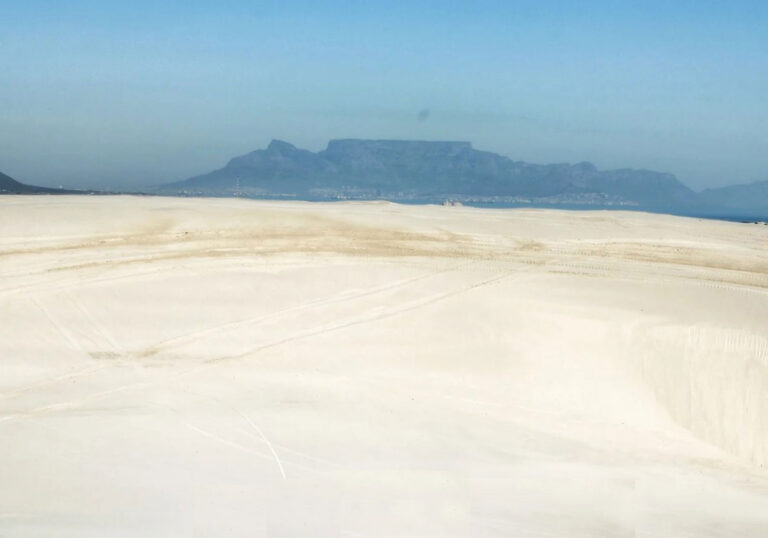
West Coast
Roughly 3 000 hectares on Cape Town's northern edge where a white dune field, endangered sand fynbos and the aquifer that supplies three towns share the same ground
Witzands Aquifer Nature Reserve protects roughly 3 000 hectares near Atlantis, above an underground aquifer that supplies Atlantis, Mamre and Pella with drinking water. On the surface lie 500 hectares of the white Atlantis Dunes, endangered Atlantis Sand Fynbos and Cape Flats Dune Strandveld, and wildlife including caracal, steenbok and Cape dune mole rat. Walking in is free, while sandboarding, quad biking and off-road driving are permitted under City codes of conduct.
Explore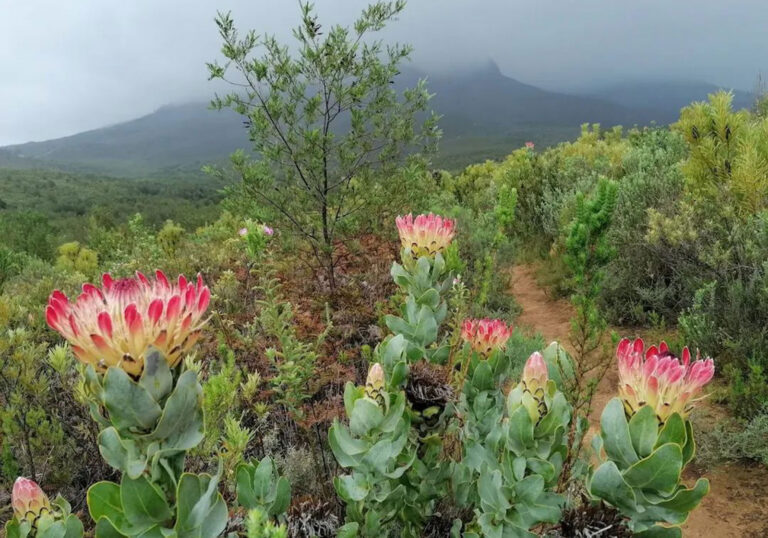
Northern Suburbs
Ten hectares of indigenous fynbos surrounded by suburb
Bothasig Fynbos Nature Reserve protects ten hectares of indigenous lowland fynbos on the border of Visserhof, Bosmansdam and Potsdam roads in Bothasig. It is a neighbourhood conservation area rather than a destination, with short paths for walking, birdwatching and plant identification, looked after by local residents and the Bothasig Rovers. Worth a stop if you are interested in Cape flora, honestly not a headline attraction.
Explore
Northern Suburbs
3.6 hectares of surviving lowland habitat in Durbanville
Botterblom Nature Reserve protects 3.6 hectares of indigenous lowland habitat on Botterblom Road in Vierlanden, Durbanville. It is the smallest reserve in the City's northern network and functions as a biodiversity refuge rather than a visitor facility, with marked paths, seasonal flowering and birdlife but no published hours, fee or facilities. Administered from Durbanville Nature Reserve.
Explore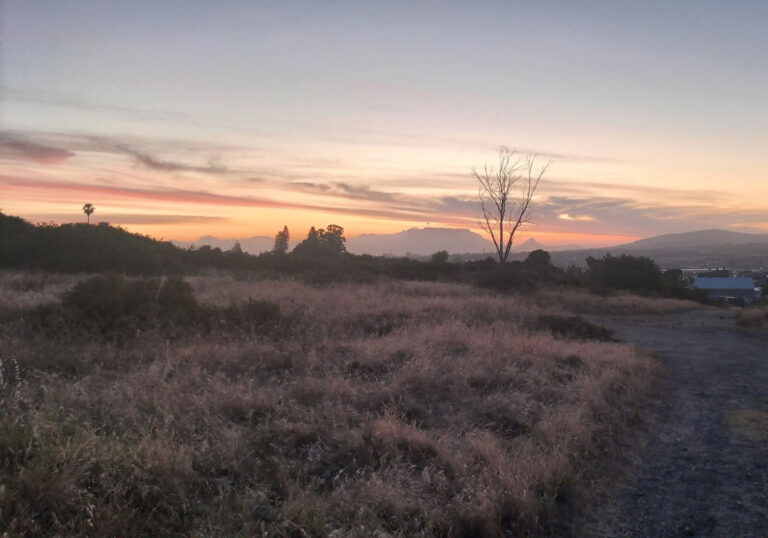
Northern Suburbs
36 hectares of renosterveld on the old Kanonkop hill
Bracken Nature Reserve protects 36 hectares of critically endangered Swartland granite renosterveld and Cape Flats sand fynbos on the hill above Brackenfell. The hill was Kanonkop in the 1700s, a granite quarry in the mid twentieth century and then a landfill, before being recognised as a core botanical site. Free entry, open daily, with good birding, picnic areas and a small satellite reserve at Perdekop.
Explore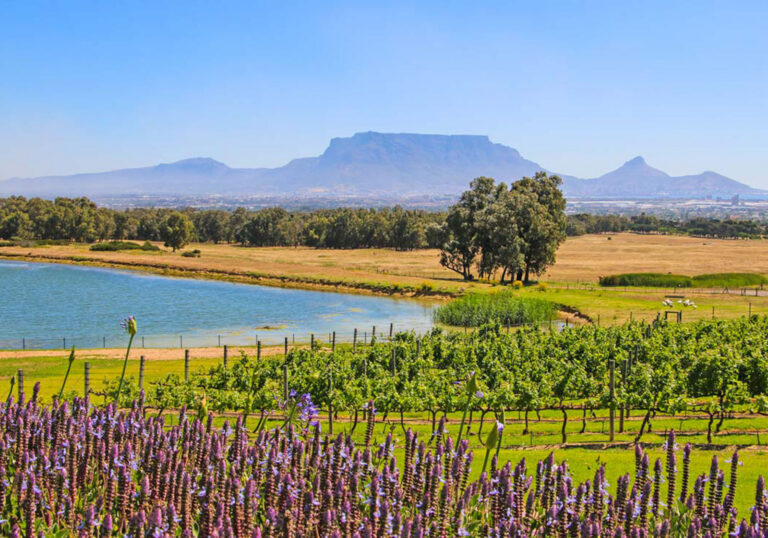
Northern Suburbs
A six-hectare botanical reserve in Cape Town's northern suburbs
Durbanville Nature Reserve protects six hectares on Racecourse Road where critically endangered Swartland Shale Renosterveld meets Cape Flats Sand Fynbos. Around 241 plant species grow here, and the reserve exists because a population of Aristea lugens, once believed extinct, was found on the site. Short trails, wheelchair-friendly pathways and picnic sites make it an easy hour or two rather than a day out.
Explore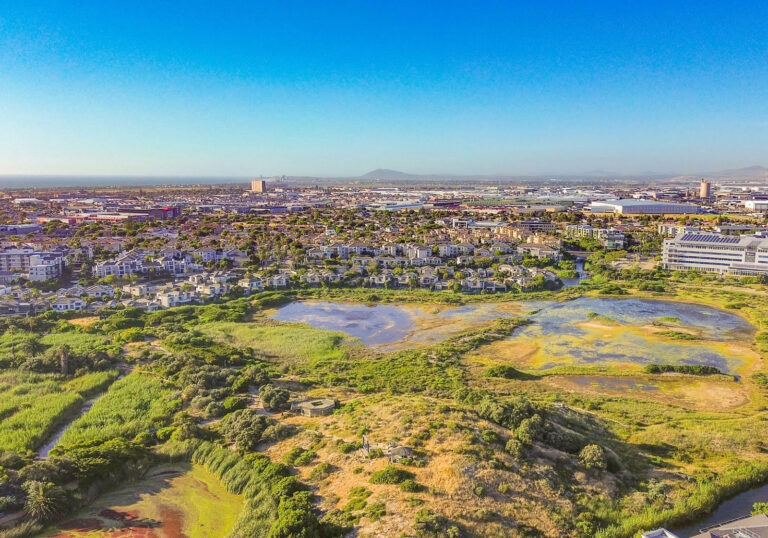
Northern Suburbs
A 16-hectare wetland and bird sanctuary at the heart of Century City
Intaka Island is a 16-hectare wetland nature reserve in the heart of Century City, offering an unexpected escape into one of Cape Town’s most important urban conservation areas. Surrounded by modern offices, apartments and shopping centres, the reserve protects indigenous wetlands that support more than 120 recorded bird species, making it one of the city’s premier birdwatching destinations. Visitors can explore peaceful walking trails, bird hides and educational displays while experiencing a thriving ecosystem just minutes from the city centre. Officially managed as a conservation area, Intaka Island demonstrates how urban development and biodiversity can successfully coexist.
Explore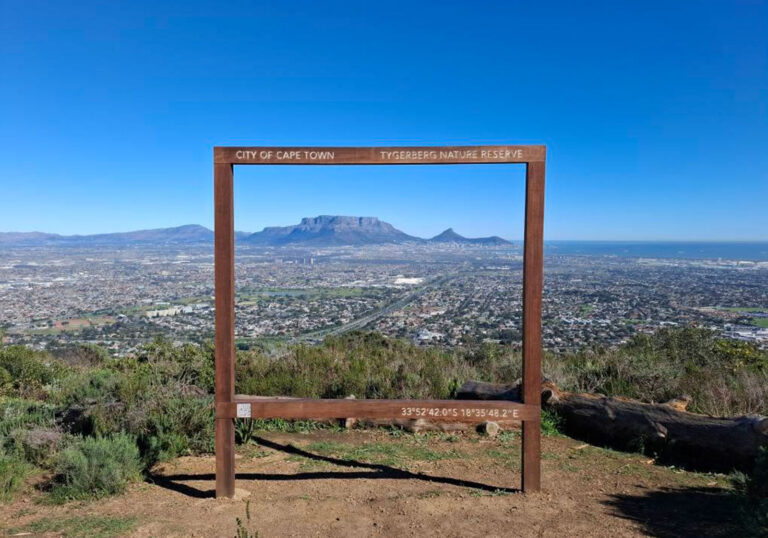
Northern Suburbs
A 388-hectare renosterveld hill reserve in the northern suburbs with a 360 degree view over Cape Town
Tygerberg Nature Reserve protects 388 hectares of hillside in Cape Town’s northern suburbs, where the western slope still carries close to pristine Swartland shale renosterveld. The City of Cape Town records 562 plant species here, 23 of them threatened and three found nowhere else, alongside 24 mammal species, 137 bird species, reptiles, frogs and butterflies. Footpaths climb through the veld to the top of the hill, where the view opens out a full 360 degrees across the city. The Kristo Pienaar Environmental Education Centre at the reserve teaches biodiversity and ecology to school and university groups.
Explore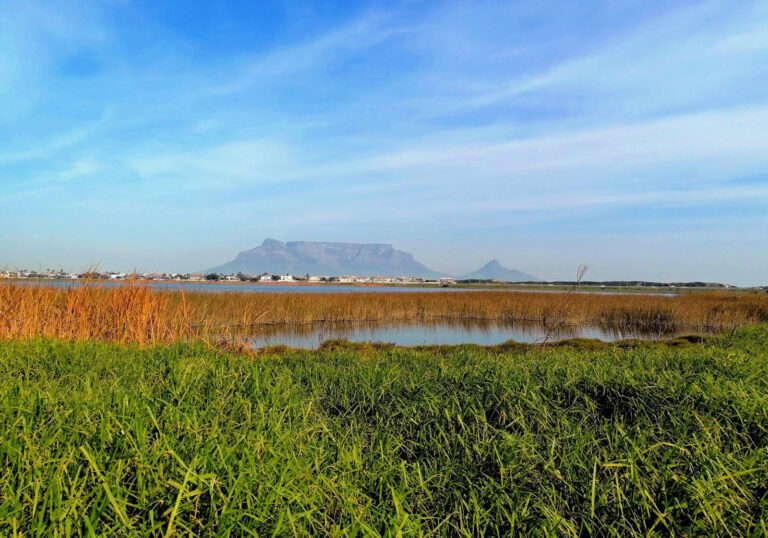
Northern Suburbs
A seasonal wetland on the edge of Durbanville
Uitkamp Wetland Nature Reserve protects 32 hectares of seasonal wetland and threatened lowland vegetation on Mosselbank Road, Durbanville. The wetland fills in winter and dries back in summer, so its character changes markedly through the year. Walking and birdwatching are the activities, entry is free, and there are no visitor facilities.
Explore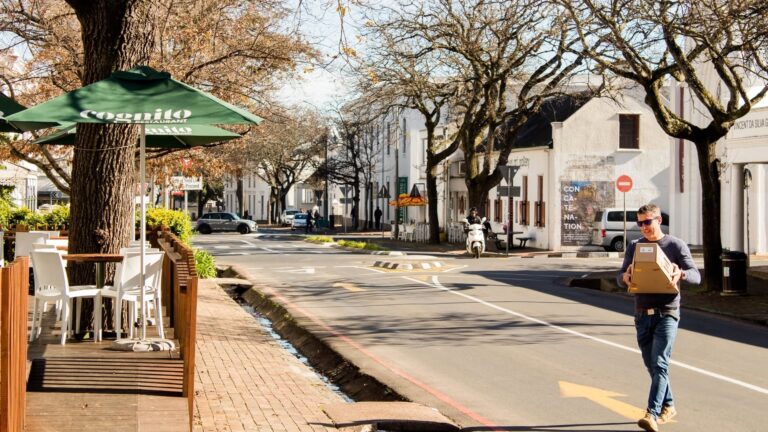
Cape Winelands
The second-oldest road in South Africa, a national monument along its full length
Dorp Street is the second-oldest road in South Africa and its entire length is declared a national monument. Built up from 1710 as the wagon road to the Cape, it holds one of the longest surviving rows of old buildings of any major town in southern Africa, running from Cape Dutch through Georgian to Victorian under mature oaks. Museums, galleries, bookshops, delis and restaurants occupy the ground floors alongside private homes.
ExploreCape Winelands
A big cat sanctuary near Paarl that states plainly it does no breeding, no trade and no visitor contact.
Drakenstein was set up in 1998 to give lions in distress somewhere to live free of abuse and persecution, and it has taken in big cats from captivity ever since. What separates it from most places in the region that use the word sanctuary is that it publishes what it will not do. Their own words: no breeding, trade, or visitor-animal interaction takes place, and genuine lion sanctuaries do not offer petting opportunities. The animals are here for life and the park says so. A visitor walks the enclosures and watches, and nothing more is offered. Feeding happens on Mondays, Wednesdays and Fridays in the late afternoon.
Explore
Cape Winelands
A 402-hectare reserve on the Hottentots Holland slopes above Somerset West, with boardwalks, picnic lawns and mountain footpaths
Helderberg Nature Reserve protects 402 hectares on the lower slopes of the Hottentots Holland Mountains above Somerset West. Proclaimed in 1960 as a wildflower garden and to safeguard the town’s water supply, it holds four vegetation types in one reserve, including critically endangered Swartland shale renosterveld, Kogelberg sandstone fynbos, vulnerable Cape Winelands shale fynbos and pockets of Southern afro temperate forest. Universal access boardwalks and daily serviced picnic sites make the lower reserve easy for families, while an extensive footpath network climbs into the mountain above.
ExploreCape Winelands
Marais Street, Stellenbosch
A municipal fynbos reserve inside Stellenbosch itself, a few minutes from the centre. There is a playground, a flat 1.7km perimeter path that suits small bicycles, a stone labyrinth and a pond, with lawns for picnics and dogs welcome on leads. Nothing is ticketed and it opens during daylight hours, which makes it the easiest hour outdoors in town.
Explore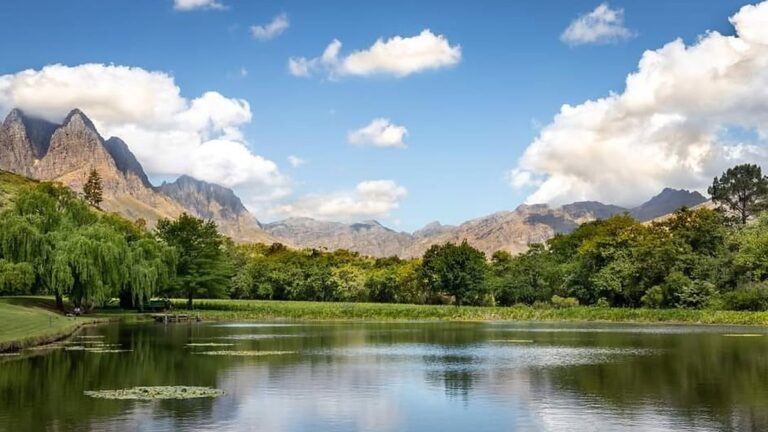
Cape Winelands
A CapeNature reserve nine kilometres from town, with mountain trails and river pools
Jonkershoek Nature Reserve sits about nine kilometres from Stellenbosch at the head of the Jonkershoek Valley, managed by CapeNature. Four marked hiking trails run from 5.3 to 18 kilometres across easy to demanding ground, four rivers rise in the mountains here, and the rock pools and waterfalls along them are the reason many people come. Mountain biking is available on adjoining forestry land for a separate fee. Access is on a first-come basis and the circular road takes only twenty cars at a time.
Explore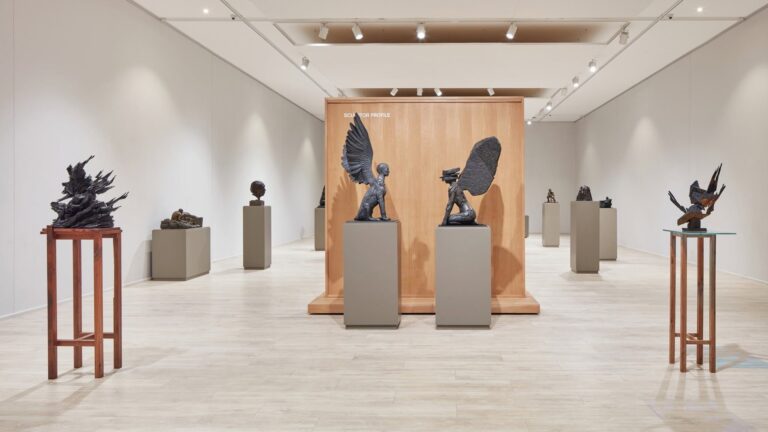
Cape Winelands
Over 350 works of South African and European art, free to enter.
The Rupert Museum on Stellentia Avenue holds more than 350 works from the private collection assembled by Anton and Huberte Rupert from the 1940s onward, now managed by the Rupert Art Foundation. The South African holdings run from around 1940 to the early 2000s and include Irma Stern, Maggie Laubser and Alexis Preller, shown alongside European sculpture by Auguste Rodin and Kaethe Kollwitz and a group of French tapestries. The building was commissioned in 2003 and opened in February 2005. Entry is free.
Explore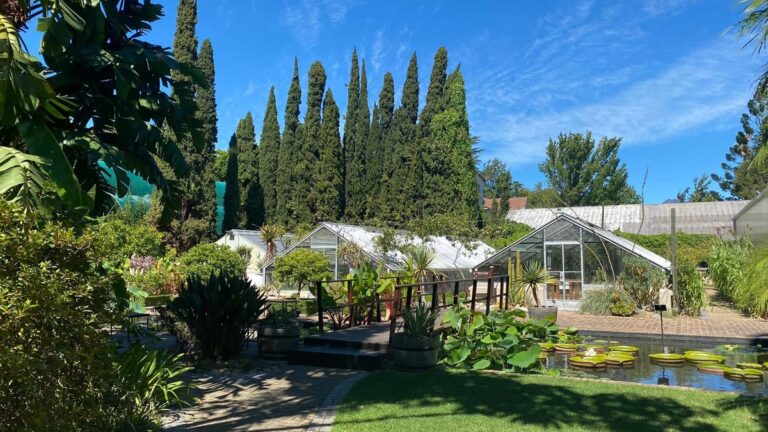
Cape Winelands
The oldest university botanical garden in South Africa, open daily in the town centre
The Stellenbosch University Botanical Garden is the oldest university botanical garden in South Africa, on a site the university has used since 1922. It is small and walkable, laid out around South African biomes, medicinal plants and research collections, with four glasshouses holding species that will not grow in the local climate and three of them open to visitors. A cafe and a shop sit inside the garden, and it opens every day of the year bar a couple of public holidays.
ExploreCape Winelands
More than 6,000 pieces of traditional African art on Ryneveld Street, free to enter
The Stellenbosch University Museum stands at 52 Ryneveld Street, a few doors up from the Village Museum, and holds one of the largest collections of traditional African art in South Africa: more than six thousand masks, sculptures and textiles from across the continent, shown alongside the university’s wider art, cultural and scientific holdings. It ran for years as the Sasol Art Museum and still carries a changing programme of temporary exhibitions by South African and international artists through the year. Admission is free. It opens on weekdays only.
Explore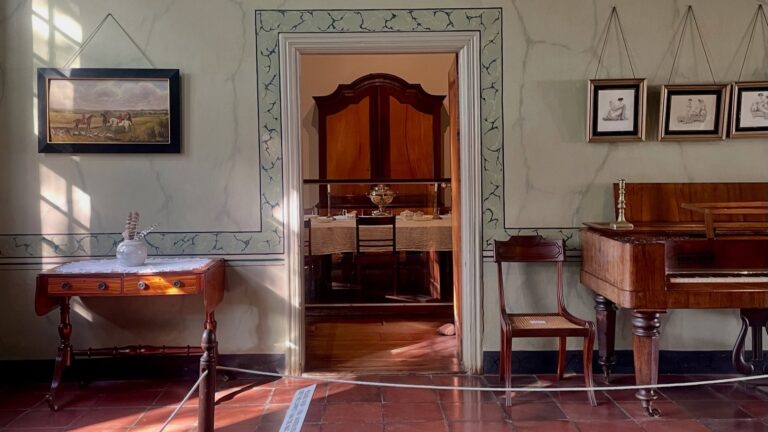
Cape Winelands
Four restored town houses spanning 1709 to 1850, shown by guides in period dress
The Stellenbosch Village Museum is a block of four restored town houses in the old centre, furnished to four different periods between 1709 and 1850 and linked by their gardens. Guides in period dress work the rooms. It is run by Stellenbosch Museum, which also operates the Toy Museum and the VOC Kruithuis nearby, and it is open six days a week plus Sunday afternoons.
ExploreCape Winelands
An open-air wildlife education centre near Muldersvlei, built around four giraffe and a programme of animal encounters.
The park opened in April 2007 as an educational portal for local schools and for visitors who would never see these animals in the wild, and education is still what it says it is for. Fifteen hectares of open ground carry four giraffe, led by Gerry, who was hand reared, alongside zebra, eland, springbok, blue crane, caracal, porcupine, meerkat, a crocodile, owls, tortoises and a farmyard. The animals are described as ambassadors rather than rescues, and the centre does not call itself a sanctuary. Timing matters here more than at most places. The encounters, the farmyard feeding and the shows all run at weekends, on public holidays and during school holidays, so a midweek visit in term time is a walk around the grounds rather than a programme.
ExploreCape Winelands
More than a thousand Indian Runner ducks crossing the lawns on their way out to work in the vineyards.
The ducks are not a show. They are pest control, and the parade is simply the commute. Twice a day the flock crosses the lawns on its way out to the vineyard blocks, where it eats the snails, insects and weeds that would otherwise be dealt with by spraying. The estate says the parade runs at exactly nine and exactly twelve, which is worth taking literally, because the whole thing is brief and nobody waits. Watching costs nothing and needs no booking. Around it sits one of the oldest working farms in the country, in continuous use since 1696, with a homestead dated 1773, a tasting room, a restaurant and an art walk of fifteen works set around the property. Pets are not allowed anywhere on the estate, for the ducks.
ExploreCape Winelands
The only Dutch East India Company powder magazine still standing in South Africa, finished in 1777 on the Braak
The VOC Kruithuis stands at the lower end of the Braak and is the only Dutch East India Company powder magazine left in South Africa. It was completed on 5 May 1777 by the contractors Phillip Hartog and Lambert Fick, who took the tender for nine thousand guilders while the Company supplied the timber and the paving stones. Stellenbosch never faced the attack it was built for, so the building spent most of its life as the site of the town’s Friday market and later as a home for the fire brigade. It was restored by the municipality in 1936, declared a national monument in 1940, and has been run as a small military museum by the Stellenbosch Museum since 1971.
ExploreCape Winelands
A predator park and a childrens animal farm on a Stellenbosch wine estate, with guided big cat feeding tours twice a day.
Vredenheim runs three separate wildlife products on one farm and it is worth knowing which you are buying. The Roofdierpark is the predator park, walk in without booking, and the reason to time a visit is the guided feeding tour that goes out at eleven and again at three every day. The cats are white lions, brown lions, white tigers, a brown tiger and leopards including a black one. The Dierewerf is the childrens animal farm at the other end of the scale, with alpacas, rabbits, goats, pigs, sheep and a pony in enclosures, a sandpit, jungle gyms and a bike track, and feeding bags sold at the gate. The third option is a guided game drive of about ninety minutes through the plains game, which must be booked and which includes entry to both the others.
Explore