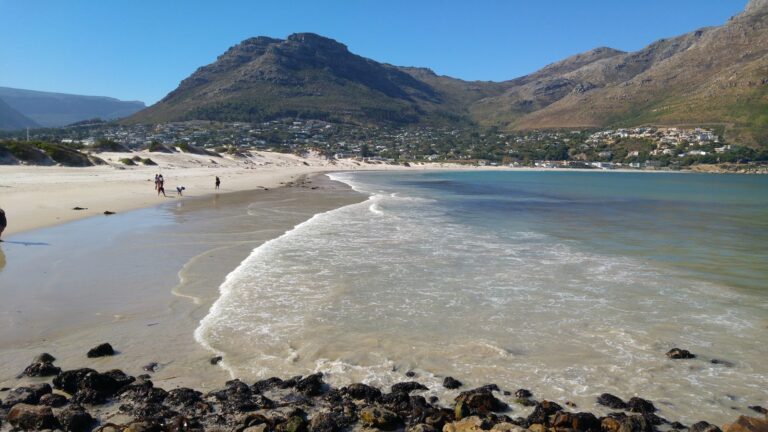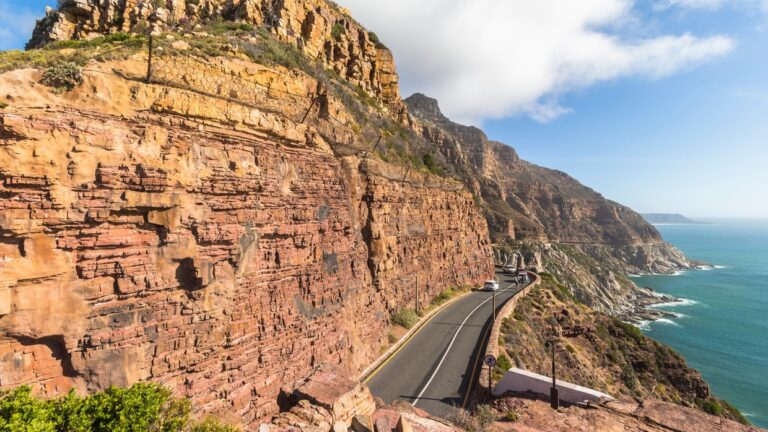
The Twelve Apostles are the chain of peaks and buttresses forming Table Mountain's western wall, rising above the Atlantic Seaboard between Camps Bay and Hout Bay. There is no single viewpoint: the range is seen from a series of public places along the coast, and the view changes as you move south. Late afternoon light is the classic time.
The Twelve Apostles are the chain of rock peaks and buttresses that form the western wall of Table Mountain, rising above the Atlantic Seaboard between Camps Bay and Hout Bay. They are one of Cape Town's defining landscapes, and it is worth being clear about what visiting them means, because there is no single Twelve Apostles viewpoint, no gate and no parking area with a sign on it. You do not travel to one pin on a map. You experience the range from a series of places along the Atlantic coast, and the view changes as you move.
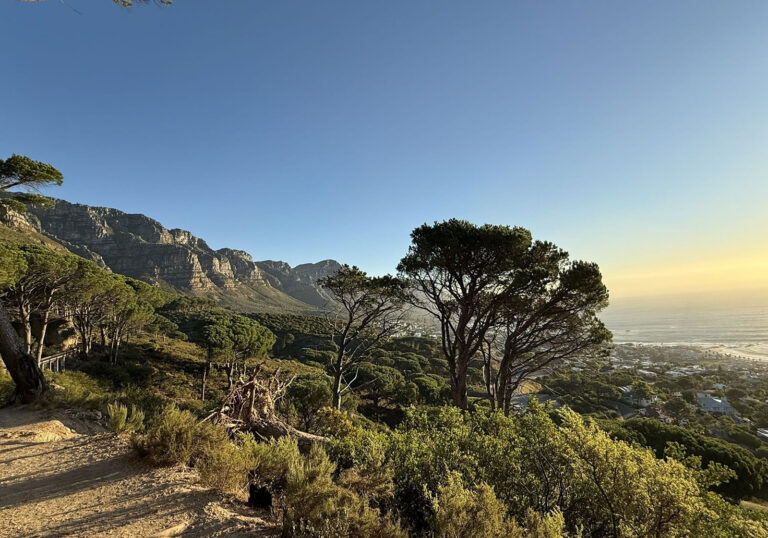
Seen from below, the effect is of a long grey wall standing directly over the sea. Sheer buttresses drop into steep scree and fynbos slopes, which run down almost to the road and then to the water, so mountain and ocean sit in the same field of view with very little in between. That compression is what makes the landscape feel so dramatic compared with mountains that are approached across a plain. There are not literally twelve peaks, and counting them is a waste of a good view. What matters is the rhythm of the buttresses, one after another, holding the light differently depending on where the sun is.
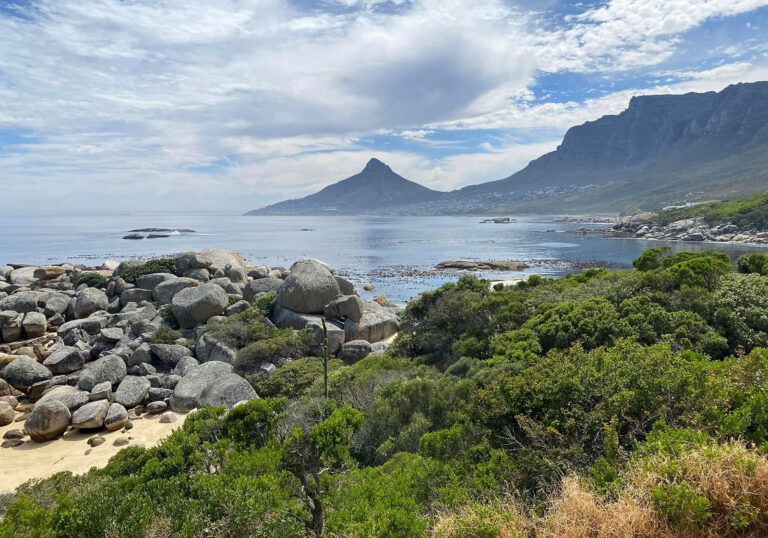
The range rewards movement. From Camps Bay and Bakoven you are close underneath the northern buttresses, and they loom, filling the sky behind the beach and the rooftops. Continue south past Oudekraal and the angle opens out: you begin to look back along the wall rather than straight up at it, and the range reads as a single continuous formation instead of a series of separate faces. Further on towards Llandudno the mountain steps back from the coast and the view becomes wider and more distant. Victoria Road strings these perspectives together and will give you repeated views as you go, but the road is not the attraction here. The mountain is.
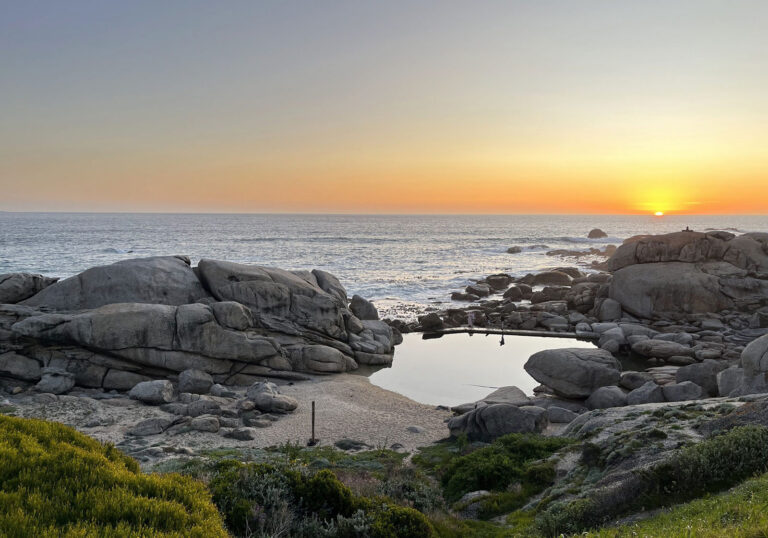
Light and weather do more to this landscape than location does. Late afternoon is the time most people remember, when the sun swings out over the Atlantic and the west-facing rock turns warm and gold before the whole wall falls into silhouette at sunset. Mornings are the opposite, with the faces in shadow and the detail flat, though the air is often clearer. Cloud changes everything: the tablecloth spilling over the top edge, or low mist erasing the peaks entirely and then lifting to reveal them. Photographers should plan around the afternoon and be patient with weather, since a grey hour here can turn spectacular in ten minutes.
Looking at the Twelve Apostles and going onto them are two very different propositions. The slopes above are part of Table Mountain National Park, and the routes that climb into the ravines between the buttresses are serious mountain walks that need proper preparation, not casual detours from the beach. The overwhelming majority of visitors experience this range exactly as it is meant to be experienced from below, which is why it belongs among viewpoints rather than trails. There is nothing to book, nothing to pay and nothing to open or close. You simply need to be somewhere along the Atlantic Seaboard with the mountain in front of you, ideally in the late afternoon.
Highlights
- The chain of peaks and buttresses forming Table Mountain's western wall
- Mountain and Atlantic Ocean compressed into the same view
- A landscape that changes as you move south along the seaboard
- Camps Bay and Bakoven perspectives from directly beneath the peaks
- Golden hour light on the west-facing rock in late afternoon
- No gate, ticket or opening hours, seen from public places along the coast
Tips
Plan for late afternoon, when the light is on the rock. Move rather than settling in one spot, since the range looks quite different from Camps Bay than it does from Oudekraal a few kilometres south. Don't write off a grey day, as mist lifting off the buttresses is often better than clear sky. There is nothing to book or pay, so this fits easily around a beach afternoon or a drive south.
Frequently Asked Questions
Where is the Twelve Apostles viewpoint?
There isn't one. This is a mountain range rather than a single site, so there is no formal viewpoint, entrance or parking area named after it. You see the Twelve Apostles from public places along the Atlantic Seaboard, and the view changes depending on where you stand.
What am I actually looking at?
The western wall of Table Mountain: a sequence of rock buttresses running above the Atlantic between Camps Bay and Hout Bay, with steep fynbos and scree slopes dropping almost to the sea. There are not literally twelve peaks, and counting them is beside the point.
Where are the best places to see them?
Camps Bay and Bakoven put you close underneath the northern buttresses, where they loom above the beach. Further south past Oudekraal the angle opens and you look back along the wall as one continuous formation. Towards Llandudno the mountain steps back and the view widens.
When is the best light?
Late afternoon. The sun swings out over the Atlantic and the west-facing rock turns warm and gold before the whole range falls into silhouette. Mornings leave the faces in shadow, though the air is often clearer. Cloud can transform the view in either direction within minutes.
Can I hike the Twelve Apostles?
The slopes are part of Table Mountain National Park and routes do climb into the ravines between the buttresses, but these are serious mountain walks needing proper preparation rather than casual detours from the beach. Most visitors experience the range from below, which is how this page treats it.