The seat of South Africa's national legislature occupies a precinct of historic buildings at the top of the city centre, beside the Company's Garden, the oldest of them completed in 1884. It is a working government complex rather than a museum, so most visitors experience it as a landmark seen from the surrounding public space.
The Parliament of South Africa occupies a walled precinct of historic buildings at the top of Cape Town's city centre, between Plein Street and the eastern edge of the Company's Garden. It is one of the city's most significant landmarks and also one of its least understood, because most visitors meet it as an imposing red-and-white facade behind security fencing rather than as somewhere they can walk into. The buildings themselves are the attraction here: a Victorian parliamentary chamber, later wings added across a century of expansion, and a modern assembly block, all still in use as the working seat of the country's national legislature.
Visitors are often surprised to find Parliament here rather than in Pretoria. South Africa has three capitals, a compromise reached when the Union of South Africa was formed in 1910 out of four formerly separate territories. None would give up its standing entirely, so the functions were split: the executive went to Pretoria, the judiciary to Bloemfontein, and the legislature stayed in Cape Town, where a parliament already sat and already had a building.
That building is still standing. The oldest structure in the precinct was completed in 1884 for the parliament of the Cape Colony, a substantial Victorian design in brick and plaster with a columned portico and a pedimented entrance. As the institution grew, so did the precinct, absorbing additional wings, offices and courtyards over the following century, and in the 1980s a large new chamber was added for the National Assembly. The result is not a single monument but an accumulation, which is part of what makes it worth looking at. You can read a century of the country's political self-image in the changing architecture.
The precinct matters most for what was decided inside it. For much of the twentieth century this was where the laws of segregation and then apartheid were debated and passed, by a parliament that excluded the majority of South Africans. It is also where that system was formally dismantled. In February 1990, at the opening of Parliament, state president F.W. de Klerk announced the unbanning of the liberation movements and the release of Nelson Mandela. Four years later the first democratically elected Parliament sat in the same chambers, and the Constitution that followed was adopted by that body. Few buildings in the country carry both halves of the story quite so directly.
In January 2022 a fire broke out in the precinct and destroyed the National Assembly chamber, gutting parts of the older buildings alongside it. Parliament continued to function from temporary venues elsewhere in the city while reconstruction and restoration work began. That work has shaped the site ever since, and depending on when you visit you may find scaffolding, hoarding or sections closed off. It is worth knowing before you arrive, because it is a genuine part of the building's current story rather than a detail to be tidied away.
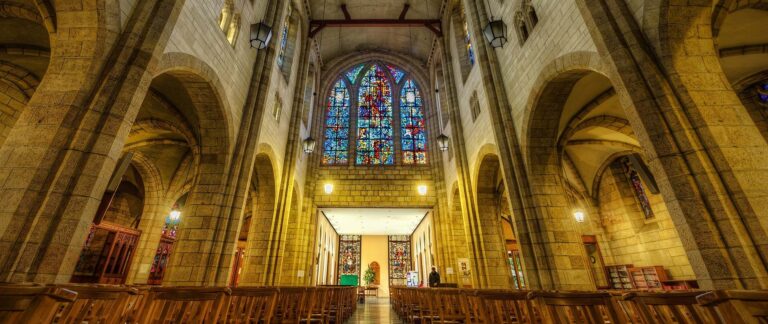
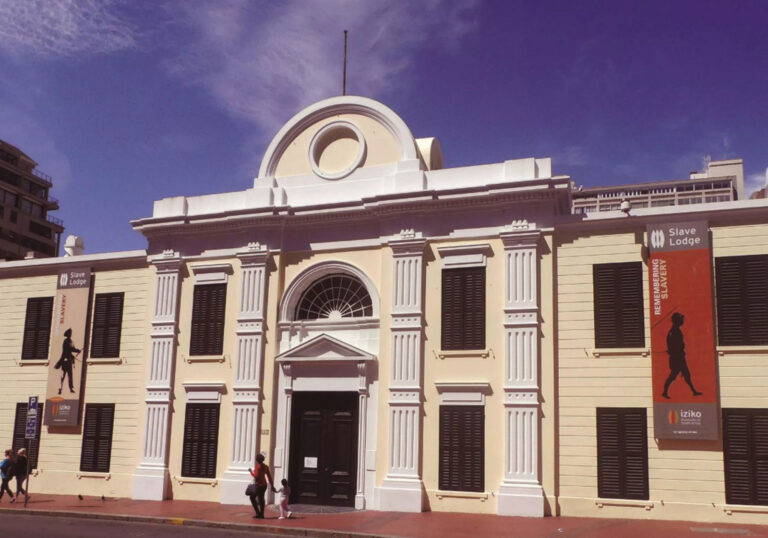
For most visitors the experience is an exterior one, and it works better than that sounds. The precinct sits directly against Government Avenue, the oak-lined pedestrian walk running through the Company's Garden, so the buildings can be seen at close range from a calm public space rather than from a traffic-heavy street. Walking the perimeter takes only a few minutes and puts you within easy reach of St George's Cathedral, the Slave Lodge, the museums and galleries in the Garden, and the wider heritage layer of the upper city.
Going inside is a different matter. Parliament normally runs free guided tours on weekdays, lasting about an hour, but it currently states that tours are suspended until further notice. Separately, it publishes arrangements for members of the public to watch debates from the galleries of the National Assembly and the National Council of Provinces, free of charge and by advance booking, subject to the parliamentary programme. Either way this is a working government and security precinct: identification is required for entry, there is no parking inside the precinct, and arrangements can change at short notice. Confirm directly with Parliament before planning a visit that depends on getting inside.
Highlights
- The 1884 parliament building, the oldest structure in the precinct
- Seat of South Africa’s national legislature and the country’s legislative capital
- Historic facades seen at close range from Government Avenue
- Directly beside the Company’s Garden and the upper city’s heritage cluster
- Where the 1990 announcement unbanning the liberation movements was made
- A century of changing architecture across one working precinct
Tips
Parliament is a working government precinct, so check current public access and tour arrangements directly with Parliament before planning a visit that depends on going inside. Approach from Government Avenue in the Company’s Garden for the closest and calmest view of the buildings. Allow time for the cathedral, museums and galleries within a few minutes’ walk.
Frequently Asked Questions
Why is South Africa’s Parliament in Cape Town and not Pretoria?
South Africa has three capitals, a compromise from the formation of the Union in 1910. Pretoria holds the executive, Bloemfontein the judiciary and Cape Town the legislature. Parliament stayed in Cape Town because a parliament and a parliamentary building already existed here.
Can visitors go inside Parliament?
Partly. Parliament’s guided tours are suspended until further notice, so the usual weekday tour of the buildings is not currently available. Parliament does still publish arrangements for the public to observe debates from the galleries of the National Assembly and the National Council of Provinces, free of charge and by advance booking. Access is controlled either way and identification is required. Confirm current arrangements directly with Parliament before you travel.
How do you attend a debate from the public gallery?
Tickets are free and issued by Parliament’s Public Relations Office. Booking should be made at least 48 hours before a sitting, and tickets are collected on the day. Sittings follow the parliamentary programme rather than a fixed timetable. An identity document or passport is required at the security desk, and cameras, recording equipment and other electronic devices must be checked in at the entrance.
What is there to see if you cannot go inside?
The buildings themselves. The precinct runs along the edge of the Company’s Garden, so the facades can be viewed at close range from a pedestrian avenue rather than a busy road. Walking the perimeter takes only a few minutes, and it sits inside a dense cluster of historic city-centre attractions. There is no parking within the precinct, though there is public parking nearby.
What happened in the Parliament fire?
A fire in January 2022 destroyed the National Assembly chamber and damaged parts of the older buildings alongside it. Parliament continued sitting at temporary venues while reconstruction began. Restoration work has continued since, so scaffolding, hoarding or closed sections may be visible.
What else is worth seeing nearby?
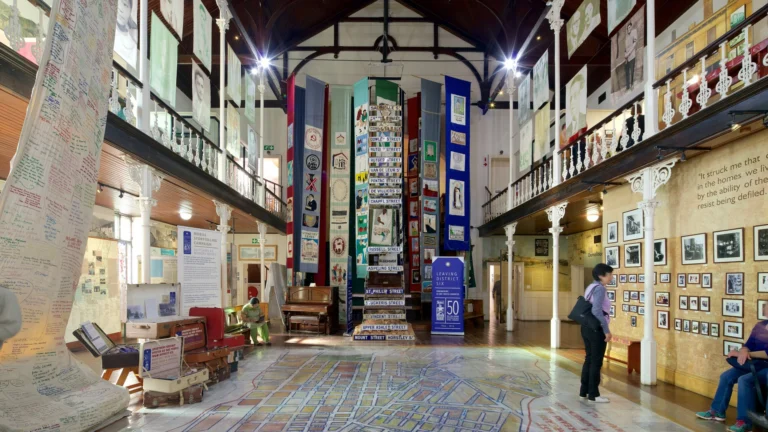
The Company’s Garden runs alongside the precinct, with the Iziko South African Museum and the National Gallery inside it. St George’s Cathedral, the Slave Lodge and the Castle of Good Hope are all within a short walk, and the District Six Museum is a little further along Buitenkant Street.