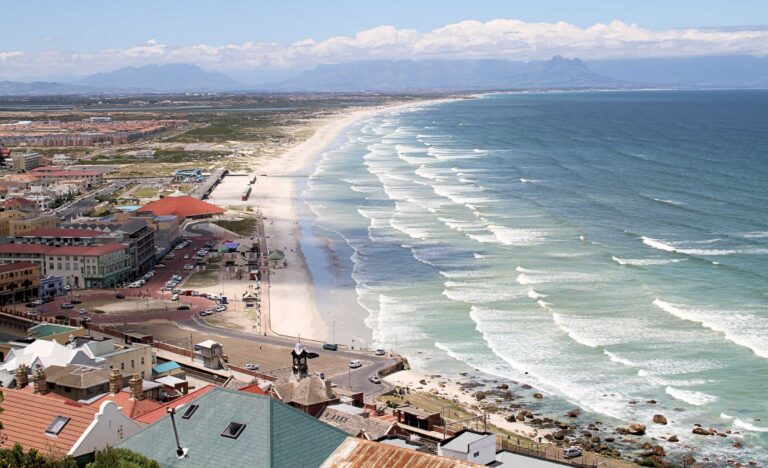
Harmony Flats Nature Reserve is the smallest reserve in the City of Cape Town network and one of the most significant. Its nine hectares between Strand and Gordon’s Bay support more than 220 plant species, over 30 of them endangered, and conserve critically endangered Lourensford alluvium fynbos, a vegetation type with less than seven percent of its original extent left in the world. Spring turns the reserve into a display of rare bulbs and orchids, including a plant thought to survive nowhere else. Entry is free and the reserve is open every day.
Harmony Flats is the smallest reserve in the City of Cape Town network, nine hectares of flat ground wedged between Strand and Gordon’s Bay. It has no summit, no forest and no view worth the name. It is on this site because of what grows in it, and by that measure it is one of the most important pieces of protected land in the metropolitan area.
The vegetation type here is Lourensford alluvium fynbos, and it is critically endangered. Less than seven percent of it is left in the world, and Harmony Flats is one of the last places where it is conserved. Inside those nine hectares the City records more than 220 plant species, over 30 of which are endangered. Among them is Ixia versicolor, a critically endangered bulb thought to have its last viable population on this reserve.
Spring is when that matters most to a visitor. The City describes the reserve coming to life in a kaleidoscope of colour, and the plants to look for are small and easily missed: the delicate spider orchid, Bartholina burmanniana, and the sweet smelling Disa tenella, which locals call the Lekkerruik orchid. Birdlife runs to grassland species such as the orange throated longclaw, the cloud cisticola and the zitting cisticola, and because parts of the reserve become a seasonal wetland it is not unusual for wader species to rest here in winter. The spiny agama, believed extinct in Cape Town for more than 40 years, was sighted at Harmony Flats again in 2010. Cape cobra and mole snake hunt the striped field mouse, pygmy mouse and Cape mole rat that share the ground with them.
The reserve was first proclaimed in 1986 to provide a home for the critically endangered geometric tortoise. Urban development, poaching, fires that came too often and a lack of management degraded the veld badly, and the tortoises are no longer found here. The City now keeps permanent biodiversity staff on the site, restoration of the damaged veld is the priority, and the hope is that the tortoises will one day return. Visitors are asked to keep to the designated paths, to leave every plant and animal where it is, and to join the volunteer work if they want to be part of the recovery.
Highlights
- Critically endangered Lourensford alluvium fynbos, with under seven percent left worldwide
- More than 220 plant species in just nine hectares, over 30 of them endangered
- Thought to hold the last viable population of the critically endangered Ixia versicolor
- Spring flowers including the spider orchid and the sweet smelling Disa tenella
- Grassland birds such as the orange throated longclaw and the cloud cisticola
- Free daily entry and an active volunteer conservation programme
Tips
Spring is the reason to come, so time a visit for the flowering season. Keep to the designated paths, both to protect the rare plants and because Cape cobra and mole snake are present on the reserve. Do not pick or remove plants, and do not disturb nesting birds. The City runs volunteer activities for visitors who want to help with the restoration work.
Frequently Asked Questions
Why is Harmony Flats Nature Reserve important?
It conserves critically endangered Lourensford alluvium fynbos, a vegetation type with less than seven percent of its original extent remaining in the world, and Harmony Flats is one of the last places where it is protected. Within nine hectares the reserve supports more than 220 plant species, over 30 of them endangered, including the critically endangered Ixia versicolor, which is thought to have its last viable population here.
When is the best time to visit for flowers?
Spring. The City describes spring as a very special time at Harmony Flats, when the plants come to life with colour. Look for the spider orchid, Bartholina burmanniana, and the sweet smelling Disa tenella, known locally as the Lekkerruik orchid.
Are there walking trails in the reserve?
The reserve has paths and walkways rather than a hiking trail network, which suits its nine hectare size. Walking, running and jogging are listed activities, and visitors are asked to keep to the designated paths so that the rare plants are not trampled.
Is the reserve suitable for children?
Yes, and the City runs educational programmes here. The reserve is small and served by marked paths, which makes it manageable for young visitors. Keep children on the paths and supervised, as Cape cobra and mole snake are present on the reserve.
What does it cost and when is it open?
Entry is free and the reserve is open daily from 07:30 to 16:00. General enquiries go to 021 444 6930 or harmonyflats.naturereserve@capetown.gov.za.