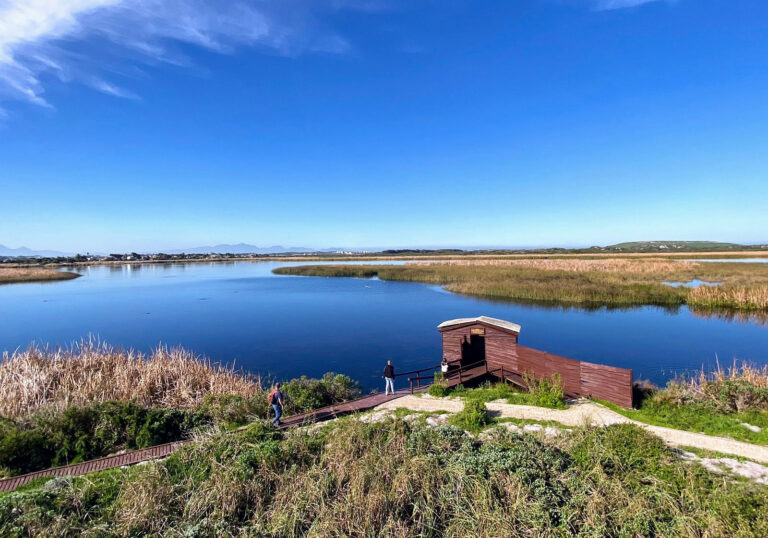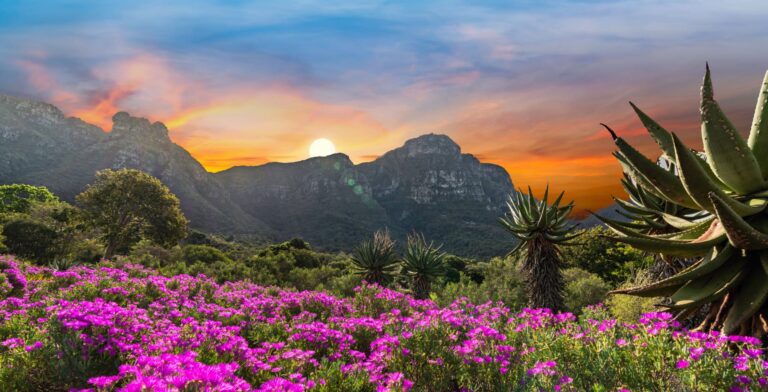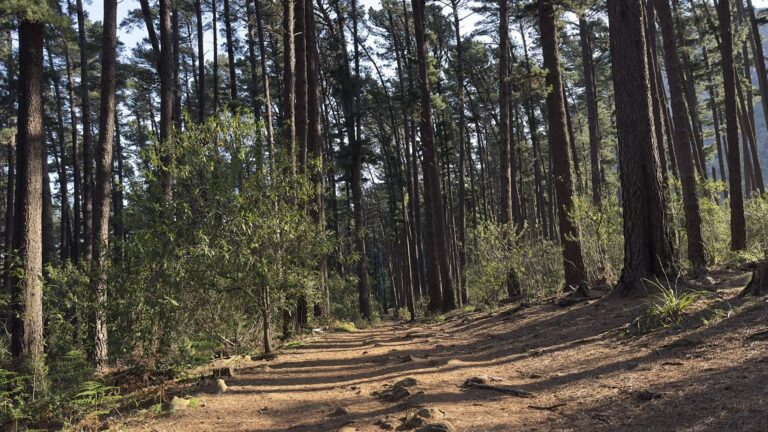
Helderberg Nature Reserve protects 402 hectares on the lower slopes of the Hottentots Holland Mountains above Somerset West. Proclaimed in 1960 as a wildflower garden and to safeguard the town’s water supply, it holds four vegetation types in one reserve, including critically endangered Swartland shale renosterveld, Kogelberg sandstone fynbos, vulnerable Cape Winelands shale fynbos and pockets of Southern afro temperate forest. Universal access boardwalks and daily serviced picnic sites make the lower reserve easy for families, while an extensive footpath network climbs into the mountain above.
Somerset West sits at the foot of the Hottentots Holland Mountains, and Helderberg Nature Reserve is the town’s doorway into them. Where Tygerberg protects an isolated hill of open renosterveld and Newlands Forest offers shaded recreation on the city side of the mountain, Helderberg combines manicured lower gardens and picnic lawns with a footpath network that climbs steeply into wild mountain fynbos.
The reserve was proclaimed on 23 September 1960, first as a wildflower garden and as protection for the water supply of Somerset West. It now covers 402 hectares rising from the edge of the suburb onto the mountain slopes above it.
Four vegetation types meet inside its boundaries. Critically endangered Swartland shale renosterveld survives on the lower ground, Kogelberg sandstone fynbos covers the higher slopes, vulnerable Cape Winelands shale fynbos fills the middle ground, and pockets of Southern afro temperate forest shelter in the kloofs. That mix in a single reserve is unusual, and it is what gives Helderberg its range, from open flowering veld to closed forest canopy within one walk.
The lower reserve is built for easy visiting. Boardwalks designed for universal access run through it, picnic sites are serviced daily and backed by large ablution facilities, and an information centre run by the Friends of Helderberg sits near the entrance. Beyond that the paths turn upward and the walking becomes serious mountain hiking. The reserve runs a no bin policy, so everything brought in must be carried out again, and dogs are not permitted anywhere in the reserve apart from certified service dogs.
Highlights
- 402 hectares on the lower slopes of the Hottentots Holland Mountains
- Universal access boardwalks through the lower reserve
- Four vegetation types, including pockets of Southern afro temperate forest
- Picnic sites serviced daily, with large ablution facilities
- An extensive footpath network climbing into the upper reserve
- Proclaimed in 1960, first as a wildflower garden for Somerset West
Tips
The reserve runs a no bin policy, so carry out everything you bring in. Dogs are not permitted, with the exception of certified service dogs. Gate payment is cashless, so bring a card. The lower boardwalks are gentle, but the upper paths climb steeply and need proper shoes, water and an early start.
Frequently Asked Questions
What makes Helderberg Nature Reserve special?
It protects 402 hectares on the slopes of the Hottentots Holland Mountains above Somerset West, holding four vegetation types in one reserve: critically endangered Swartland shale renosterveld, Kogelberg sandstone fynbos, vulnerable Cape Winelands shale fynbos and pockets of Southern afro temperate forest. The lower reserve is gentle and family friendly, while the upper paths climb into open mountain country.
When is Helderberg Nature Reserve open?
The reserve opens at 07:30 every day. Closing is at 20:00 from December to February, 19:00 in March, 17:30 from April to October and 19:00 in November.
How much does it cost to enter?
On the City of Cape Town 2026/27 tariffs, daily entry is R30 for adults from 18 years and R20 for children aged 3 to 17, pensioners from 60 and students with a valid card. Children under 3 and members of the Friends of Helderberg enter free. Vehicles are charged R20 and organised learner groups R7 per learner. The gates are cashless.
Are dogs allowed in the reserve?
No. Dogs are not permitted in Helderberg Nature Reserve. The only exception is certified service dogs.
What facilities are there for families?
Boardwalks designed for universal access run through the lower reserve, and there are picnic areas serviced daily with large ablution facilities, an information centre, kiosks and vendors, and venues available for hire. The reserve runs a no bin policy, so all litter must be carried out.