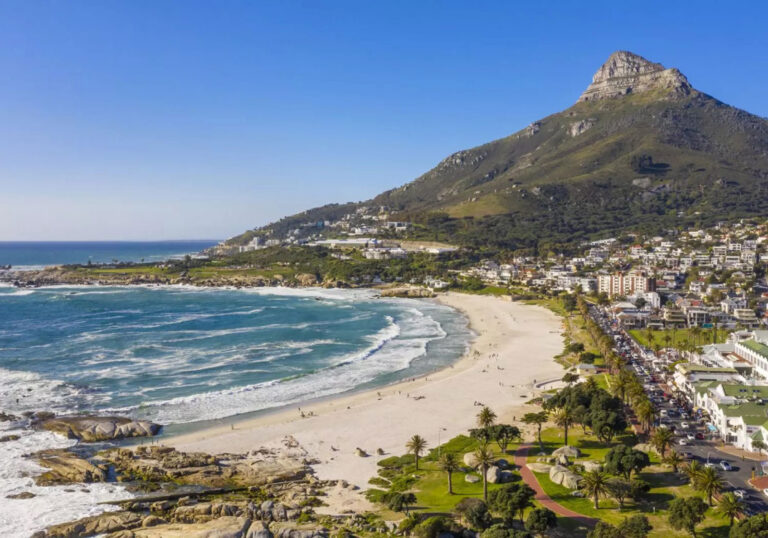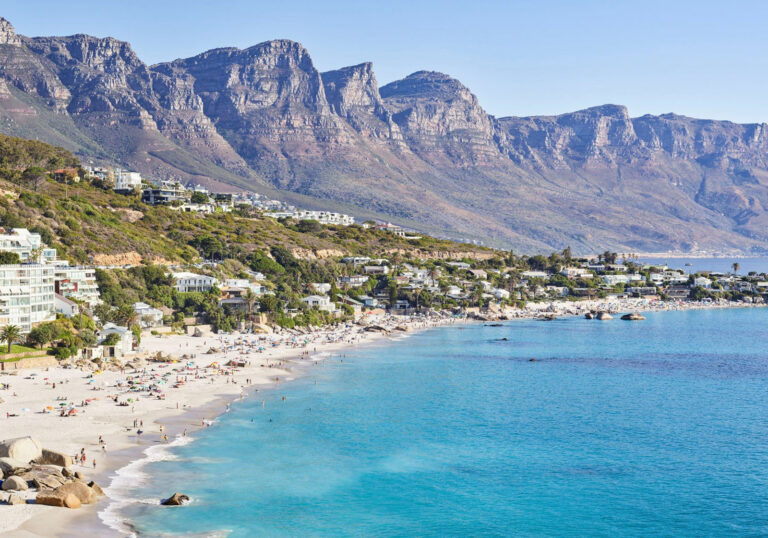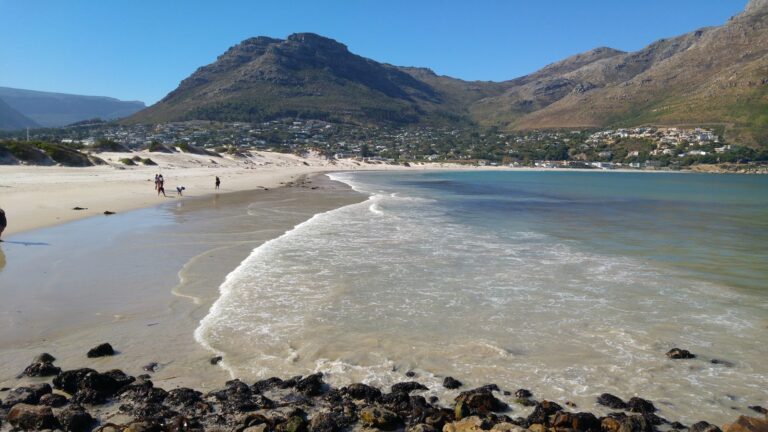
Llandudno Beach is a single curve of sand at the head of a granite cove, closed in by enormous boulders at both ends and steep fynbos slopes behind. Houses sit on the hillside above, but there is no promenade, no lawns and no restaurant strip, so the Atlantic dominates in a way it does not at Camps Bay. The water is cold and the surf can be powerful, access is through residential streets, and late afternoon light on the granite is the best of it.
Llandudno Beach is a single curve of pale sand at the head of a granite cove on the Atlantic coast, wedged between Camps Bay and Hout Bay. Enormous rounded boulders form both ends of the bay and spill onto the sand itself, the slopes climb steeply on three sides, and the ocean fills the fourth. Houses are built into the granite on the hillside above, so this is not an empty stretch of coast, but the bay closes around the beach in a way that makes the Atlantic, rather than the city, the thing you are aware of.
Anyone arriving from Camps Bay will notice the difference within a minute of getting out of the car. There is no promenade, no lawns, no palms and no row of restaurants across the road. You leave the coastal road, drop down through quiet residential streets, and the commercial beachfront simply stops existing. That is the honest reason Llandudno feels different, and it is worth being clear that it is a difference of setting rather than of solitude: Llandudno is an established neighbourhood and the beach can get very busy on a hot weekend.
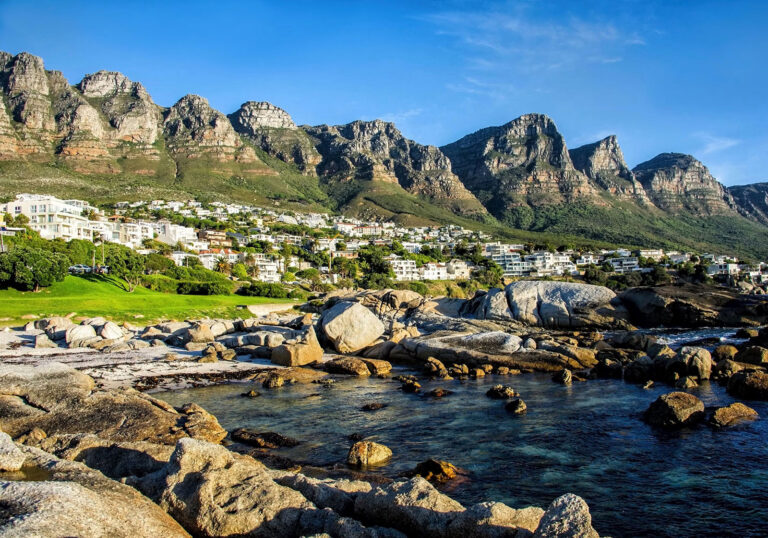
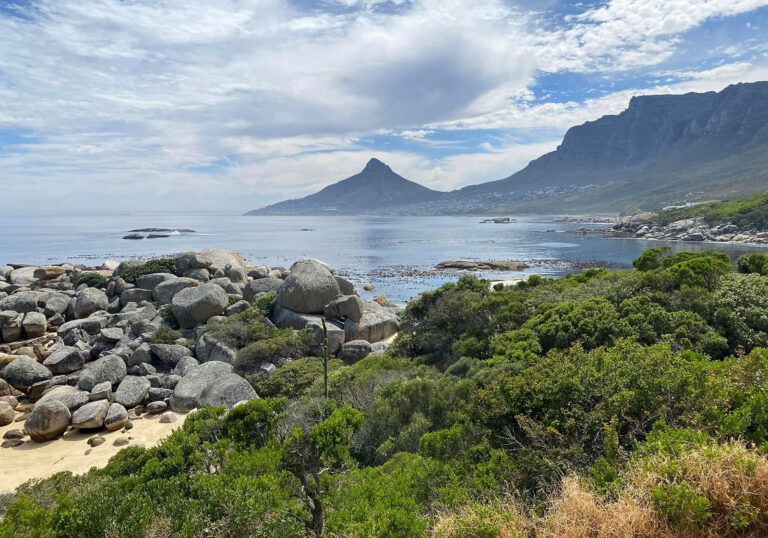
The landscape carries the page. The granite here is on a different scale from Clifton's, great smooth slabs and domes stacked at either end of the cove and scattered across the top of the sand, weathered pale grey and gold. Behind them the slopes rise into fynbos and rock, and the shape of the bay funnels the sound of the surf back at you, which is part of why the place feels enclosed. It is a genuinely dramatic piece of coastline, and it photographs best from above and behind the beach where the boulders, sand and water read as one composition.
The ocean deserves respect rather than romance. This is the cold Atlantic, bracing at any time of year, and the cove is more exposed than its sheltered appearance in photographs suggests. Surf here can be powerful, conditions change from day to day, and there is nothing tame about the water even on a calm-looking afternoon. Swim according to the conditions on the day and to any signage or lifeguard guidance in place, and be realistic about your own ability in cold water and moving surf. Llandudno is also a long-established Cape Town surf spot, which tells you most of what you need to know about the waves it can produce.
Late afternoon is the best time to be here, and the reason is the landscape rather than the crowd. As the sun drops toward the Atlantic the light comes in low across the granite, warming the boulders and the slopes behind the beach while the water darkens, and the whole cove changes character in about half an hour. It is a quieter kind of sunset than Camps Bay's: fewer people staying on into the evening, no restaurants behind you, more attention on the rock and the sea.
Practically, plan a little. Access is through Llandudno's residential streets, and from the parking area you walk down to the sand rather than stepping straight off a promenade. Street parking is limited and fills up when the beach is busy, so a hot Saturday afternoon is the hardest time to arrive. There is no commercial strip behind the beach, so bring water, food, shade and anything else you need with you, and do not assume particular facilities will be available. The beach works as either a short stop for the view or a few hours on the sand, and we will deal with specific streets, parking and arrival in a later detail pass.
Highlights
- A single curving beach at the head of a granite cove
- Enormous smooth boulders at both ends and across the sand
- Steep fynbos slopes and hillside houses closing in the bay
- No promenade or restaurant strip behind the beach
- Cold Atlantic water and powerful surf
- Low afternoon light across granite, water and slopes
Tips
Bring everything you need, including water, food and shade, because there is no commercial strip behind the beach. Arrive early on hot summer weekends, when the limited street parking fills quickly. Treat the ocean seriously: the water is cold and the surf can be strong, so follow the conditions and any signage on the day. Late afternoon is the best light, particularly on the boulders. Remember that access runs through a residential neighbourhood, so park considerately and keep noise down.
Frequently Asked Questions
How is Llandudno different from Camps Bay and Clifton?
Camps Bay is one broad beach with a promenade and restaurant strip immediately behind it. Clifton is four smaller coves, each with its own stairway. Llandudno is a single cove closed in by very large granite boulders and steep slopes, reached through residential streets, with no commercial beachfront at all. The setting feels more enclosed and the Atlantic more dominant.
Can you swim at Llandudno?
People do, but treat it carefully. The water is cold Atlantic year round and the surf can be powerful, and the cove is more exposed than it looks in photographs. Conditions change from day to day, so swim according to the conditions and to any signage or lifeguard guidance in place on the day.
Are there shops, restaurants or facilities at the beach?
No commercial strip sits behind the sand, which is one of the main differences from Camps Bay. Bring water, food and shade with you, and do not assume any particular facility will be available.
Is there parking?
There is limited street parking in the residential area above the beach, and it fills up when the beach is busy, particularly on hot summer weekends. From there you walk down to the sand. We will cover arrival and parking in more detail later.
Is Llandudno good for surfing?
It is a long-established Cape Town surf spot, which is part of its character and a good indication of the waves the cove can produce. We are not covering swell, tides or break specifics here; that belongs with surfing rather than with the beach itself.