Victoria Road runs south from Camps Bay to Hout Bay with the Atlantic on one side and Table Mountain's western wall on the other. It is an ordinary public road rather than a purpose-built tourist route, and the appeal is how completely the coastline changes over a short distance, from Camps Bay's open beachfront to the rugged rock around Oudekraal and the descent into Hout Bay. Best in late afternoon.
Victoria Road is the coastal road that runs south from Camps Bay to Hout Bay with the Atlantic on one side and the western wall of Table Mountain on the other. It is worth saying plainly that there is nothing hidden or undiscovered about it. Thousands of people use it every day for the commute and the school run, and it is signposted, ordinary and busy. That is precisely what makes it good. This is not a purpose-built tourist route you set aside a day for. It is a working road that happens to pass through some of the finest coastal scenery in the country, which means the sightseeing costs you nothing, needs no planning and fits inside a journey you were probably making anyway.
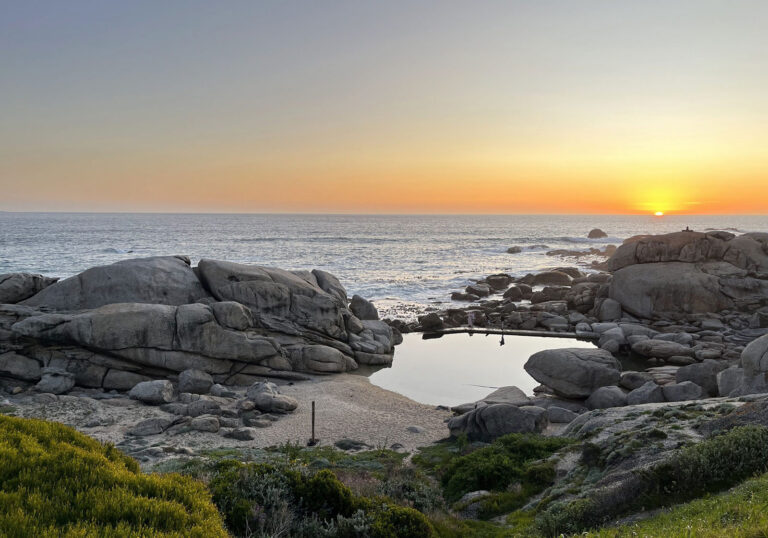
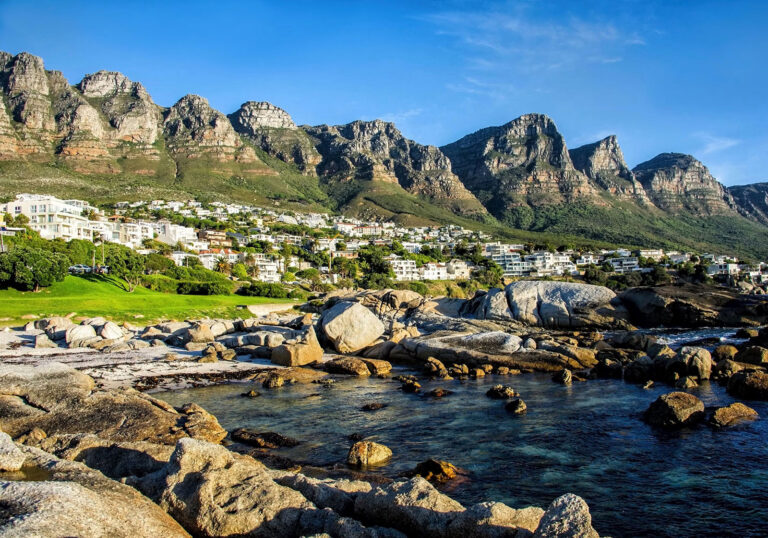
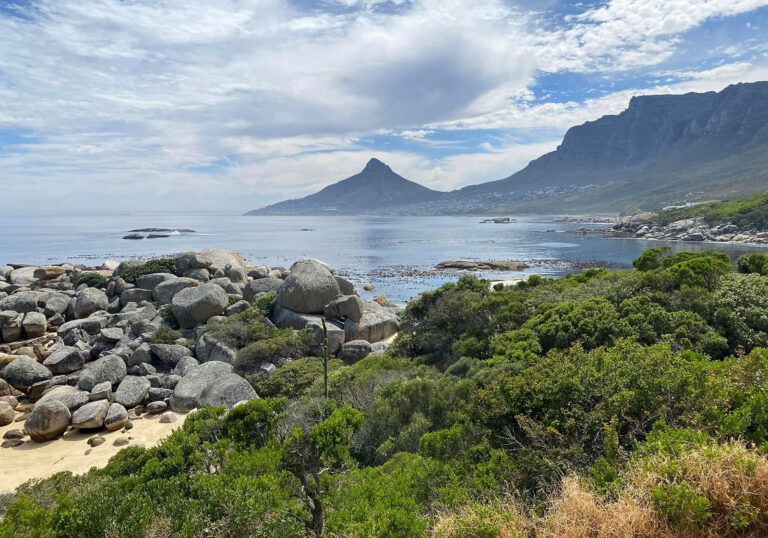
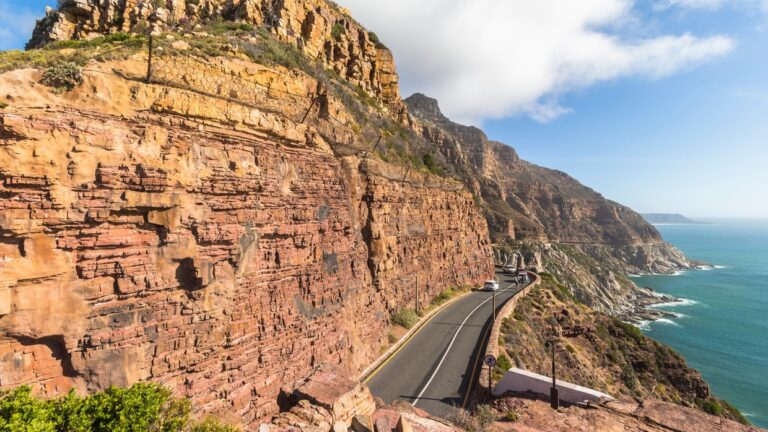
Heading south, the drive opens at Camps Bay, where everything is wide: a long beachfront, palms along the promenade, and the mountain standing back in a broad amphitheatre behind the town. Then the road narrows and begins to climb, and the character changes quickly. The buildings thin out, the slope steepens, and you find yourself running directly beneath the buttresses of the Twelve Apostles with very little between the tar and the water. Bakoven arrives as a much smaller, quieter, more residential place, all granite boulders and tiny coves tucked below the road. Past it the coastline turns genuinely rugged around Oudekraal, with bare rock, kelp beds, white spray and fynbos slopes dropping steeply into the sea.
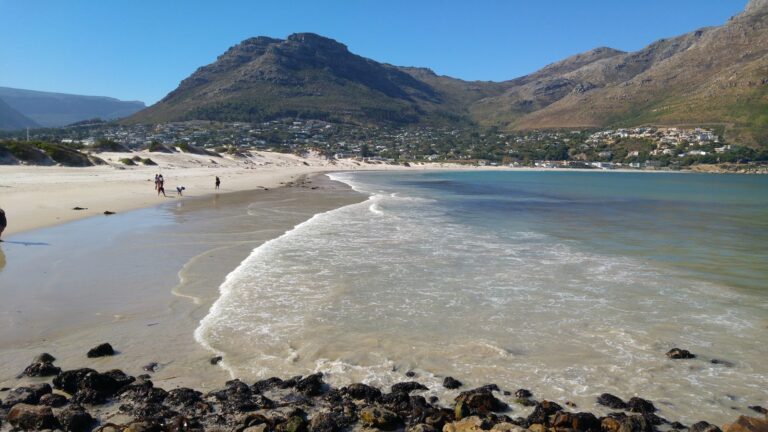
The southern half opens out again. The road curves and lifts, and somewhere along that stretch the Atlantic horizon simply widens in front of you, with Llandudno's houses stacked into the mountainside below and the sea a long way down. Then comes the descent towards Hout Bay, where the valley opens up, the Sentinel appears as a distinct peak above the water, and the coast resolves into a working harbour and a bay. At that point the coastal drive becomes a place again, and you have arrived somewhere rather than simply passed through. Chapman's Peak Drive begins from Hout Bay if you want to keep going, but this drive stands complete on its own and there is no need to treat it as a prelude.
It is worth being clear about how this differs from Chapman's Peak, because the two are not competing for the same visitor. Chapman's Peak is the engineering spectacle: a road cut into a cliff face, a toll gate, and a route people drive specifically because of the road. Victoria Road makes a quieter claim. Its appeal is the constant change of coastline over a relatively short distance, and the fact that ocean, mountain, beaches and neighbourhoods keep rearranging themselves around you as you go. Late afternoon is when it is at its best, with the sun out over the Atlantic and the light coming in low across the water and up onto the rock. Photographers should plan for that hour and expect company.
Practically, this is a public road rather than an attraction with a gate. There is no fee, no ticket and no opening time. End to end without stopping it takes well under half an hour, though driving it without stopping rather misses the point. Where you do stop, use the established pull-offs, parking areas and beaches rather than pausing on the verge, since the road is narrow in places with blind corners and stopping outside proper laybys is both unsafe and often not allowed. Expect slow going on summer weekends, over the December holidays and around sunset in both directions, and share the road with a steady stream of cyclists. It works equally well in either direction, but travelling north to south gives the landscape its most natural progression.
Highlights
- Cape Town's classic Atlantic coastal drive, from Camps Bay south to Hout Bay
- Ocean on one side and the Twelve Apostles wall on the other
- A coastline that changes character every few kilometres
- Late afternoon light coming in low off the Atlantic
- Beaches, coves and established viewpoints strung along the route
- A public road with no gate, toll, ticket or opening hours
Tips
Drive it in the late afternoon if you can, when the light is best and the sea is lit from the west. Allow far longer than the driving time suggests. Stop only at proper laybys, parking areas and beaches. Expect heavy traffic on summer weekends, over December and around sunset, and give cyclists room. Fill up before you set off, as there is little along the road itself between Camps Bay and Hout Bay.
Frequently Asked Questions
What is the Victoria Road drive?
The coastal road running south from Camps Bay through Bakoven, Oudekraal and Llandudno to Hout Bay, with the Atlantic on one side and Table Mountain's western slopes on the other. It is an everyday public road rather than a tourist route, and the drive itself is the attraction.
How long does it take?
Well under half an hour end to end if you simply drive it, but that rather defeats the purpose. Allow a half afternoon if you want to stop at beaches or viewpoints along the way, and longer if you intend to stay for sunset.
Which direction is best?
It works in both directions. Travelling north to south, from Camps Bay towards Hout Bay, gives the landscape its most natural progression, opening at a broad beachfront, tightening beneath the mountain and finishing in the Hout Bay valley.
Where can I stop along the way?
Use the established pull-offs, parking areas and beaches rather than stopping on the verge. The road is narrow in places with blind corners, and pausing outside proper laybys is unsafe and often not permitted. Camps Bay, Oudekraal, Llandudno and Hout Bay all have proper access and parking.
How does it compare with Chapman's Peak Drive?
They offer different things. Chapman's Peak is the engineering spectacle, a toll road carved into a cliff face and driven for its own sake. Victoria Road is everyday coastal sightseeing woven into the city, with the scenery changing constantly. Chapman's Peak begins from Hout Bay if you want to continue, but you do not have to.