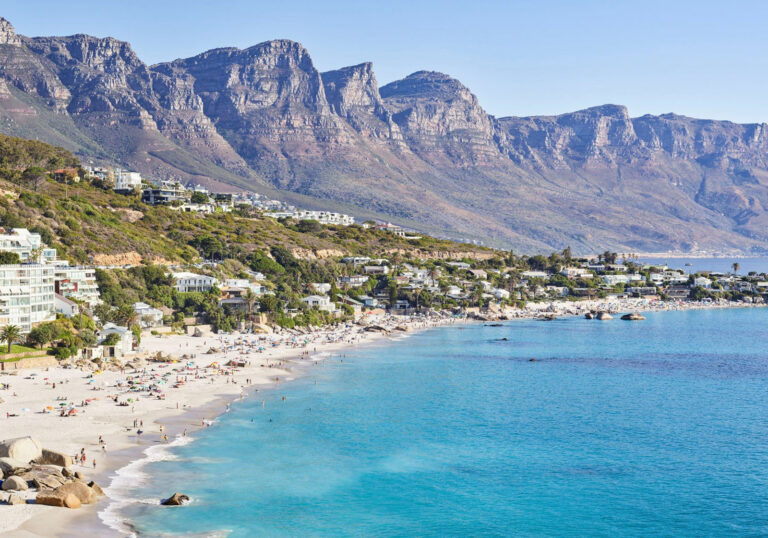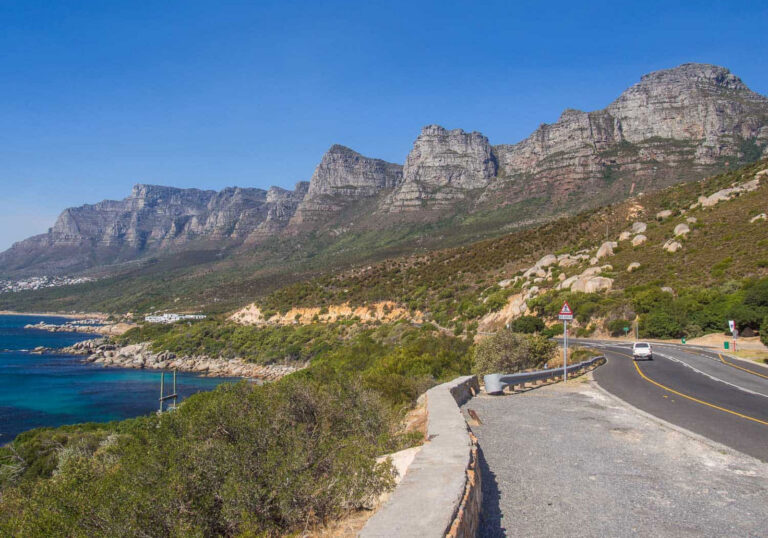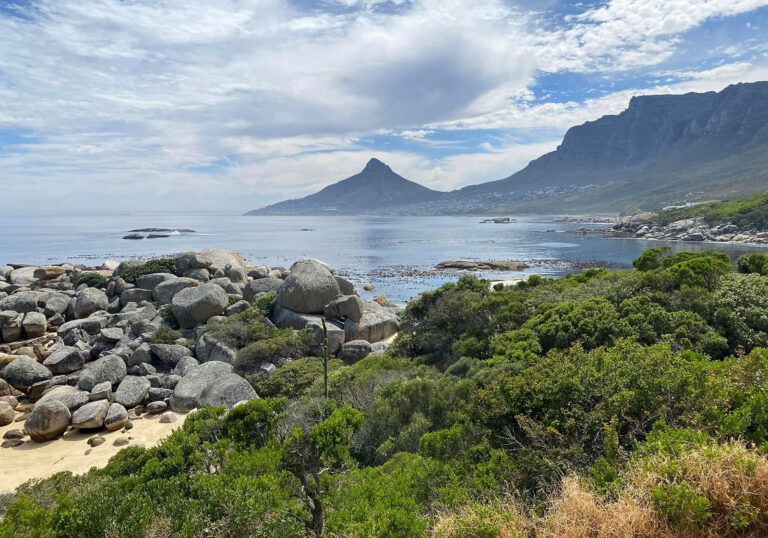
Camps Bay Beach is Cape Town's most accessible big Atlantic beach: one long, open sweep of pale sand with the Twelve Apostles rising behind the suburb and Lion's Head anchoring the northern end. A strip of lawn, palms and promenade separates the sand from a busy row of restaurants and cafés, which is what makes it feel social rather than remote. The water is colder than it looks, the beach is more exposed to wind than Clifton's coves, and sunset is part of the usual routine.
Camps Bay Beach is one long, open sweep of pale sand on Cape Town's Atlantic coast, and it is the city's most easily reached big beach. Where Clifton hides four small coves behind granite, Camps Bay gives you the opposite: a single broad shoreline with nothing between you and the ocean, and a busy urban edge running along the top of the sand. The combination that defines it is a major Atlantic beach, a wall of mountain immediately behind the suburb, and a promenade and restaurant strip one road crossing away.
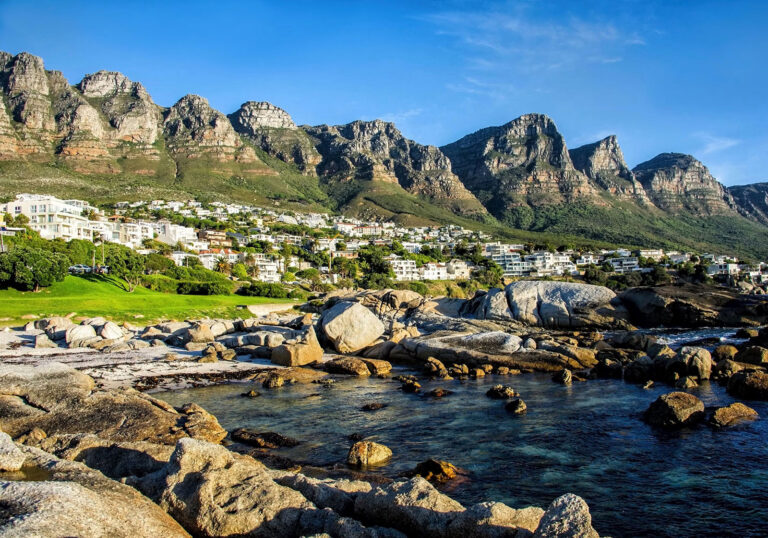
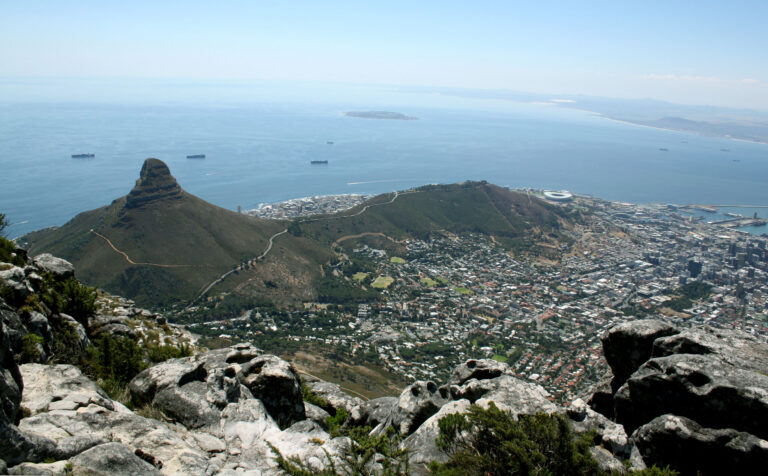
The setting is one of the strongest compositions in Cape Town. Stand on the sand facing the sea and the Atlantic runs uninterrupted to the horizon. Turn around and the Twelve Apostles rise abruptly behind the houses, a long line of buttresses that catches the late light and closes off the whole eastern side of the bay. Lion's Head sits at the northern end, giving the bay its other anchor. Between the mountain and the sand there is a strip of lawn, palms and paved walkway, and granite outcrops mark each end of the beach. It is the proximity of all of it, rather than any one element, that makes the view work.
That urban edge is what really separates Camps Bay from the rest of the Atlantic coast. You can spend the afternoon on a full-scale ocean beach, then cross a single road into a busy strip of restaurants, cafés and shops, and be back on the sand within minutes. It is why the beach feels social rather than remote: it is large, it has a promenade, services are immediately at hand, it is quick to reach from the city, and people tend to stay put through the end of the day rather than packing up mid-afternoon. The suburb itself, its restaurants in detail and its evenings are a separate outing, and this page is about the beach.
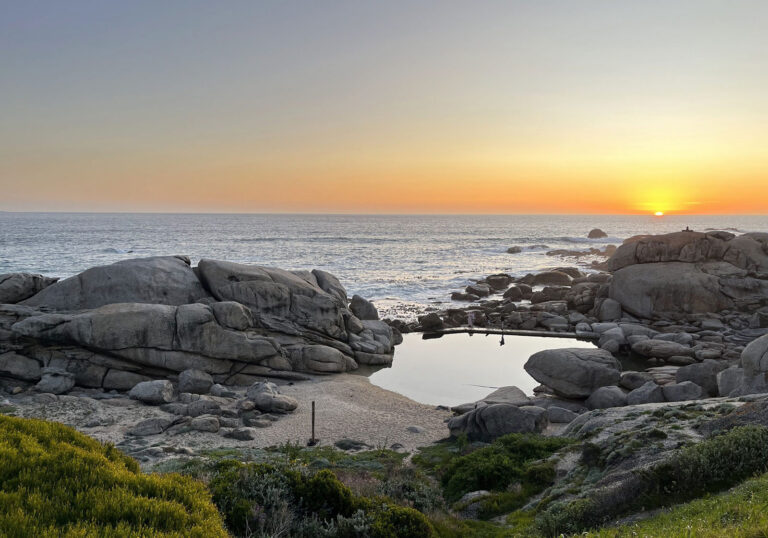
Sunset is part of the normal rhythm here rather than a special event. The beach faces west, the sand and lawns fill up in the last hour of light, and the mountain behind turns while the sun goes down over the water. Many visitors arrive late in the afternoon precisely for that, and it is one of the few Cape Town beaches where staying on into the evening is the usual thing to do rather than the exception.
Two honest notes. First, the water. Camps Bay can look almost tropical in bright weather and it is nothing of the kind: this is the cold Atlantic, bracing even in midsummer, and plenty of people never get much past their knees. There is often a shore break, conditions change from day to day, and swimming should follow current beach signage and lifeguard guidance. Second, the wind. Because this is a wide, open beach rather than a sheltered cove, it feels the wind more than Clifton does on a strong south-easterly day. Neither is a rule: Camps Bay is not always windy and Clifton is not always calm, but the difference is worth knowing when you choose.
Practically, it is an easy beach to visit. Parking is along the beachfront and nearby streets, and it fills up quickly in summer and around sunset, so early or late is easier than the middle of a hot Saturday. Services and facilities are close by thanks to the beachfront setting, though it is worth not assuming any particular one. The beach suits anything from a twenty-minute walk along the promenade to most of a day on the sand, and we will get into the specifics of arrival and parking in a later detail pass.
Highlights
- One long, open sweep of pale Atlantic sand
- The Twelve Apostles rising immediately behind the suburb
- Lion's Head anchoring the northern end of the bay
- Lawns, palms and promenade along the top of the beach
- Restaurants and cafés a single road crossing from the sand
- West-facing sand that fills up for sunset
Tips
Come late in the afternoon if you want the beach at its best, or early if you want it quiet. Parking fills fast in summer and around sunset, so plan for that rather than circling. Expect cold water and follow current signage and lifeguard guidance before swimming. Check the wind, since this open beach feels a south-easterly more than Clifton's coves do. Take shade and water: there is very little natural shade on the sand. Facing away from the sea for the mountain view is worth doing at least once.
Frequently Asked Questions
How is Camps Bay Beach different from Clifton?
Clifton is four small coves separated by granite, each reached by its own stairway. Camps Bay is one broad, open beach with a promenade, lawns and a restaurant strip directly behind it, and level access from the road. Camps Bay is easier to reach and more social; Clifton is more contained and can feel more sheltered.
Is the water warm enough to swim?
It looks warmer than it is. This is the cold Atlantic side of the peninsula and the water is bracing even at the height of summer, so many people wade rather than swim. There is often a shore break and conditions vary, so follow current beach signage and lifeguard guidance.
Is Camps Bay windy?
It can be. Because it is a wide, open beach rather than a sheltered cove, it feels a strong south-easterly more than Clifton does. That is a tendency rather than a rule, and plenty of days are calm, but it is worth checking the wind before committing to an afternoon.
Is there parking, and how busy does it get?
There is beachfront and nearby street parking, but it fills quickly in summer and around sunset. Early morning and late afternoon are easier than the middle of a hot day. We will cover arrival and parking in more detail later.
Is it worth staying for sunset?
Yes, and most people do. The beach faces west, the last hour of light is the busiest and best part of the day, and the restaurants across the road make it easy to stay on afterwards.