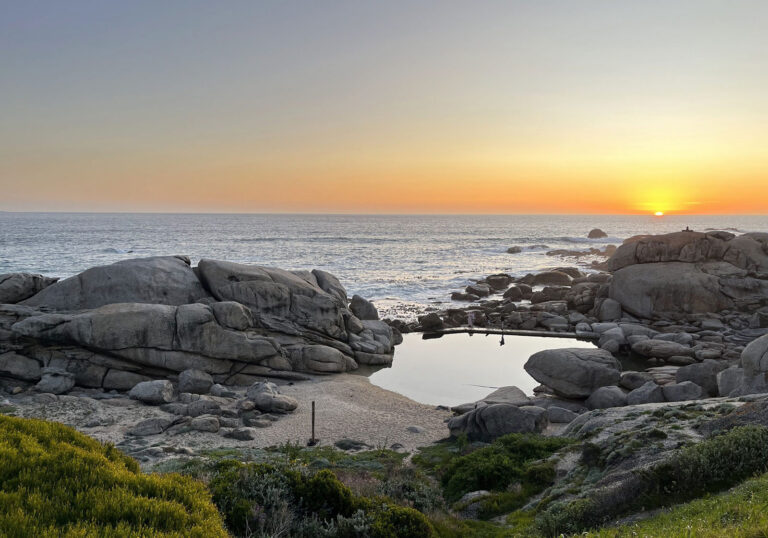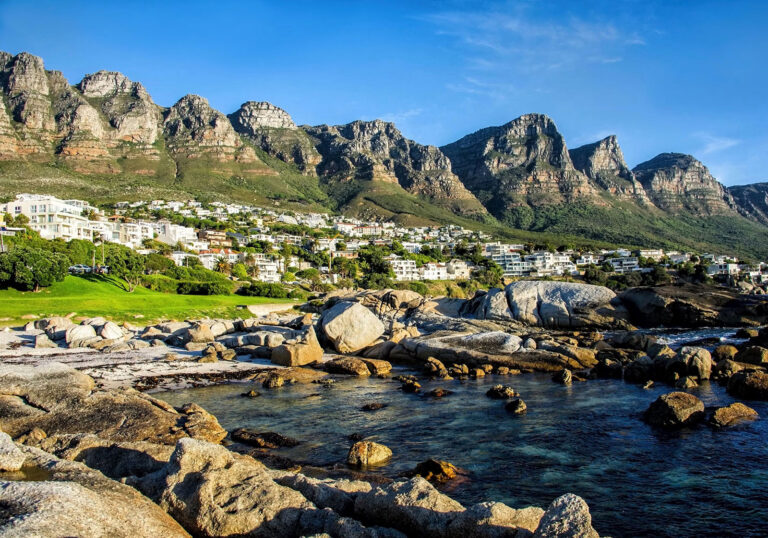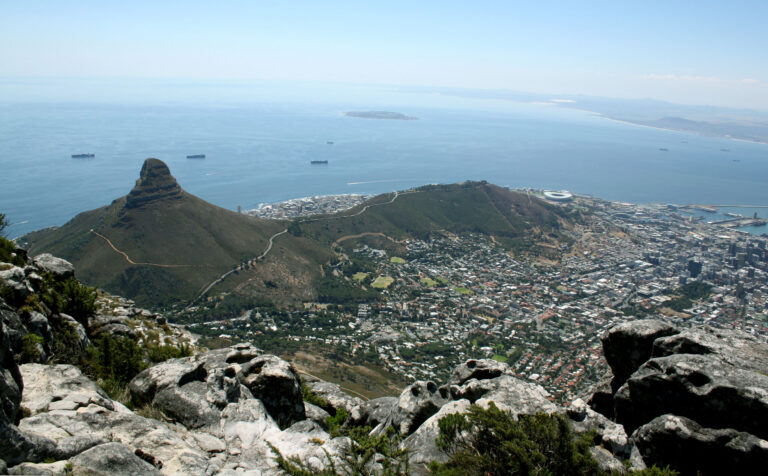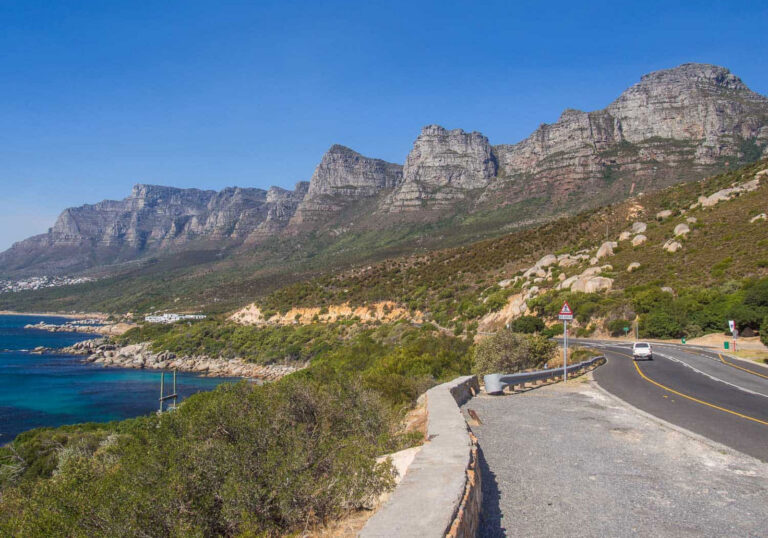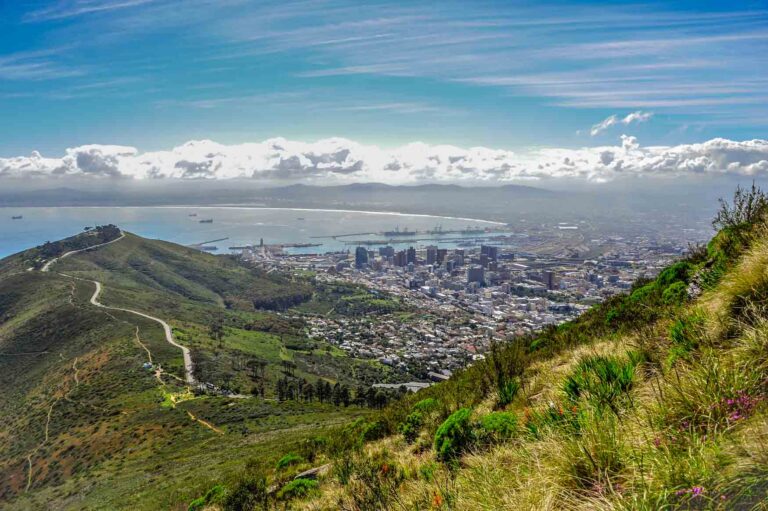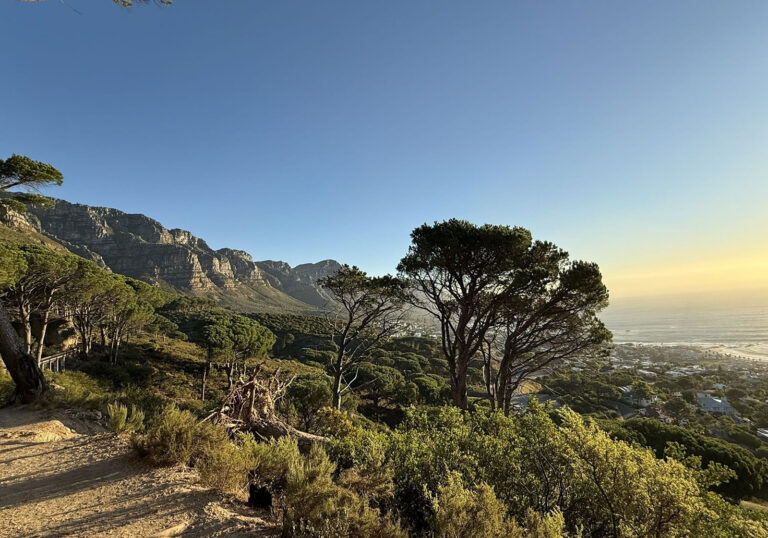
Clifton is a sequence of four small Atlantic coves, known as 1st to 4th Beach, separated by granite boulders and backed by steep residential slopes below Lion's Head. The sand is pale, the water is an improbable turquoise and colder than it looks, and the coves can feel calmer than Cape Town's more exposed Atlantic beaches. Each beach has its own stairway down from Victoria Road, and the climb back up is part of the deal.
Clifton is not one beach but four, set side by side in a line of sheltered coves below the mountain on Cape Town's Atlantic coast. They are known simply as 1st, 2nd, 3rd and 4th Beach, and each is a separate crescent of very white sand divided from its neighbours by outcrops of pale granite. Behind them the slopes climb steeply, packed with apartments and houses, and above that the mountain rises toward Lion's Head. The effect is a string of small, contained beaches rather than one long stretch of coast, which is exactly what makes Clifton distinctive.
Knowing how the four beaches relate to one another is the most useful thing a visitor can arrive with. They run in sequence along the same short piece of coastline, but they are not connected by a promenade and you cannot simply drive from one to the next and park: each has its own stairway down from Victoria Road, so choosing a beach effectively means choosing an access point. 4th Beach, at the Maiden's Cove and Camps Bay end, is the largest and the best served, and it is where you will find the most facilities and the most people. The other three are smaller and generally quieter, with 1st Beach the most tucked away of the four. Beyond size, shelter and how much space you want, there is not much to choose between them, and the practical differences matter far more than any reputation attached to a particular number.
The physical setting does the work here. The sand is fine and pale, the granite boulders that separate the coves are rounded and photogenic and give each beach a natural edge, and the water over the sand takes on an improbable turquoise on a bright day. Because the coves are set back into the coastline with rock at either end and high ground behind, they can feel noticeably calmer than Cape Town's more exposed Atlantic beaches when the south-easter is blowing. That is a real advantage, but it is relative rather than absolute: Clifton is not wind-free, and on a strong wind day it can still be uncomfortable.
The water deserves an honest word. Clifton photographs like the tropics and swims like the Atlantic. This is the cold side of the peninsula, and the sea here is bracing even at the height of summer, cold enough that many people go in briefly or not at all. Conditions vary between the coves and from day to day, with shore break and currents to be aware of, so take note of any signage and of where other people are swimming.
What most visitors actually do at Clifton is settle in. It suits sunbathing, reading, picnicking and long spells of doing very little, with a swim or a paddle in between. The beaches face west, which makes late afternoon and sunset the best part of the day and the reason many people arrive when others are leaving. Photographers do well here at almost any hour, thanks to the boulders, the colour of the water and the mountain backdrop, and a walk along the sand of a single cove is short but very pleasant.
Access is the part to plan for. There is no beachfront car park beside the sand: parking is limited street parking along Victoria Road, and from there you walk down a fairly steep stairway to whichever beach you have chosen. That also means the return trip is uphill, so take only what you are willing to carry back. In peak summer the parking fills early and the stairways are busy. Lifeguard cover and facilities are seasonal and vary between the beaches, and are more likely at 4th Beach than at the smaller coves, so do not count on them. We will map out the specific access points and parking properly in a later detail pass.
Highlights
- Four separate coves set side by side below the mountain
- Very white sand divided by rounded granite boulders
- Turquoise Atlantic water that is colder than it looks
- Coves that can feel calmer than more exposed Atlantic beaches
- West-facing sand that makes this one of Cape Town's sunset beaches
- Steep residential slopes and mountain rising directly behind
Tips
Decide which beach you want before you arrive, because each cove has its own stairway and you cannot easily move between them at road level. 4th Beach is the largest and best served; the other three are smaller and usually quieter. Take only what you are willing to carry back up the stairs. Arrive early in summer for any chance of parking, or come late for the sunset. Expect cold water and check conditions and signage before swimming. Bring water, shade and sunscreen, as shade on the sand is limited.
Frequently Asked Questions
How many beaches are there at Clifton, and how do they differ?
Four, numbered 1st to 4th, lying side by side and separated by granite outcrops. 4th Beach, at the Maiden's Cove and Camps Bay end, is the biggest and the best served with facilities, and it draws the largest crowds. The other three are smaller and generally quieter, with 1st Beach the most tucked away. The practical differences are size, shelter, space and which stairway you use.
Can I walk or drive between the four beaches?
Not directly. Each cove has its own stairway down from Victoria Road, and granite outcrops separate them at the water's edge, so choosing a beach really means choosing an access point. There is no continuous beachfront promenade or car park along the sand.
Is the water warm enough to swim?
It looks tropical and is not. Clifton is on the cold Atlantic side of the peninsula and the sea is bracing even in midsummer, so many people swim only briefly. Conditions vary between the coves and from day to day, so take note of signage and of where others are swimming.
Is Clifton really sheltered from the wind?
It is more sheltered than Cape Town's most exposed Atlantic beaches, because the coves sit back into the coastline with rock at either end and high ground behind. That is a genuine advantage on a south-easterly day, but it is relative: Clifton is not wind-free and a strong wind can still spoil an afternoon.
How do I get down to the beaches, and is there parking?
On foot, down a fairly steep stairway from Victoria Road, which means an uphill climb on the way back. Parking is limited street parking along Victoria Road and fills early in summer. Specific access points and parking will be covered in more detail later.