A historic, still-lived-in neighbourhood on the slopes of Signal Hill, and the heart of Cape Town's Cape Malay community and Islamic heritage.
Bo-Kaap is one of Cape Town's oldest residential neighbourhoods, rising up the slopes of Signal Hill on the edge of the city centre. It is best known for its steep cobbled streets lined with brightly painted homes, but its real significance lies in its history as a heartland of Cape Muslim and Cape Malay culture.
The area developed from the eighteenth-century rental houses above central Cape Town, and became home to generations of Cape Muslims, including descendants of enslaved people, free Black residents and political exiles brought to or settled at the Cape. Over time the community built a lasting culture here, and Bo-Kaap remains a living centre of Cape Malay heritage and some of Cape Town's oldest mosque traditions.
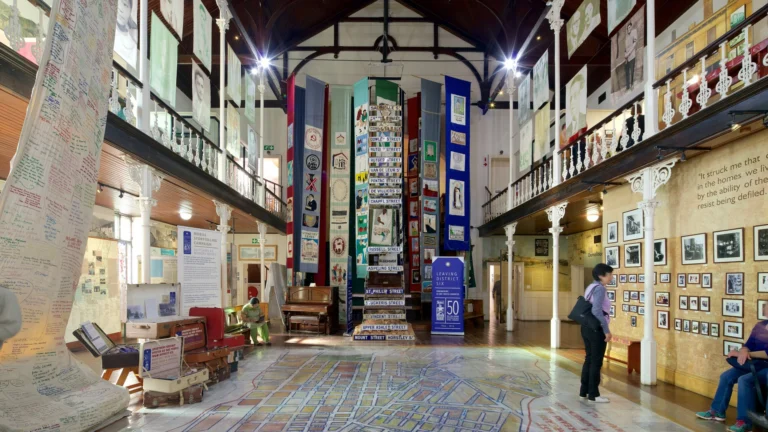
To understand that history, the Iziko Bo-Kaap Museum at 71 Wale Street occupies one of the area's oldest houses and tells the story of the neighbourhood and its Cape Malay heritage. You can find visitor details on the official Iziko Bo-Kaap Museum page.
Visitors are welcome, but Bo-Kaap is a home before it is a photo opportunity. It is a residential community where families live, worship and go about daily life. Exploring it respectfully, on foot and with an awareness of that living context, is what makes a visit meaningful rather than intrusive.
Highlights
- Historic heart of Cape Town's Cape Malay community
- Brightly painted heritage homes along cobbled streets
- Bo-Kaap Museum on Wale Street, one of the area's oldest houses
- Long-standing Islamic heritage and historic mosques
- Cape Malay cuisine, spices and cooking traditions
Frequently Asked Questions
What is Bo-Kaap known for?
It is Cape Town's historic Cape Malay quarter, known for its colourful heritage houses, cobbled streets and deep roots in the city's Muslim and Cape Malay culture.
Is it respectful to visit and take photos?
Yes, but remember Bo-Kaap is a living residential neighbourhood, not a museum. Explore on foot, keep noise down, and ask before photographing people or private homes.
Is there anything to visit indoors?
The Bo-Kaap Museum on Wale Street offers context on the area's history and Cape Malay heritage. Local cooking classes and food experiences are also popular.
How long should I spend there?
A respectful walk through the main streets and a museum visit take around one to two hours.