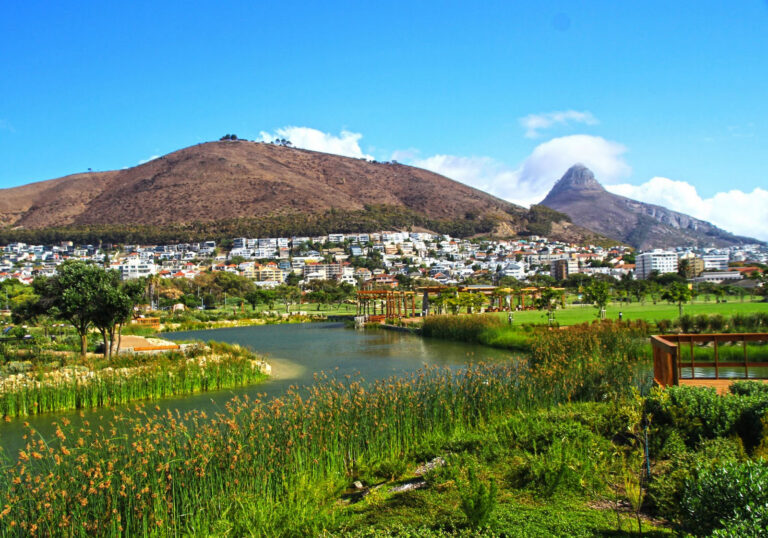
Intaka Island is a 16-hectare wetland nature reserve in the heart of Century City, offering an unexpected escape into one of Cape Town’s most important urban conservation areas. Surrounded by modern offices, apartments and shopping centres, the reserve protects indigenous wetlands that support more than 120 recorded bird species, making it one of the city’s premier birdwatching destinations. Visitors can explore peaceful walking trails, bird hides and educational displays while experiencing a thriving ecosystem just minutes from the city centre. Officially managed as a conservation area, Intaka Island demonstrates how urban development and biodiversity can successfully coexist.
Unlike Cape Town’s mountain parks and coastal reserves, Intaka Island focuses on wetlands, birdlife and environmental education. Its level walking trails and tranquil setting make it equally enjoyable for families, photographers, birdwatchers and anyone seeking a quieter nature experience.
Intaka Island was created as part of the Century City development to conserve and rehabilitate an important wetland ecosystem while providing a valuable environmental education resource. When work on the 250-hectare site began in 1996, much of the area was covered by invasive alien vegetation and degraded wetlands, and the environmental impact assessment recommended that a nature reserve be established at its centre. The reserve received Voluntary Conservation Status from CapeNature in 2006 and its environmental education centre was completed in 2010. Today it protects a rich diversity of indigenous plants, aquatic habitats and birdlife within one of Cape Town’s busiest urban districts.
Visitors follow well-maintained boardwalks and gravel paths through reed beds, open water and indigenous vegetation. The western half of the island consists of constructed wetlands that help purify water and provide breeding habitat for waterbirds, while the eastern half preserves seasonal pans and sand plain fynbos, both rare habitat types. Two bird hides provide excellent opportunities to observe waterbirds, kingfishers, herons and many migratory species without disturbing their natural behaviour, and the Eco-Centre introduces visitors to the ecology of the wetlands and the importance of urban conservation.
Despite being surrounded by a modern city environment, Intaka Island offers a remarkably peaceful atmosphere. A total of 177 indigenous fynbos plant species and 120 bird species have been recorded here, and Bird Mountain, the highest point on the island, gives panoramic views across the wetland with Table Mountain as a backdrop. The reserve has become one of Cape Town’s leading birdwatching destinations and demonstrates how conservation can successfully form part of contemporary urban planning.
Highlights
- Protected 16-hectare urban wetland reserve
- Home to more than 120 recorded bird species
- Scenic walking trails through indigenous wetlands and rare sand plain fynbos
- Two bird hides overlooking natural habitats
- Eco-Centre with environmental education displays
- Guided boat trips on Century City’s Grand Canal, booking essential
Tips
Intaka Island is cashless: cards, SnapScan and Zapper are accepted, but cash is not. There is no restaurant or shop on the island, although picnics are welcome and the Century City Clubhouse and Coffee Shop is roughly 100 m from the entrance. Bicycles are not permitted on the trails.
Frequently Asked Questions
What is Intaka Island?
Intaka Island is a protected wetland nature reserve and bird sanctuary within Century City that focuses on bird conservation, environmental education and indigenous ecosystems. The name means “bird” in isiXhosa.
When is Intaka Island open?
The reserve is open every day of the year except 25 December. Hours are 07:30 to 19:00 from October to April, and 07:30 to 17:30 from May to September.
How long should I allow for a visit?
Most visitors spend one to two hours exploring the walking trails and bird hides.
Is Intaka Island suitable for children?
Yes. The level trails, educational displays and wildlife viewing make it an excellent destination for families.
What wildlife can I see?
The reserve is best known for its birdlife, with more than 120 recorded species, together with indigenous wetland plants, frogs and other small wildlife.
Do I need to book?
No. Walk-in visitors are welcome and general admission is paid at reception on the day. Boat trips and guided activities must be booked in advance.
Can I bring my dog?
No. Intaka Island is a conservation area and pets are not permitted.