Green Point Lighthouse is the red-and-white banded tower standing on the shoreline at Mouille Point, first lit in 1824 and still in service. It is the oldest operational lighthouse in South Africa and the first solid lighthouse structure built on the coast. It sits directly beside the Atlantic promenade, so it is easy to reach and to see close up, but it is a working navigational station rather than a visitor attraction and is not normally open inside.
Green Point Lighthouse is a small, sharply painted tower on the seaward side of Beach Road at Mouille Point, where the Atlantic comes straight up against the edge of the city. The tower is masonry, about sixteen metres tall, square rather than round, and wrapped in broad red and white diagonal bands. A railed balcony and a white lantern room sit on top, and the whole thing rises out of a single-storey whitewashed keeper’s house with palms planted around it. It is far smaller than the apartment blocks behind it, which is part of why it reads so clearly: a compact working structure from the 1820s left standing in the middle of a modern recreational seafront.
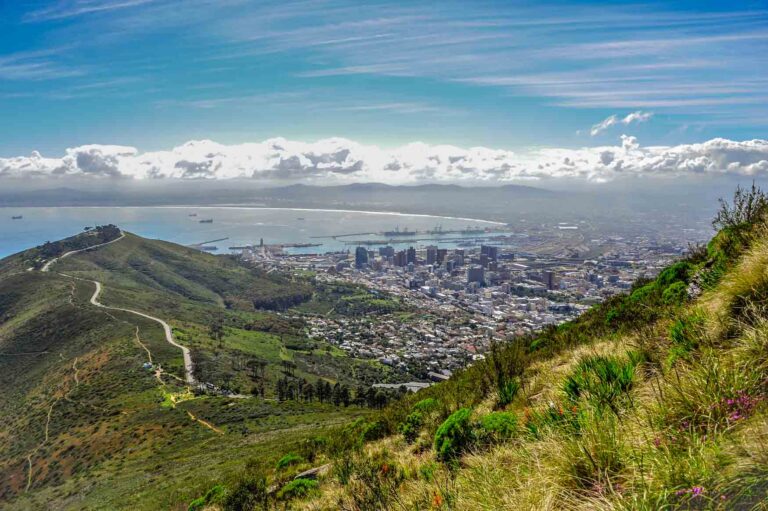
There is a straightforward reason it exists. Table Bay was a difficult place to arrive. The anchorage is exposed, the north-westerly gales of winter blow straight into it, and ships approaching Cape Town had been coming to grief on this coast for generations. A light here marked the approach and the shoreline for vessels heading into the bay. The lighthouse was commissioned in 1820 by Sir Rufane Shaw Donkin, then acting governor of the Cape, and designed by Herman Schutte — the same builder responsible for the Groote Kerk in the city centre, which gives two of Cape Town’s landmarks an unexpected common author.
Construction began in 1821 and the building was finished in 1823, but it took three years rather than one because Lord Charles Somerset, the actual governor of the Cape, had not been consulted about the project and stopped the work when he found out about it. The light was finally lit on 12 April 1824, at a total cost of somewhere around £6 420. It was the first solid lighthouse structure built on the South African coast, and it is still the oldest operational lighthouse in the country.
The light itself has been rebuilt several times over two centuries. The original lamps were Argand burners fuelled by sperm whale oil, and they could be seen roughly six nautical miles out. The tower was raised to its present height in 1865. In 1922 a new dioptric flashing apparatus pushed the range out to twenty-two nautical miles, and the light today shows a single white flash every ten seconds with a range of about twenty-five nautical miles. None of that is visible from the pavement, but it explains why a two-hundred-year-old building is still doing a job rather than being preserved as a relic.
The other thing the lighthouse is known for is its sound. A foghorn was installed in 1926, and it was not universally welcomed — Green Point residents had already written to the Mayor in 1923 to object to the idea. It has been part of local life ever since, and the nickname it earned, Moaning Minnie, has stuck. The lighthouse was certified a provincial heritage site in 1973.
Access is the thing to be clear about. This is an operating navigational station, not a museum, and there is no published schedule for public entry. It has been opened for occasional special events: the public were let in around the two hundredth anniversary in April 2024, and a public tour ran later that year. Those were one-off occasions rather than a standing arrangement. Anyone hoping to climb the tower should check whether something is being run at the time, and otherwise plan on an exterior visit.
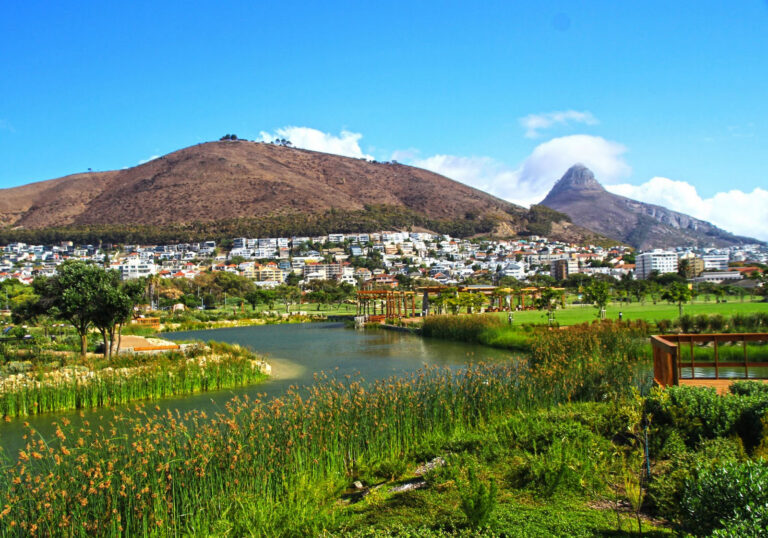
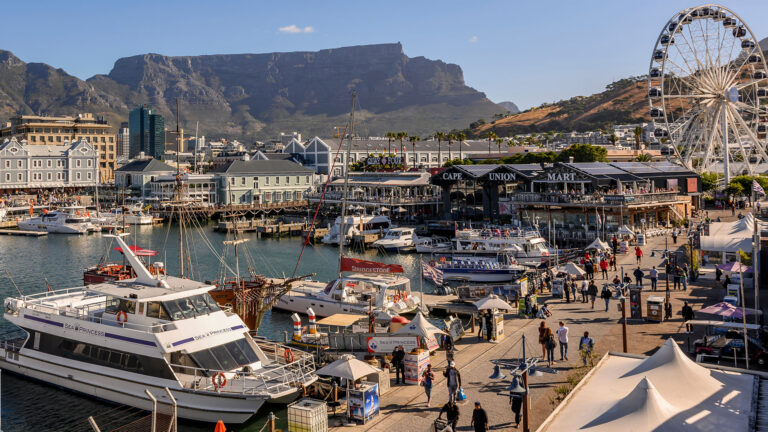
As an exterior visit it is short and genuinely easy. You can walk right up to the fence line, go around the building, and see the tower, the lantern and the keeper’s house close enough to pick out the detail. It sits directly on the promenade that runs along this shoreline, so most people see it as part of a walk rather than as a destination of its own, and the obvious thing to do is carry on walking. Green Point Urban Park is immediately inland across Beach Road, and the V&A Waterfront is a short distance east along the coast.
Highlights
- South Africa’s oldest operational lighthouse, first lit on 12 April 1824
- The first solid lighthouse structure built on the South African coast
- A sixteen-metre masonry tower in broad red and white diagonal bands
- Designed by Herman Schutte, who also built the Groote Kerk in the city centre
- The foghorn Green Point residents nicknamed Moaning Minnie
- On the Mouille Point shoreline, directly beside the Atlantic promenade
Frequently Asked Questions
How old is Green Point Lighthouse?
It was first lit on 12 April 1824, so it passed two hundred years of service in 2024. Construction began in 1821 and the building was completed in 1823. It was the first solid lighthouse structure built on the South African coast, and it remains the oldest operational lighthouse in the country.
Is Green Point Lighthouse still working?
Yes. It is an active navigational lighthouse, not a preserved monument. The light shows a single white flash every ten seconds and has a range of roughly twenty-five nautical miles. The equipment has been replaced repeatedly since 1824, and the tower was raised to its present height in 1865.
Can you go inside Green Point Lighthouse?
Not as a rule. It is a working navigational station and there is no published schedule for public entry. It has been opened for occasional special events, including around its two hundredth anniversary in April 2024, but those are one-off occasions rather than a standing arrangement. Check whether anything is being run at the time if going inside matters to you, and otherwise plan on seeing the exterior.
Why is the lighthouse painted with red and white diagonal bands?
The red and white diagonal bands make Green Point Lighthouse highly distinctive in daylight. Lighthouse colour patterns can function as daymarks, helping structures remain recognisable even when their lights are not visible.
What else is worth doing nearby?
Green Point Urban Park is immediately inland across Beach Road, and the promenade along this shoreline runs in both directions. The V&A Waterfront and Two Oceans Aquarium are a short distance east, and Signal Hill and the Noon Gun are above the city behind you.