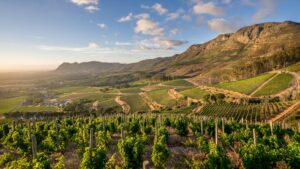
Constantia is where South African wine began. In 1685 Simon van der Stel chose 891 morgen behind Table Mountain for its wine-growing potential, and the farm he laid out there describes itself as the origin of the country’s commercial wine industry — still producing, more than three centuries later.
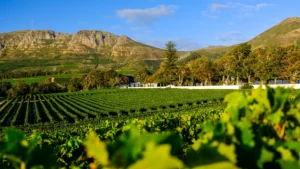
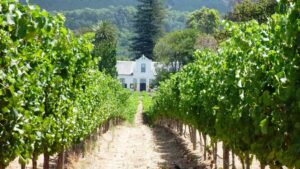
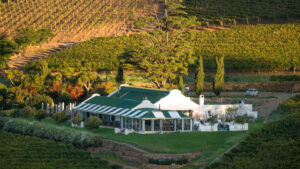
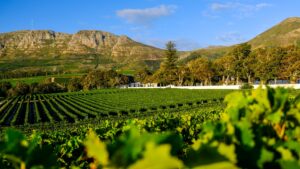
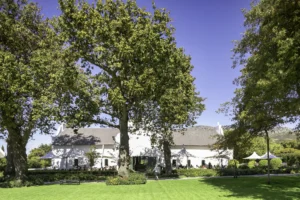
What survives is unusual. This is a wine valley inside a city: fifteen minutes from the southern suburbs, on cool south-facing slopes below Constantiaberg, with oaks, Cape Dutch gables and vineyards running down towards the Cape Flats.
The estates are the reason most visitors come, and several are close enough together to walk or cycle between. The style is cooler and more restrained than the inland winelands, which is the point.
Above the vineyards the mountain takes over. Constantia Nek sits at the head of the valley where the road crosses to Hout Bay, and the trails from there climb onto the Table Mountain back table or contour into the plantations. It is one of the few places where a morning on the mountain and an afternoon in a tasting room are the same outing.
Kirstenbosch is on the far side of the same ridge, and Tokai and Silvermine are a few minutes south.