Cape Town Life Style
Where to Eat in Cape Town
Cape Town is a serious eating city and it does not make that obvious. The best cooking is spread across half a dozen neighbourhoods that do not connect, the cheapest good food is at a market on a Saturday morning, and the restaurant everyone tells you about is often the one you needed to book a month ago.
This is the map rather than the list. Six ways into eating here, what each one is actually for, and the guide that goes deeper on it.
01
The rooms worth booking
Ten restaurants, five parts of the city
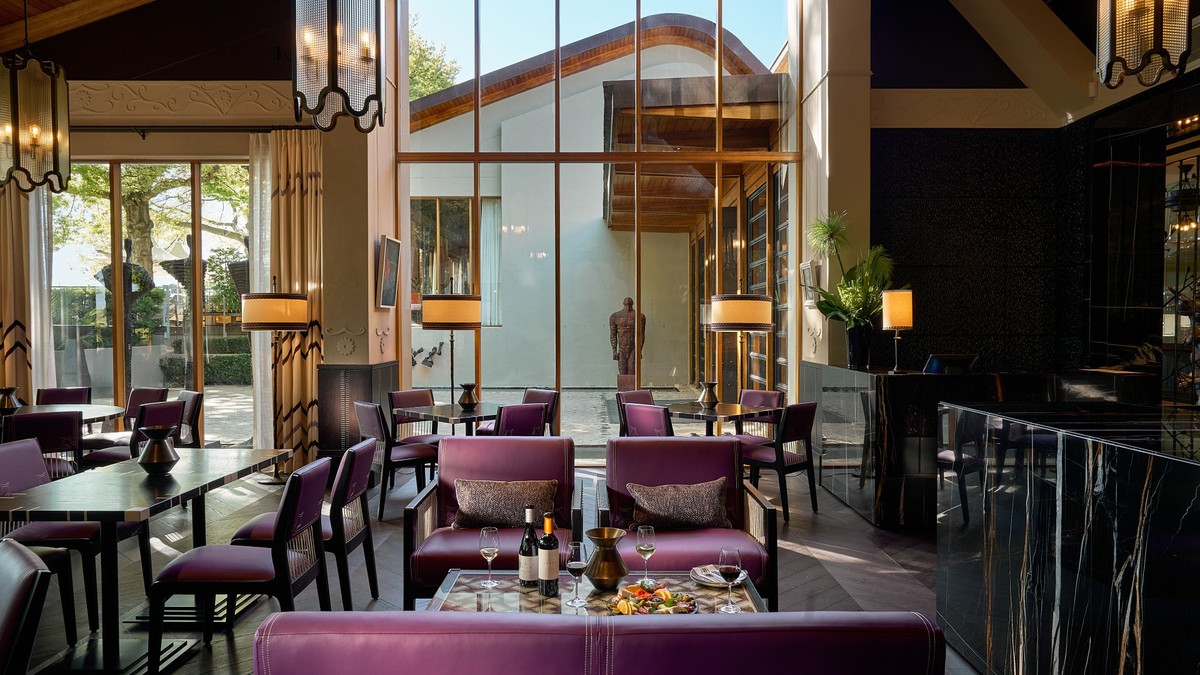
If you are going to plan one evening properly, plan it around a table. Our ten run from set-menu rooms in Constantia and on Harrington Street to fire at the Waterfront and lunch on Kalk Bay harbour, and they are chosen to spread across the city rather than cluster in the middle of it.
The four set-menu rooms fill weeks ahead and one of them seats at fixed times rather than across a service, so there is no late table to hope for. Start there and build the rest of the week around it.
02
The City Bowl, street by street
Bree, Kloof, Long and the East City
Most visitors eat in the City Bowl whether they planned to or not, because it is where they are staying and because it is walkable. Bree Street is the spine of it, Kloof Street runs up the hill behind, and the East City around Harrington holds the more interesting end.
The City Bowl guide goes street by street rather than by cuisine, which is the useful way round when you are already standing on one of them.
03
Local food, and where it came from
Cape Malay, African and South African kitchens

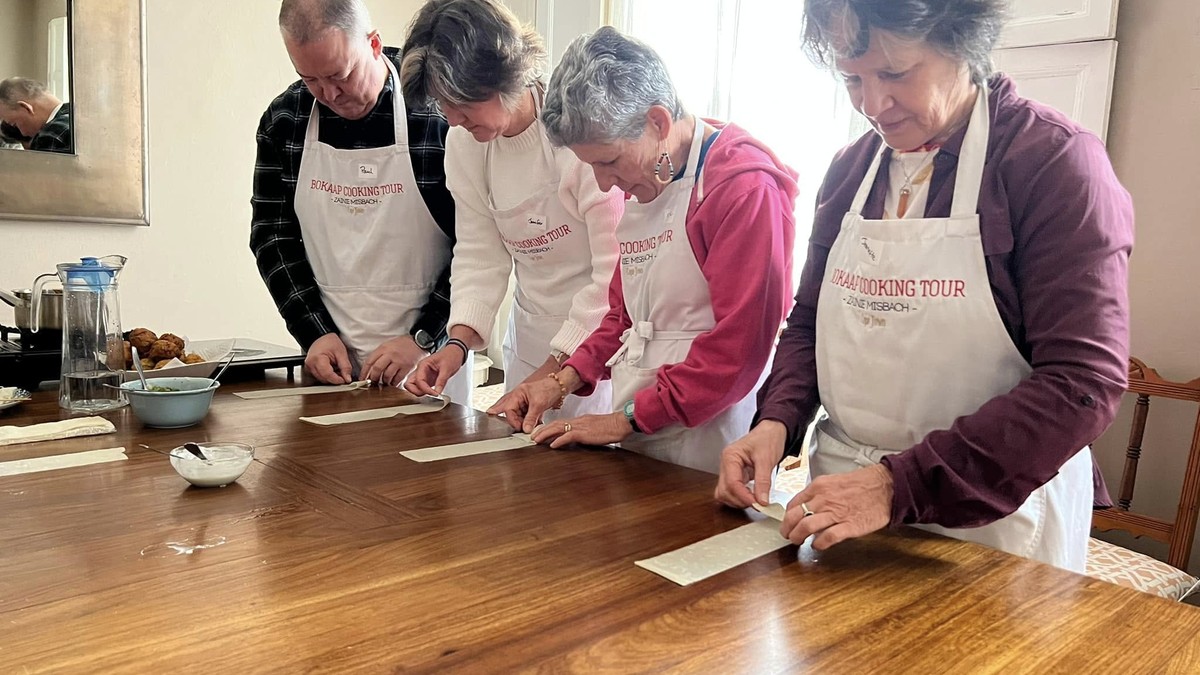
The food that is particular to this city is Cape Malay, brought by people enslaved and transported here from the Indonesian archipelago, and it is still cooked in the Bo-Kaap by the families who kept it. Alongside it sits African cooking from further up the continent and a South African tradition that now runs all the way to the tasting menu.
This is the part of eating in Cape Town most visitors miss entirely, and it is cheaper than everything else on this page.
04
Coffee and the morning
Roasters, long breakfasts and the bakeries with queues
Breakfast is a real meal here and the hour between eight and eleven is when a lot of the city is actually at its best. There are roasters worth crossing town for, rooms designed for sitting in for two hours, and bakeries that sell out before lunch.
Almost all of it closes by mid-afternoon, which catches people out. Plan the cafe into the morning rather than treating it as a fallback when a restaurant is shut.
05
Markets, and eating outdoors
Seven markets, two of them open every day

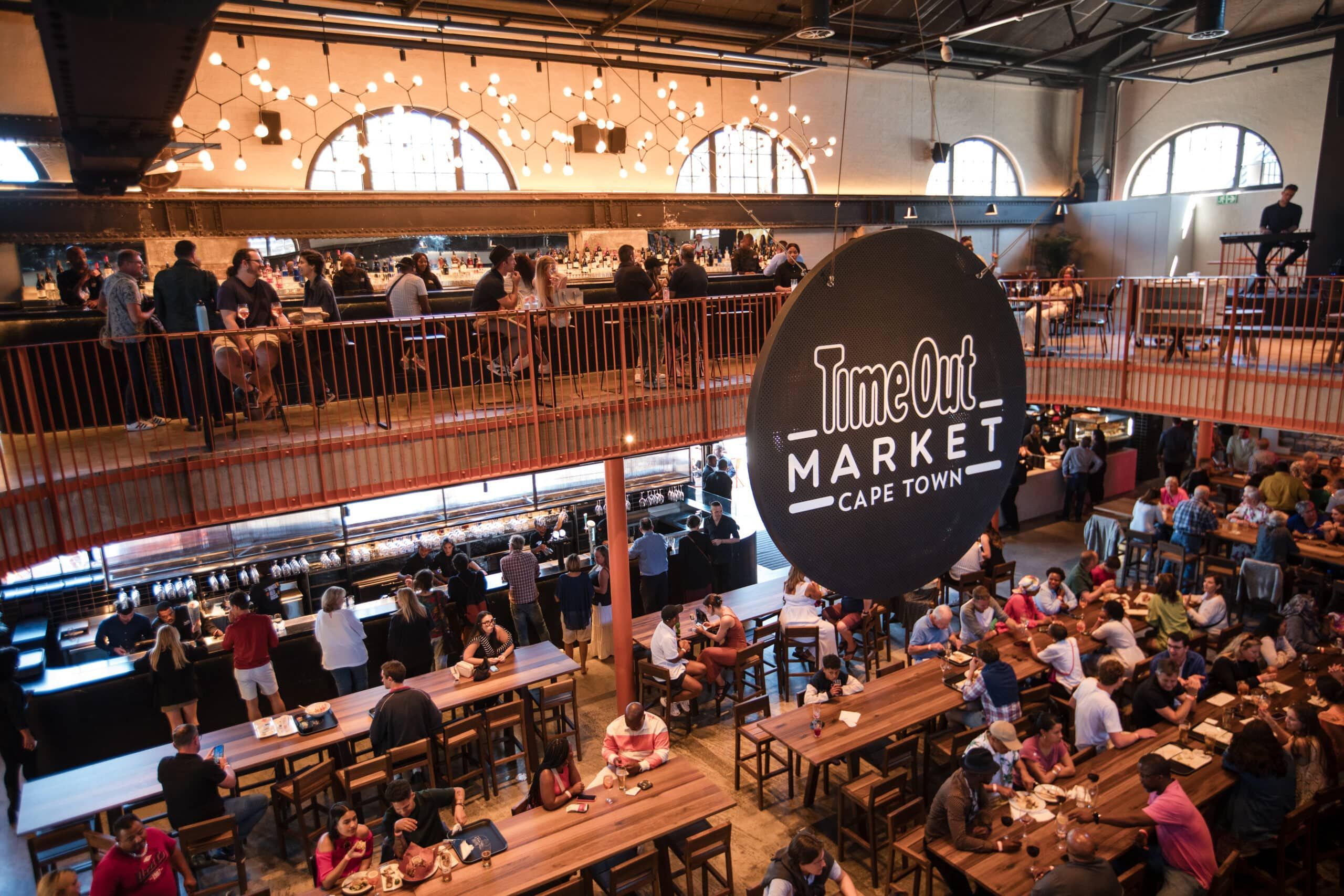
The market is the cheapest good eating in Cape Town and on a Saturday morning it is also the best. Time Out Market at the Waterfront and Mojo Market in Sea Point run every day. Oranjezicht City Farm Market, Neighbourgoods at the Old Biscuit Mill and Bay Harbour Market in Hout Bay are weekend affairs worth building a morning around.
Walk the whole thing once before committing to a stall, then eat in three or four small rounds rather than one plate. Take cash as well as a card.
06
The Winelands table
Stellenbosch, Franschhoek and the farm restaurants

An hour out of the city the whole proposition changes. The Winelands restaurants come with a view, a wine list made on the premises and a slower afternoon, and several of them are as good as anything in town. Delaire Graff sits at the top of the Helshoogte pass with the Banhoek valley in front of it; Rust en Vrede runs one of the best dining rooms in Stellenbosch on a werf dating to 1694.
This is a lunch proposition rather than a dinner one, because of the drive back. Book the terrace, and book it early.
If you only have a few days
Book one set-menu room for the evening you care about, eat the Bo-Kaap on a lunchtime, give one weekend morning to a market, and let the rest happen on Bree and Kloof Streets. That is the whole city in four moves.
If you would rather do than book, Food Experiences Worth Trying in Cape Town covers the cooking classes, the guided tours and the pairings.
And if the Winelands are on the plan anyway, Wine Farms Worth Visiting is where the eating and the drinking meet.