
You cook, then you eat what you made. A class puts you inside a food tradition the Cape has been cooking for generations. Tell us your dates, your group size and anything you cannot eat, and we arrange the class.
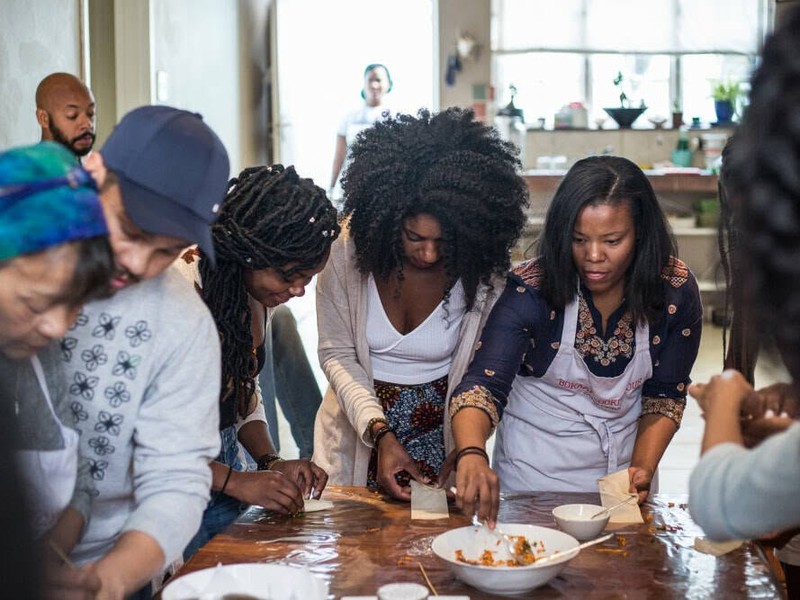
A cooking class is a hands-on session, not a demonstration. You are given a place at the table and a job to do, and the food that comes out at the end is the food you sit down to eat.
Cape Malay cooking is spice-led rather than hot. Cinnamon, cardamom, cumin and turmeric do the work, often in dishes that balance sweet against savoury in a way that surprises people expecting curry. It grew out of the Cape Muslim community, whose roots run back to the people the Dutch brought to the Cape from Southeast Asia and India, and it has been cooked here long enough to be its own tradition rather than a borrowed one.
The Bo-Kaap is where the classes have taken root, on the slope below Signal Hill where the community settled and stayed. Cape Malay food is a Cape tradition rather than a Bo-Kaap one, and it is cooked across the city, but the neighbourhood is where you are most likely to be taught it.
What you cook, how long it runs, and whether the session sits inside a wider afternoon in the neighbourhood are settled when we confirm the class. If there is something you want to learn to make, or something you cannot eat, tell us when you enquire and we will take it into account.
Highlights
- Hands-on cooking, not a demonstration
- You sit down to eat what you cooked
- Taught in the Bo-Kaap
- Spice-led Cape Malay cooking rather than chilli heat
- Arranged by CapeCurated after you send an enquiry