
Cape Town Life Style
Taste Cape Town: Local Food and Flavours
Most of what gets written about eating in Cape Town is about restaurants that could be anywhere. This is about the food that could not.
Four hundred years of forced movement, trade and settlement left the city with a kitchen of its own: Cape Malay cooking brought by enslaved people from the Indonesian archipelago, African food from the rest of the continent, and a South African cooking tradition that runs from the braai to the tasting menu. This is where to eat it, and where to learn it.
01
Cape Malay in the Bo-Kaap
Four kitchens on the slope above the city
The Bo-Kaap is where Cape Malay cooking is still cooked by the people whose families brought it, and the four places worth walking up for are within a few streets of each other. Bo-Kaap Kombuis does the view along with the food. Biesmiellah has been the neighbourhood institution for decades and does Cape Malay alongside Indian. Bo-Kaap Deli is the counter version, for a samoosa and a koesister rather than a sit-down. 126 Cape Kitchen and Cafe is the newest of them.
What to order is fairly consistent: bobotie, denningvleis, a bredie, and koesisters if it is a weekend morning. Portions are generous and prices are low by Cape Town standards. Several of these are halaal and do not serve alcohol, which is worth knowing before you plan the evening around one.
02
African kitchens
Ethiopian, Xhosa and pan-African cooking in the city
Cape Town is a port city on a continent, and the cooking of the rest of Africa arrived with the people who came south. Addis in Cape is the Ethiopian room in the city centre and the one to take somebody to if they have never eaten injera. Marco’s African Place does the pan-African version with live music attached. Seven Colours Eatery takes its name from the Sunday plate and cooks township food properly. Siba The Restaurant is chef Siba Mtongana’s room at the Waterfront, which is the polished end of the same idea.
These four are not interchangeable and it is worth knowing which you are choosing. Two are a night out with music in them; one is a lunch counter; one is a formal dining room.
03
South African cooking now
What the local kitchen looks like at the serious end
The other half of local food is what South African kitchens are doing with it at the top of the market. Galjoen on Harrington Street cooks South African seafood and is named after the national fish. Marble at the Waterfront puts a wood-fired grill at the centre of the room, which is the braai taken seriously rather than sentimentally. Journey at Urchin is the newest of the three and the most experimental.
None of these is a heritage restaurant and none of them pretends to be. They are what happens when the ingredients and the techniques go into a professional kitchen with an opinion.
04
Learn to cook it
A class, a food tour and a chocolate factory

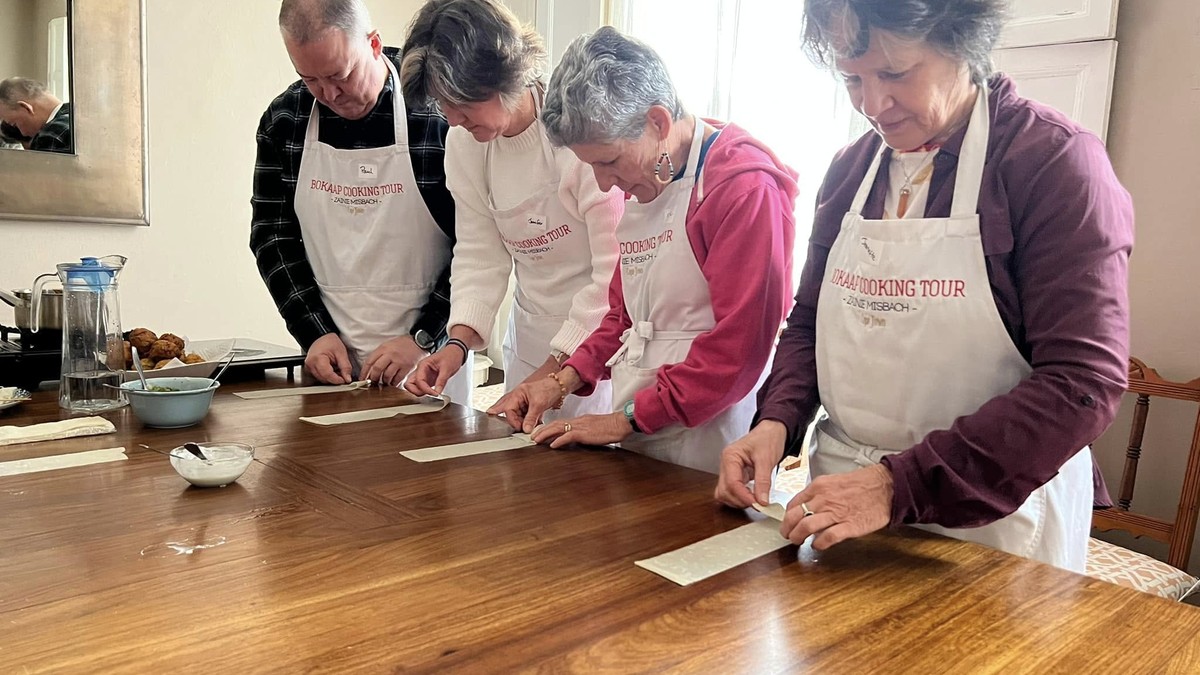
The Cape Malay cooking class is the one thing on this page that changes how the rest of the week tastes. You cook in the Bo-Kaap, usually in somebody’s house, and you eat what you made. It is a half day and it is the best-value food experience in the city.
If you would rather be walked around than stand at a stove, Taste of Cape Town runs a guided eating tour through the centre. And the Bean to Bar experience at AFRIKOA takes the chocolate side of it, from the cocoa bean through to the bar, which is a better hour than it sounds.
Eating it in the right order
If you only do one of these, make it the Bo-Kaap. It is a twenty-minute walk from the top of the city, the food is cheap by any standard, and the neighbourhood is the reason the food exists.
A cooking class before you eat out is not the obvious order, but it is the better one. Once you know what is in a bobotie or why the koesister is wet, the rest of the week tastes different.
For the wider picture, Our Top 10 Restaurants in Cape Town covers the rooms worth booking and The Best Markets in Cape Town covers the cheaper, earlier end of the same story.