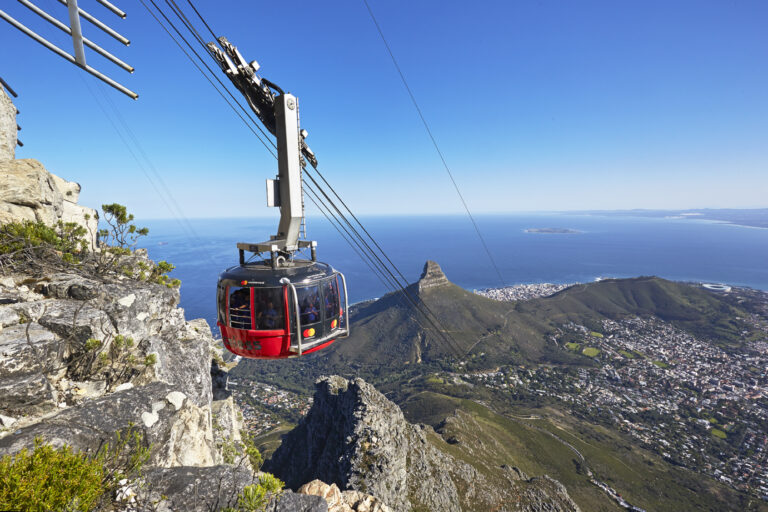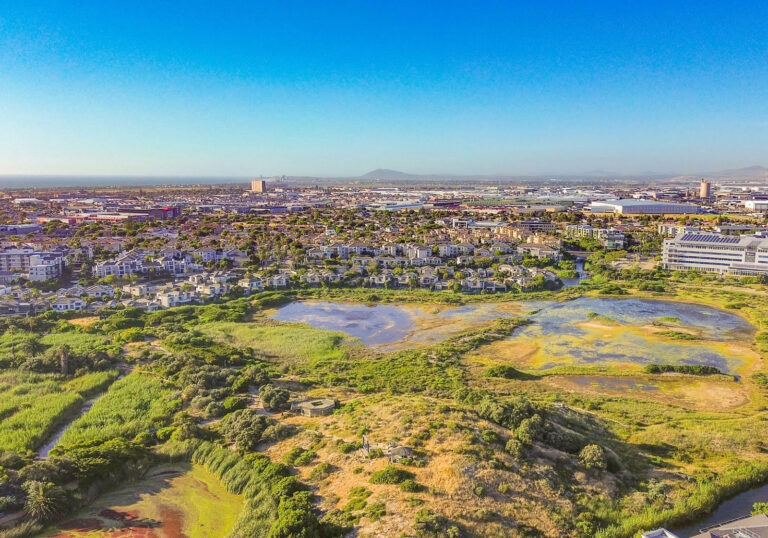
Blaauwberg Nature Reserve protects 1 445 hectares roughly 25 kilometres north of central Cape Town, at the point where the city gives way to West Coast flora. It conserves three highly threatened lowland vegetation types in a single reserve, more than 560 plant species and over 140 bird species, along with seven kilometres of rocky and sandy coastline. Blaauwberg Hill at its centre is one of the few viewpoints on earth from which two World Heritage Sites, Table Mountain and Robben Island, can be seen at once, and the ground below it holds shell middens some 15 000 years old and the site of the 1806 Battle of Blaauwberg.
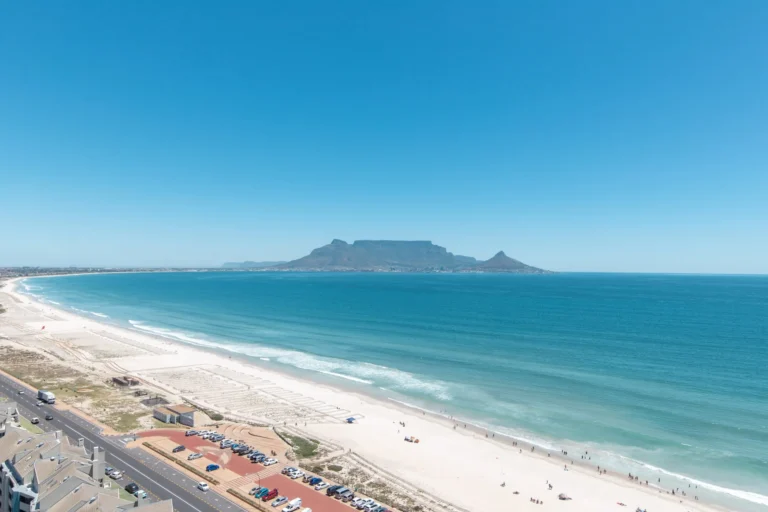
Bloubergstrand is where people go for the postcard photograph of Table Mountain. Blaauwberg Nature Reserve is the 1 445 hectares behind and above it, and the reason the view still has something wild in the foreground. The City of Cape Town describes it as one of the most intact and diverse lowland vegetation habitats in the city, roughly 25 kilometres from the centre, marking the point where the Cape flora becomes West Coast flora.
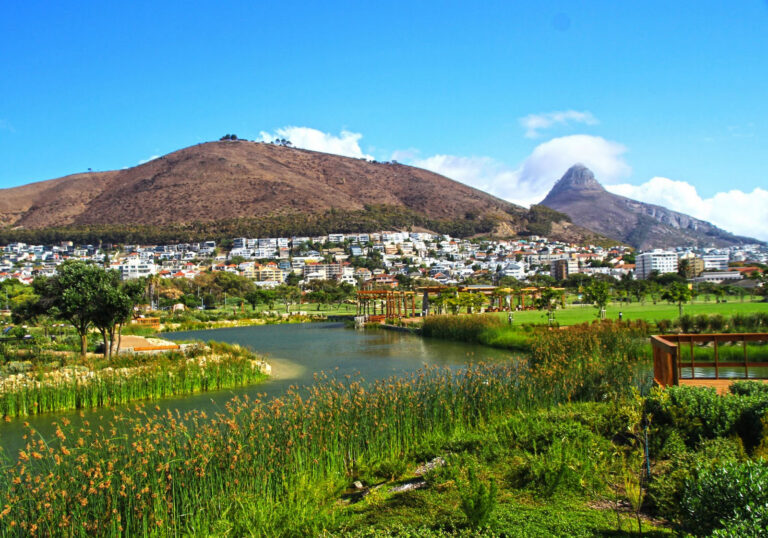
Three highly threatened lowland vegetation types are conserved here in one place: Cape Flats dune strandveld, Swartland shale renosterveld and Cape Flats sand fynbos. The City notes that this combination is seldom found in a single conserved area. More than 560 plant species have been identified inside the reserve and over 40 of them are considered threatened with extinction, which is a remarkable density for flat coastal ground that could easily have been lost to development.
The animal list is just as unlikely for a reserve this close to a city. Over 40 mammal, 28 reptile, five amphibian and 30 butterfly species have been recorded, along with more than 140 bird species including the threatened African black oystercatcher and raptors such as the jackal buzzard, the black harrier and the peregrine falcon. Honey badger, Cape grysbok and caracal are all present. So is the Blaauwberg dwarf burrowing skink, a species known from only six individuals in total, three of which were found inside this reserve.
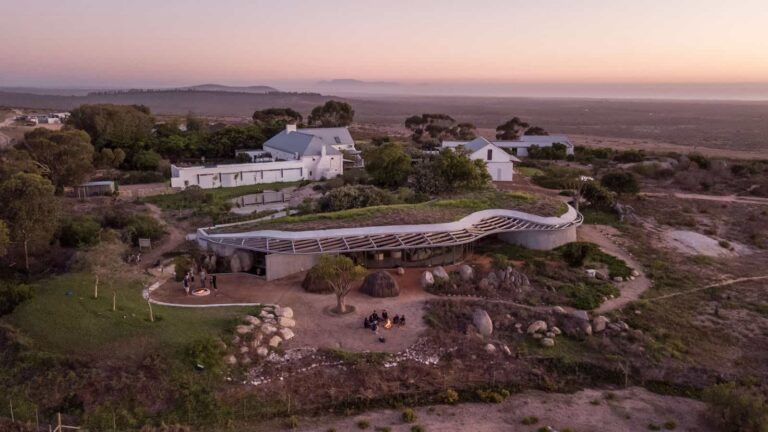
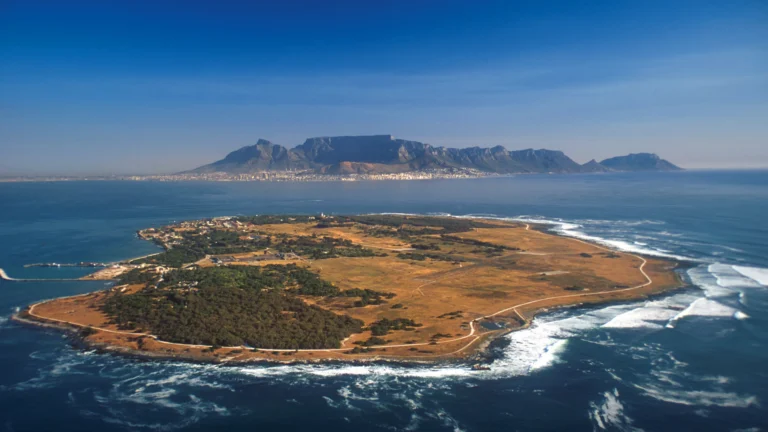
Blaauwberg Hill carries the history. It is one of the few viewpoints in the world from which two proclaimed World Heritage Sites can be seen at once, Table Mountain and Robben Island, looking down fynbos slopes across the city and out over seven kilometres of rocky and sandy coastline. Shell middens on the reserve date back roughly 15 000 years. The ground also holds the site of the Battle of Blaauwberg in 1806, where the British took second occupation of the Cape, and the hill itself carries several buildings from the Second World War, one of them the first radar station built in South Africa. The Montispectus self catering unit sits on top of the hill and can be hired through the City.
Highlights
- Blaauwberg Hill, one of the few viewpoints on earth showing two World Heritage Sites at once
- Three highly threatened lowland vegetation types conserved in a single reserve
- Over 560 plant species, more than 40 of them threatened with extinction
- Seven kilometres of rocky and sandy coastline inside the reserve
- The site of the 1806 Battle of Blaauwberg and South Africa’s first radar station
- Over 140 bird species, including the threatened African black oystercatcher
Tips
Gate payment is cashless, so bring a card. Braaiing is only allowed at the designated Eerste Steen braai and picnic facility, which keeps shorter hours than the coastal section. The Montispectus self catering unit on top of Blaauwberg Hill is booked separately through the reserve reservations address. For seasonal pass prices, consult the City nature conservation tariffs.
Frequently Asked Questions
What is Blaauwberg Nature Reserve?
It is a City of Cape Town nature reserve of 1 445 hectares, about 25 kilometres north of the city centre, which the City describes as one of the most intact and diverse lowland vegetation habitats in Cape Town and the beginning of the West Coast flora. It takes in Blaauwberg Hill, seven kilometres of coastline and the Eerste Steen resort area.
Is there an entrance fee?
Yes. On the City tariffs valid from 1 July 2026 to 30 June 2027, entry is R20 for adults from 18 years and R15 for children aged 3 to 17, tertiary students and senior citizens, with proof required. Children under 3 and Friends of the reserve enter free. Vehicles are charged R20 per day, and pre-booked learner and student groups pay R15 per person. The gates are cashless.
When is the best time to visit?
The coastal section runs from sunrise to sunset every day, so early morning and late afternoon are both open to you. Late afternoon on Blaauwberg Hill gives the best light on Table Mountain across the bay. The Eerste Steen braai and picnic facility keeps shorter hours, closing at 19:00 from November to April and 17:00 from May to October.
Can you walk through the reserve?
Yes. The City lists paths and walkways among the reserve facilities, and hiking and walking, running and jogging among its activities. The City publishes both a hiking trail map and a separate coastal hiking trail map for the reserve.
Is it good for photography?
Blaauwberg Hill is one of the few places in the world from which two World Heritage Sites, Table Mountain and Robben Island, can be seen together, looking down fynbos slopes across the city and out to seven kilometres of coastline. The reserve is best known for exactly this view.