Stellenbosch
Best Things to Do in Stellenbosch
Most people arrive in Stellenbosch for the wine, give the town forty minutes and leave. That is the wrong way round. The historic centre holds the longest unbroken row of old Cape facades in the country and takes about twenty minutes to cross on foot, which means you can do it properly and still be on a farm by lunchtime.
Eleven things worth your time, in the order a first visit should take them: the town first, then four farms chosen for four different kinds of afternoon, then the valley behind the town, then the three things here you have to book.
Start in the town
It is small, it is free, and it is the part most visitors skip on their way to the farms.
01
Dorp Street
The second-oldest street in the country, and the obvious place to start

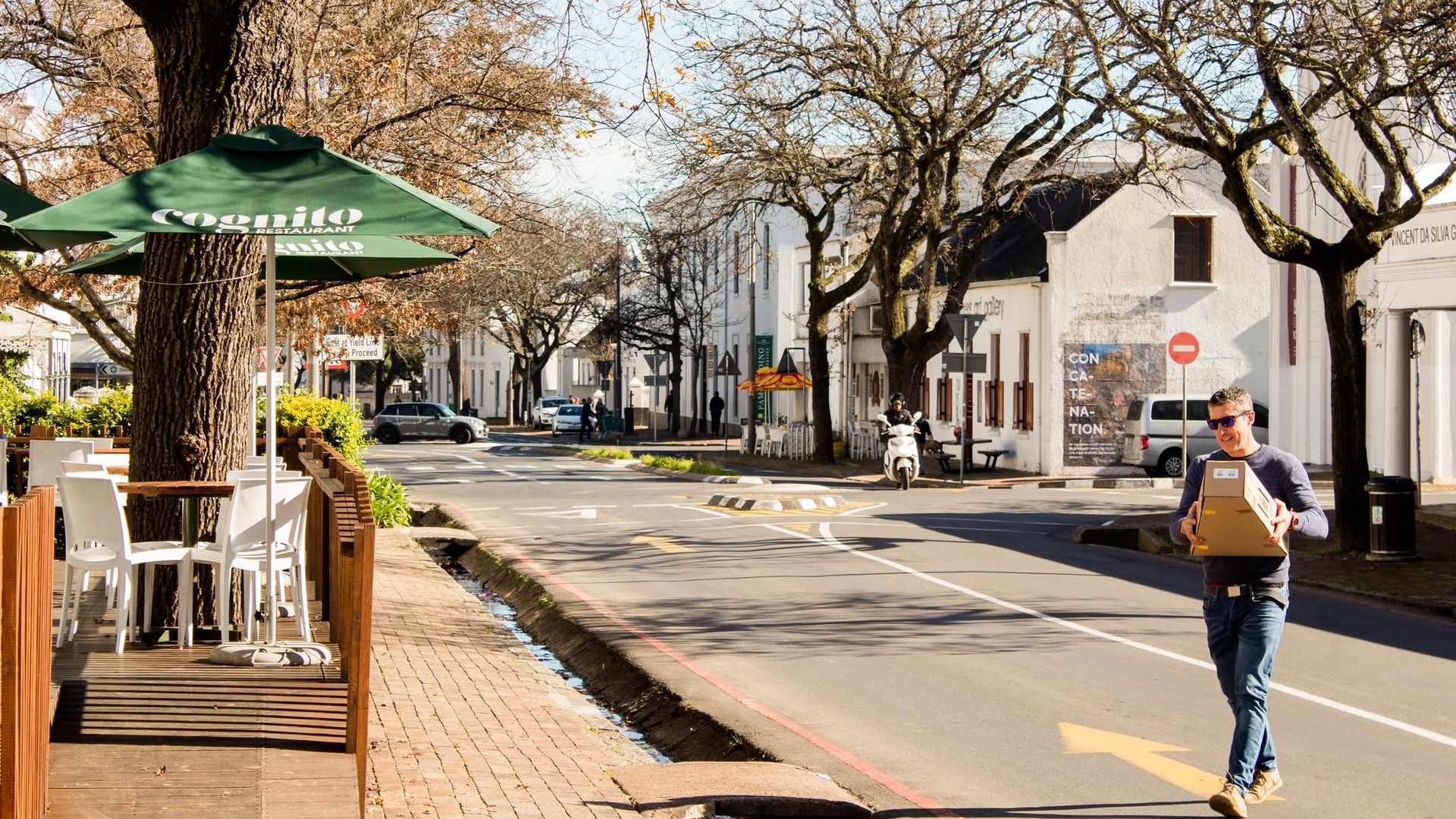
Walk it downhill from the top. Dorp Street carries the longest unbroken row of old facades left in South Africa, and the thing that makes it work is that it is still a working street rather than a preserved one — oaks down both sides, water furrows running, shops people actually use. Oom Samie se Winkel at number 84 has been trading here for more than a century and you can walk in without paying for anything.
An hour if you stop, half that if you do not. It also puts you within five minutes of everything else in this section.
02
Stellenbosch Village Museum
Four town houses, 1709 to the 1850s, shown as four separate households

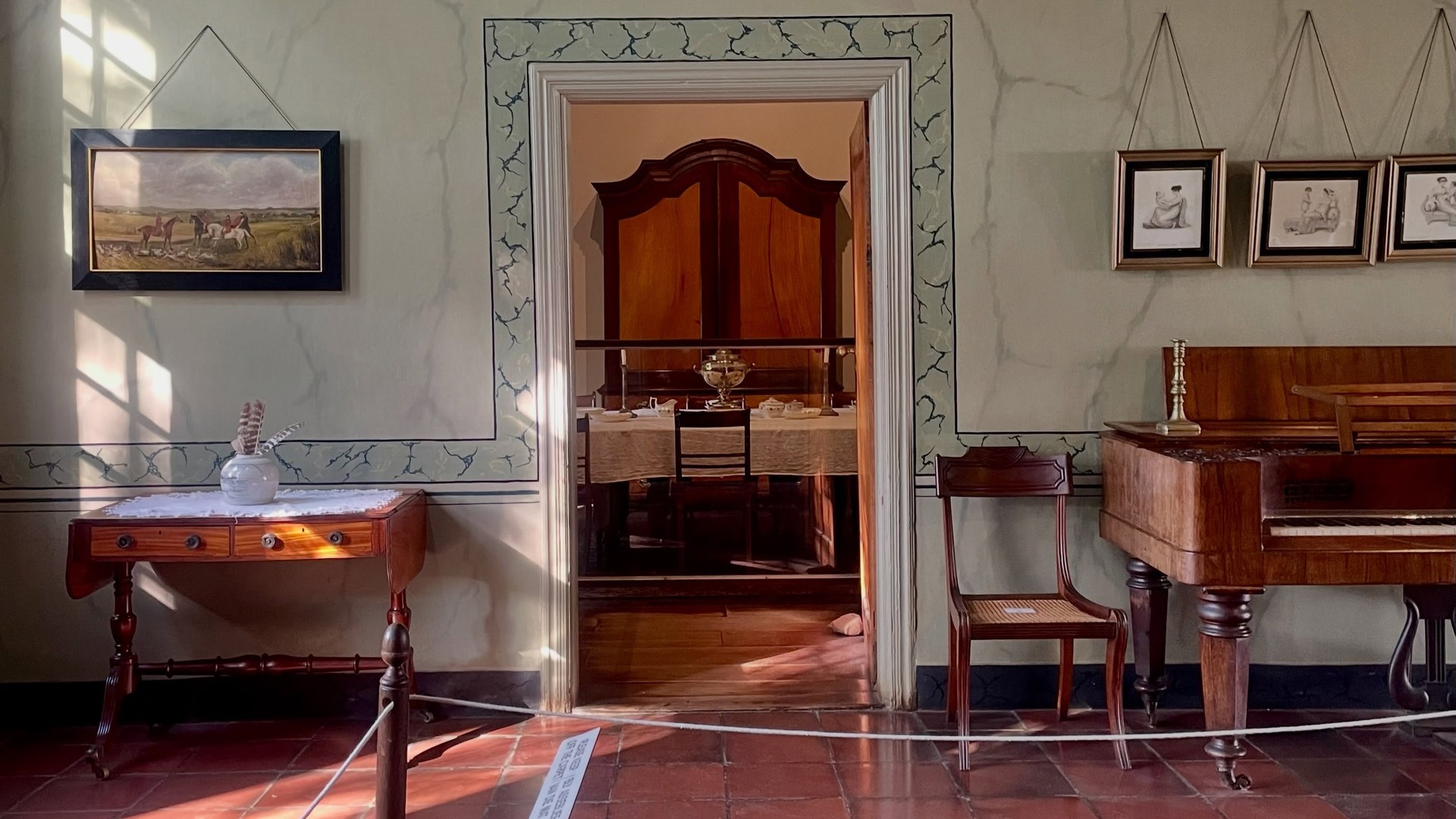
The single best hour in town for understanding why Stellenbosch looks the way it does. Four restored houses on Ryneveld Street, each furnished to its own period rather than pooled into one collection, with guides in period dress and the gardens planted to match.
The jump between the first house and the last is the clearest illustration anywhere of what happened here in a century and a half. Open seven days, which makes it the reliable choice if you are only in town for a weekend.
03
Stellenbosch University Museum
Six thousand pieces of African art, two minutes up the same street, free
Almost nobody walks the extra block from the Village Museum, and it is the best-value stop in Stellenbosch. The university holds more than six thousand pieces of traditional African art — masks, sculpture, textiles from across the continent — which is one of the largest collections of its kind in the country, and there is no charge to walk in.
A changing exhibition programme runs alongside it through the year. Older guidebooks still call it the Sasol Art Museum.
Four farms, four different afternoons
Thirty estates are attached to Stellenbosch and they are not interchangeable. These four cover the realistic range: a whole day out, a view, an old cellar, and the wine on its own.
04
Spier Wine Farm
The one to choose if you want a whole afternoon rather than a tasting

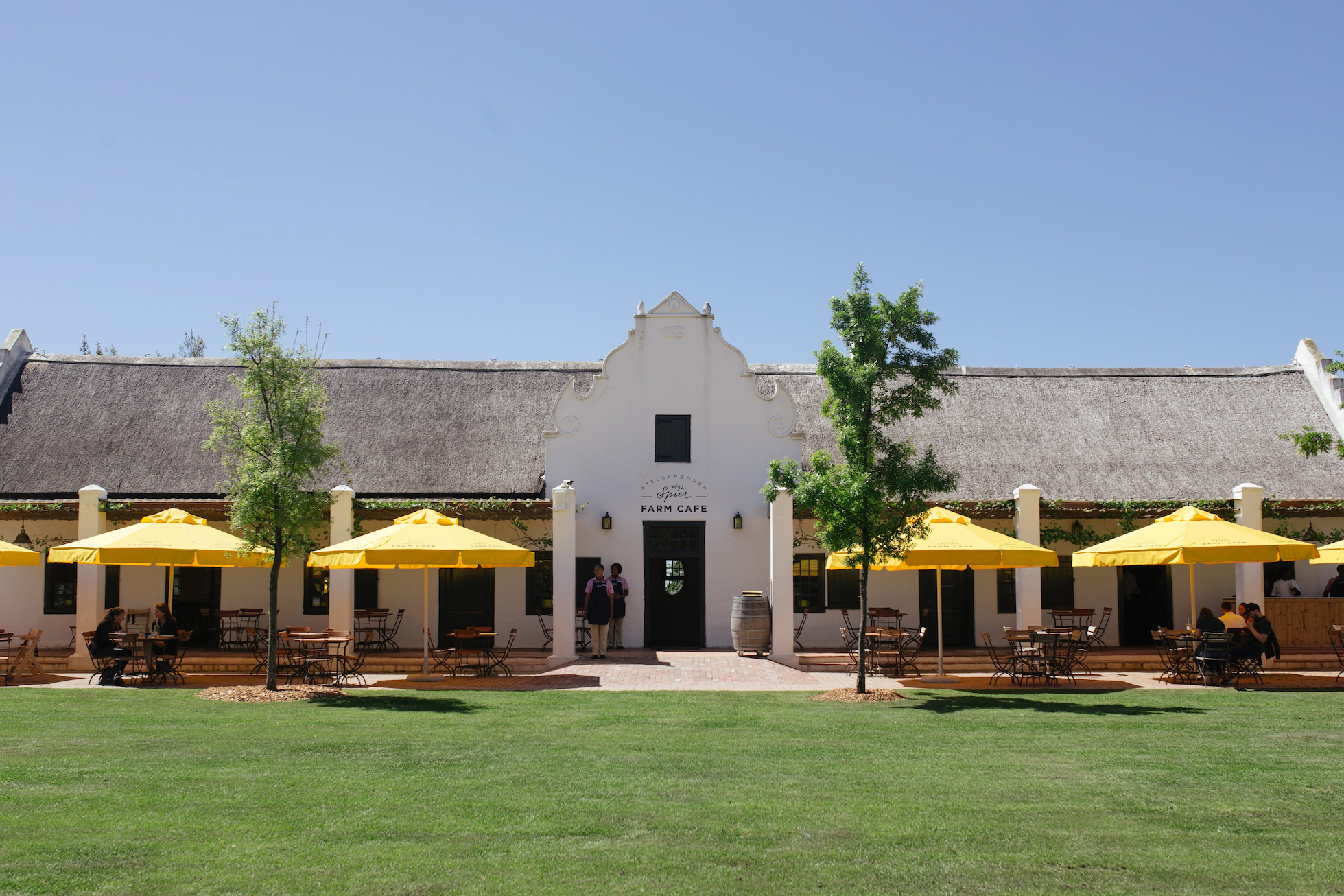
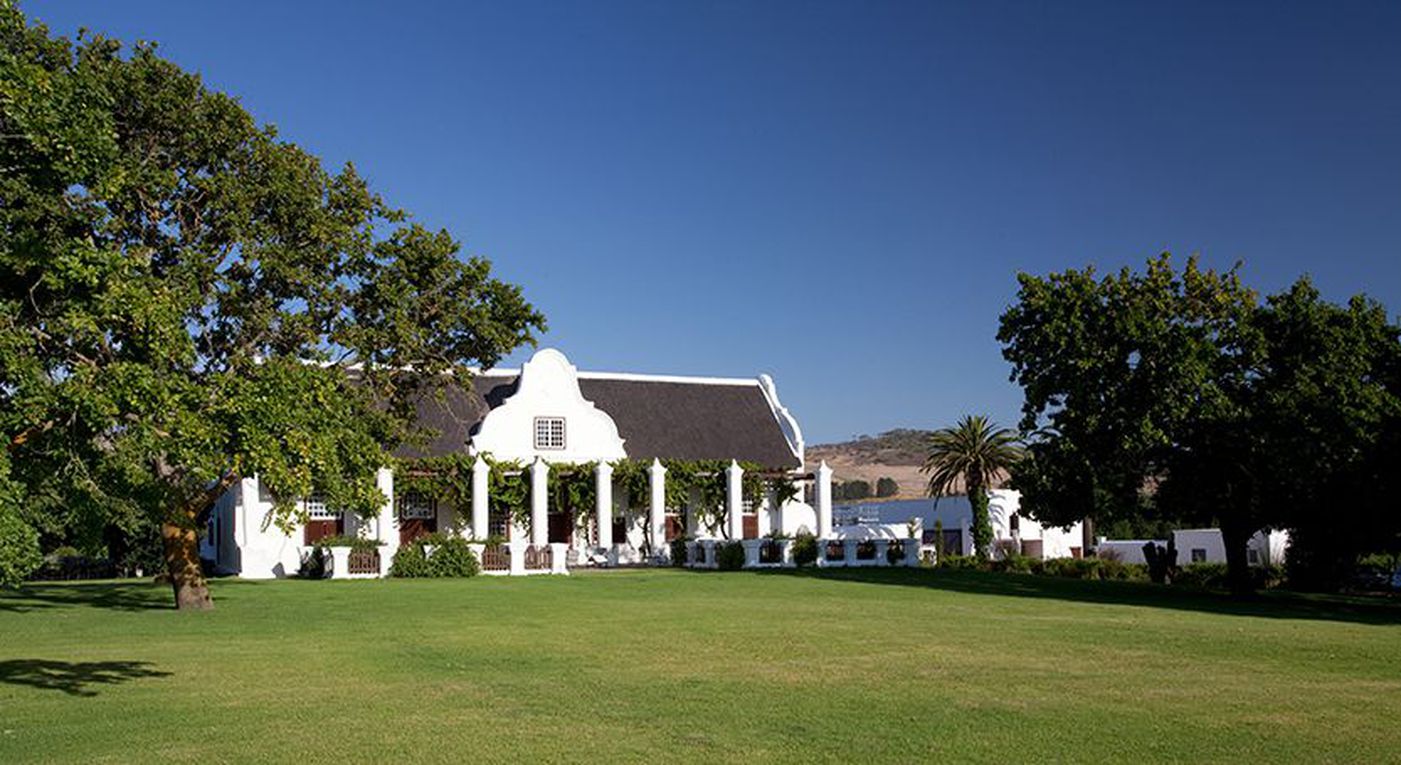
If you are only going to one farm and you have children, or simply do not want to be back in the car in forty minutes, make it this one. Spier is set up for a day rather than a stop: lawns, a picnic operation, a working food garden, three places to eat and a Segway tour through the vineyards.
The wine is genuinely good too — the Creative Block range and the 21 Gables wines are the ones to ask for. Tasting reservations are essential, and the farm does not allow you to bring your own food or drink.
05
Delaire Graff
The view, and the only major estate that takes no tasting bookings

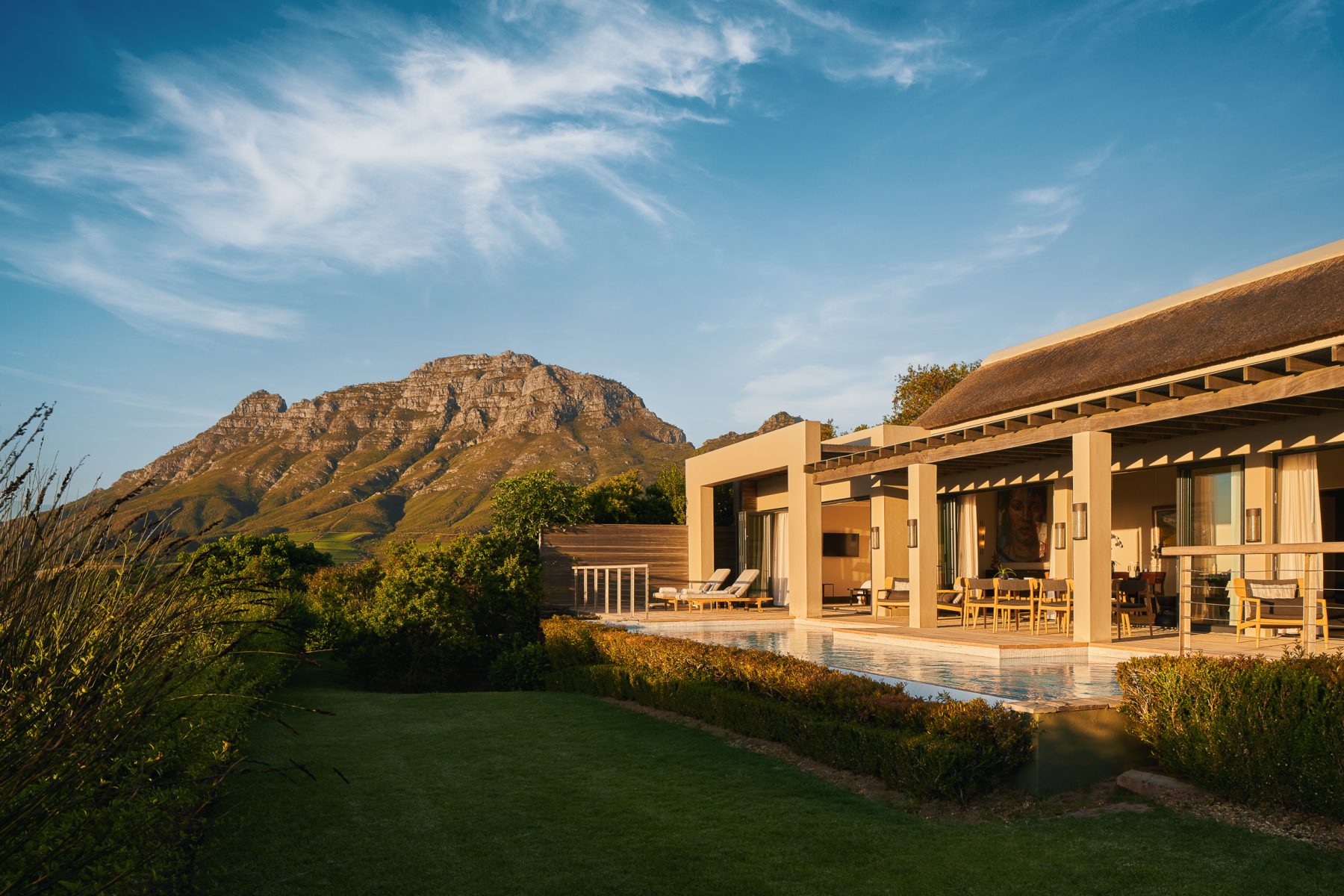
Up on the Helshoogte Pass looking back down the Banhoek valley, and the view is the reason to go. The Wine Lounge has been fully redesigned and hung with works from the Graff collection, which makes it one of the few tasting rooms in the Cape worth sitting in for its own sake.
The practical thing almost every guide gets wrong: the lounge takes no reservations at all. Tables are first come, first served, with a waiting list when it fills. That is the opposite of the advice you will read elsewhere, and it means arriving early rather than booking ahead.
06
Muratie Wine Estate
The unrestored one, and the most atmospheric tasting room in the valley

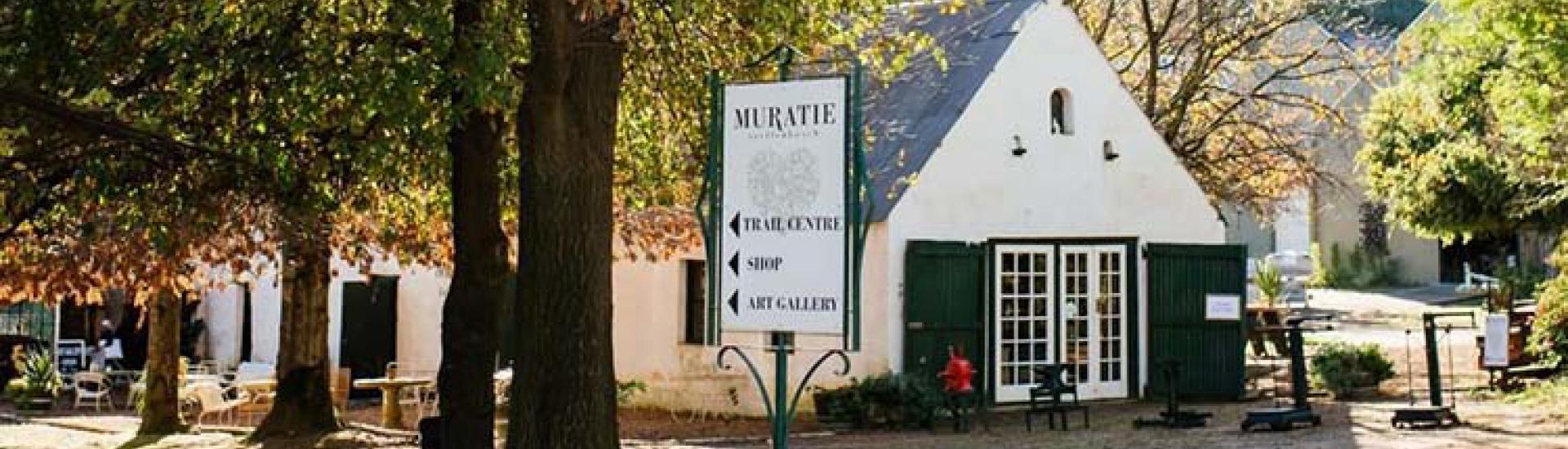
Nobody has scrubbed Muratie up and that is entirely the point. Cobwebs, candle soot on the cellar walls, portraits stacked against the plaster, a cat somewhere. After three polished tasting rooms it is a relief, and the wines hold their end up.
You can walk in for a tasting any day of the week, which not every estate allows. The Farm Kitchen only opens Wednesday to Sunday, so a Monday or Tuesday visit is wine and no lunch. The Dirtopia trail centre is on the same farm if you want to walk it off.
07
Meerlust Wine Estate
For the wine and nothing else, which is increasingly rare

No restaurant, no picnic lawn, no gift shop worth the name. Meerlust is a tasting room on an estate that has been in the same family since 1756 and makes Rubicon, which is as close as South Africa has to a benchmark Bordeaux blend.
Go if the wine is the point of the day. Do not go if you need lunch out of it. You can walk in without booking unless you are more than ten people.
The valley behind the town
Stellenbosch has a mountain reserve nine kilometres from the square, and almost everything outdoors here happens in it.
08
Jonkershoek Nature Reserve
The valley behind the town, nine kilometres from the square

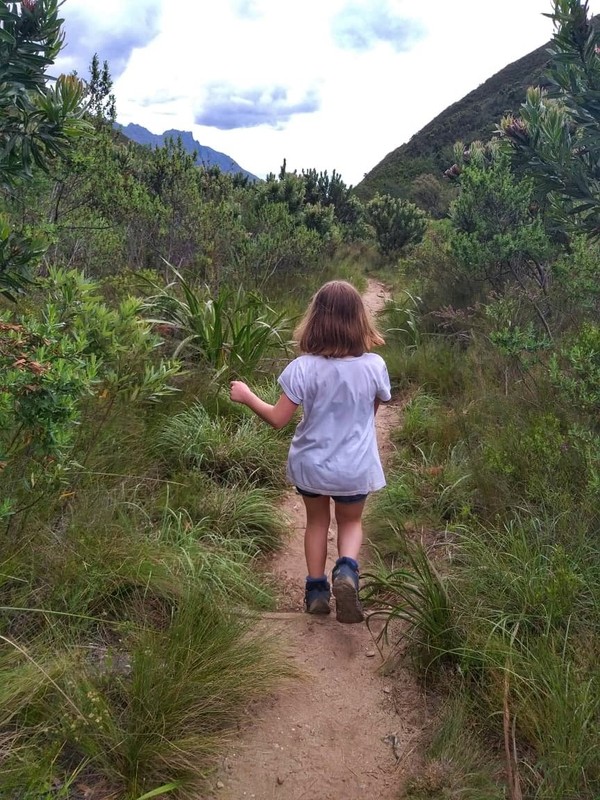
Four rivers rise in these mountains and the pools and waterfalls along them are why people come. CapeNature marks four hiking trails across the reserve, from a two-hour riverside walk to an eighteen-kilometre mountain day, and the shortest of them is well within reach of an ordinary afternoon.
One thing to know before you drive out: parking on the circular route has been closed since March 2026, so you park outside the gate and walk in, which adds about five kilometres each way before you reach the trailheads. CapeNature’s own page still carries the older arrangement as well, so ring the reserve before you go.
The three things you book ahead
None of these is a walk-up, and two of them sell out in season.
09
Hot Air Ballooning
Sunrise over the Winelands, and the one thing here you will not do anywhere else

Flights lift off at first light from Klein Joostenberg on the R304, fifteen to twenty minutes from Stellenbosch, and drift over the vineyards for about an hour before a champagne breakfast with the crew. Budget a half morning in total rather than an hour.
It is entirely weather-dependent and the meeting time moves with the season, from around five in summer to eight in winter, confirmed the day before. Bad conditions mean a reschedule rather than a refund, so book it for the start of your stay and not the morning you fly home.
10
Villiera Wildlife Sanctuary Game Drive
Giraffe, zebra and eland on a working wine farm twenty minutes out
Not the obvious Winelands activity, which is rather the point. Villiera runs a guided drive through a 230-hectare private sanctuary on its own farm at Koelenhof, with giraffe, kudu, zebra, waterbuck, eland, gemsbok and several of the smaller buck. An hour and a half to two hours.
The relationship with the wine is the other way round from what you would expect: you pay for the drive and the tasting comes with it, following the morning drive and preceding the afternoon one. Capacity is genuinely limited — two vehicles, twenty-seven people a day — so this is not a walk-up.
11
Segway Vineyard Tours at Spier
An hour through the vines without walking or driving
Run by an independent operator on Spier rather than by the farm itself, and better than it sounds. Training takes a few minutes, after which you follow the vineyard rows and the open plains of the farm with a guide. The two-hour version adds a tasting at the end.
It pairs naturally with a Spier afternoon rather than being a reason to drive out on its own, and it is one of the few things here that works for teenagers who have had enough of tasting rooms.
Shaping the day
If you have one day: the town in the morning, one farm for lunch and a tasting, and the Botanical Garden or Jan Marais in the late afternoon when the tasting rooms start closing. If you have two, add Jonkershoek on the second morning and a second farm in a different direction.
The day of the week matters more here than it should. The University Museum closes at weekends and the Rupert Museum closes on Mondays, so a Saturday visitor loses one and a Monday visitor loses the other. The Village Museum, Dorp Street and the farms are open through.
And the obvious one: a tasting flight is five or six wines across three or four estates, and South Africa’s drink-drive limit is lower than Britain’s. If the wine is the point of the day, use a driver or a tour rather than a hire car.
For the rest of it, the old town on foot, the full wine selection, everything outdoors and where to eat each go deeper than this page can.