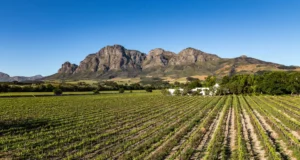
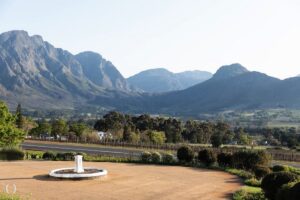
Franschhoek is a single valley closed on three sides by mountains, and its history is written into the name. Between 1685 and 1699 around 300 Huguenot refugees settled at the Cape, many of them here, bringing the vines and the French place names that still run down the valley floor.
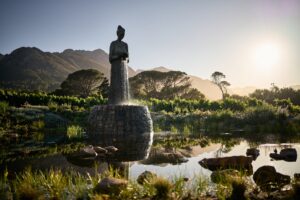
The Huguenot Monument stands at the head of the main street. Building started in 1942, finished in 1945, and it opened to the public on 17 April 1948. The adjoining museum keeps the settlement records, and the two together are the reason the valley has a sense of itself that most wine districts lack.
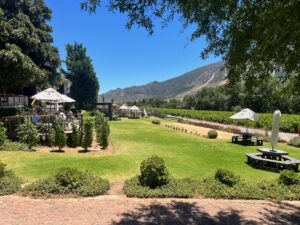
What visitors come for now is food and wine at close quarters. The main road is a single walkable strip of restaurants, tasting rooms and galleries, and the estates begin almost immediately behind it — which is what makes Franschhoek unusual: you can leave the car and still reach a good deal of it.
The mountains do the rest. Franschhoek Pass climbs out of the eastern end of the valley towards Villiersdorp and Theewaterskloof, and the slopes above the vineyards carry hiking trails into the Mont Rochelle side of the range.
It is about an hour from Cape Town and works as either a long day or, more sensibly, a night or two.