
Haute Cabrière
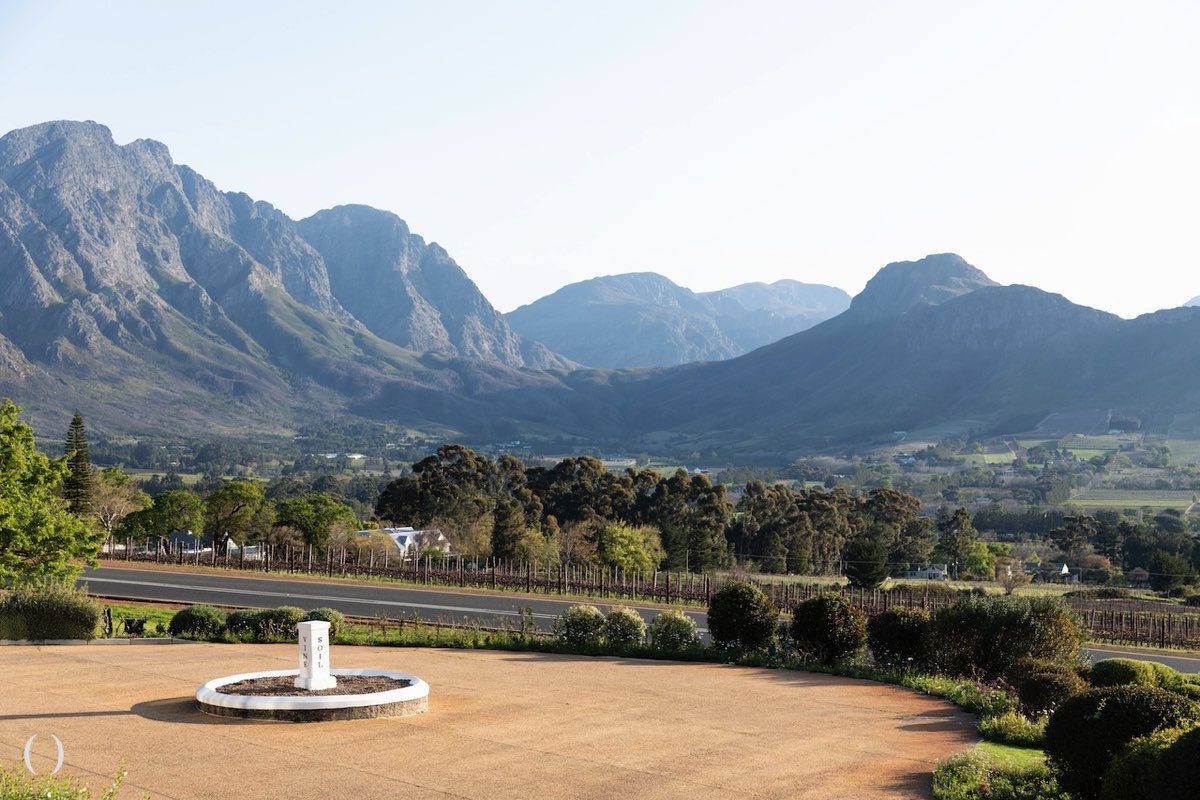
Haute Cabrière has been making wine since 1694 and is where the still Chardonnay Pinot Noir blend that South Africa now associates with Franschhoek was pioneered. The Pierre Jourdan range of Cap Classique is the other reason people drive up here.
The cellar is cut into the mountain and the tour goes underground. The restaurant is a glass-encased terrace looking straight down the valley, and it serves lunch rather than dinner, which makes this a midday estate rather than an evening one.
Chamonix Wine Farm
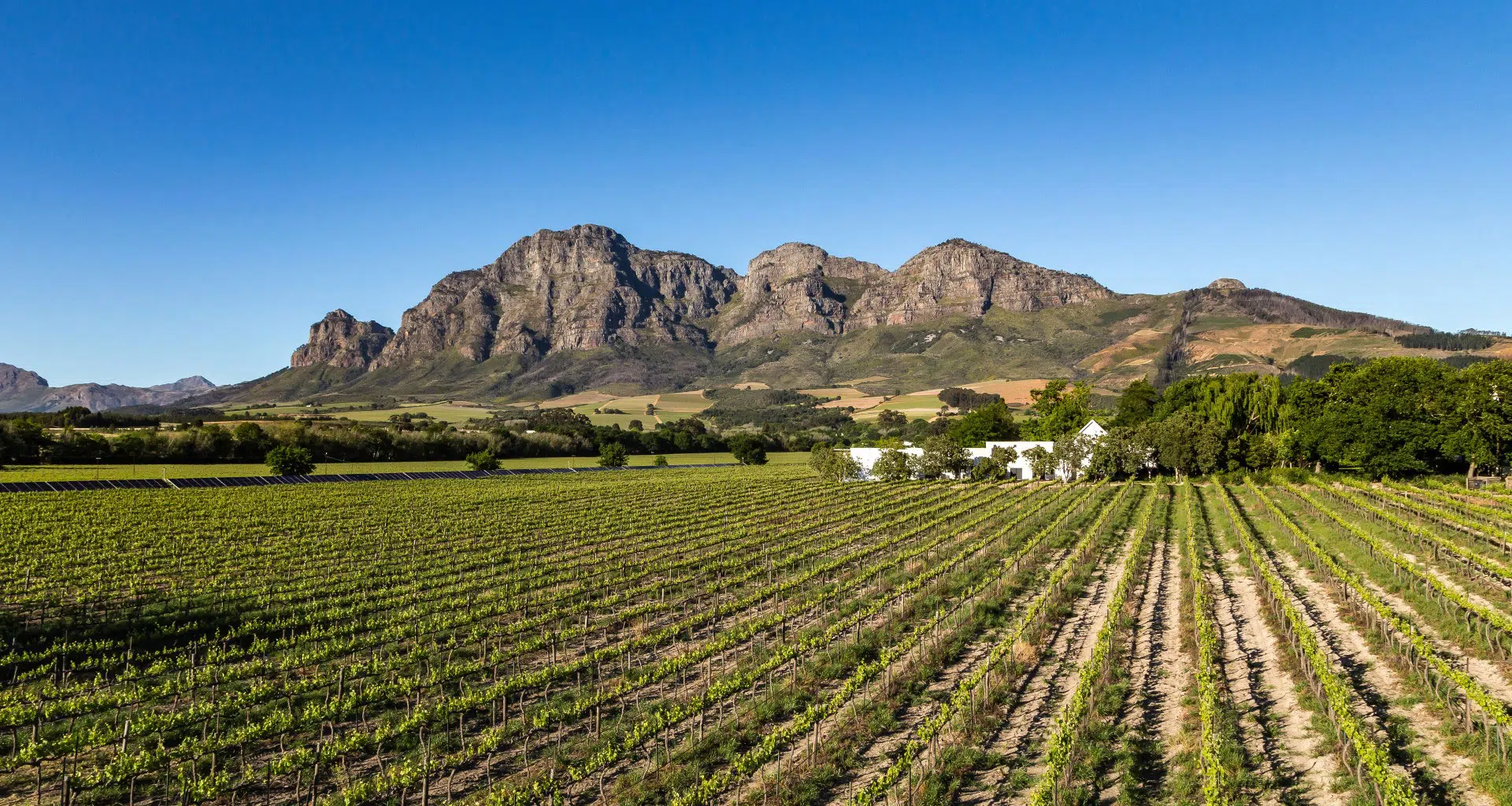
Chamonix farms some of the highest vineyards in the Cape, up the slopes above the village, and the altitude is the point rather than a detail. It shows in the Chardonnay and in the Feldspar Pinot Noir, which is one of the benchmarks for that variety in South Africa.
The flagship is Troika, a Bordeaux-style blend, and the estate makes a Pinotage under the Greywacke name. There is a restaurant on the farm and there are rooms, so this is one of the few in the valley where the visit does not have to end when the tasting room closes.
Rickety Bridge Wine Estate
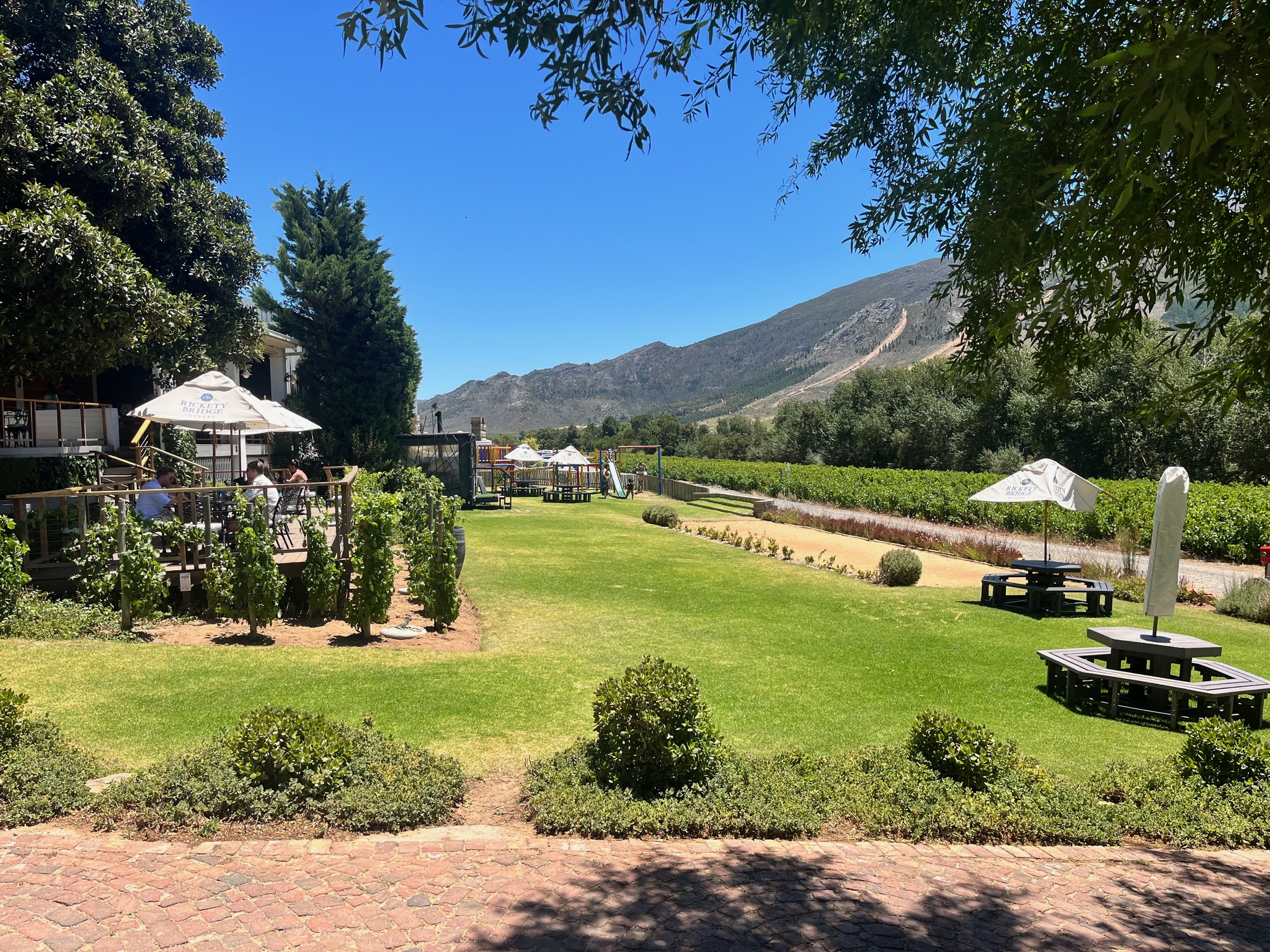
Rickety Bridge is on the main road and takes wine education more seriously than most of its neighbours. The Foundation Stone tasting runs to eight wines, the Regna Loca range is built around regional expression, and the Theatre of Wine cellar tour is the most structured in the valley.
There is also a guided vineyard walk to a viewpoint, a blending session, and a bistro for afterwards. It is a Wine Tram stop, so it is busiest in the middle of the day and quietest at either end. The estate has rooms, which makes the quiet end of the day available to you.
Babylonstoren
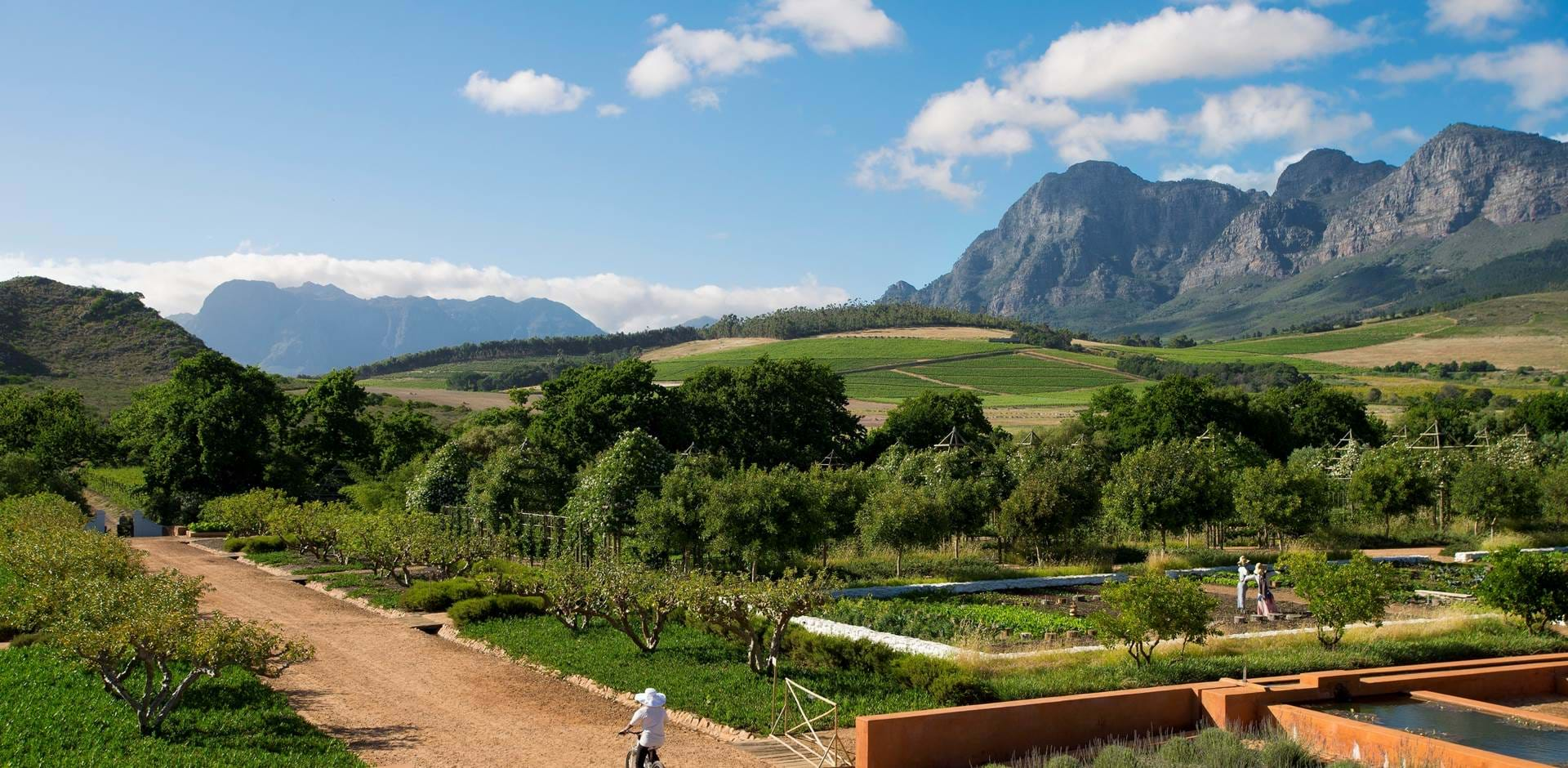
Babylonstoren is at Simondium at the top of the valley, and it is less a wine farm with a restaurant attached than a working farm that also makes wine. The eight-acre edible garden runs to hundreds of plant varieties and is what most people actually come for.
The wines come off Simonsberg vineyards, the restaurants are farm-to-table in the literal sense, and there is a bakery, a garden spa and a hotel. Cellar tours run through the day. Of the nine this is the one that most rewards arriving early, because the garden is better before the crowd reaches it.
Boschendal
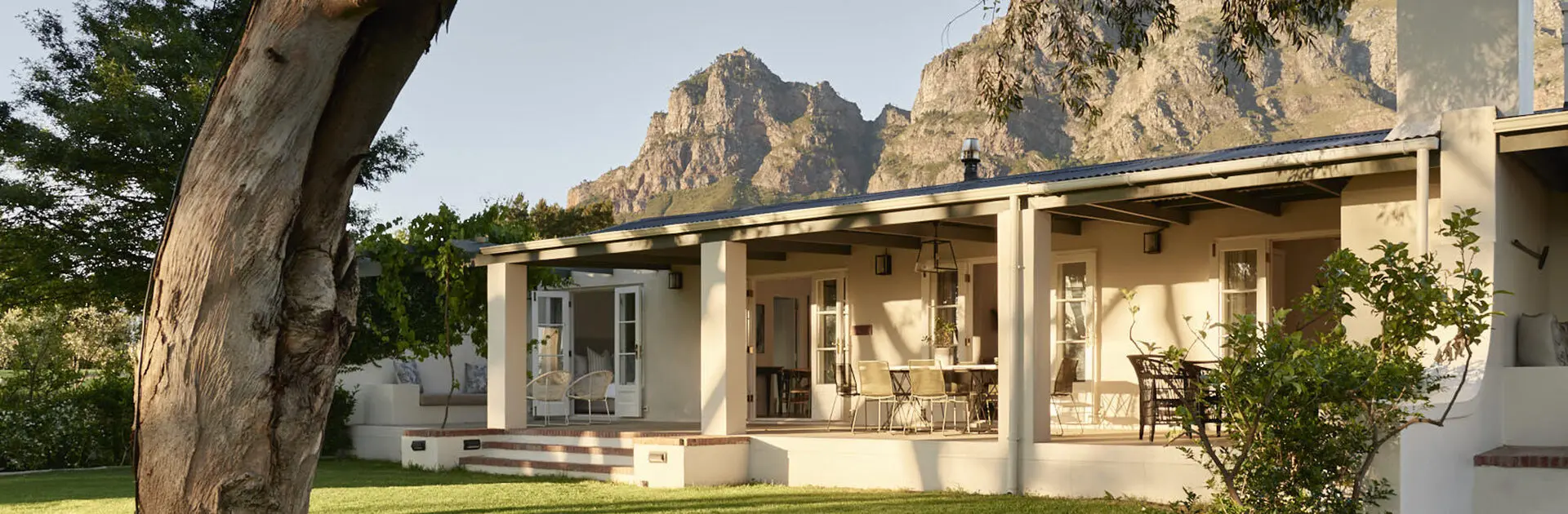
Boschendal has been farming since 1685 and is large enough to absorb a day without effort. The historic werf and homestead are the centre of it, and the estate spreads out from there into orchards, picnic lawns, and hiking and mountain-biking trails.
The wines run from an Elgin Chardonnay and Cap Classique to the Black Angus and Nicolas Bordeaux-style reds. Picnics are seasonal and worth booking ahead in summer. It sits on the Helshoogte road rather than the main Franschhoek road, which keeps it a little out of the valley traffic.
Vrede en Lust
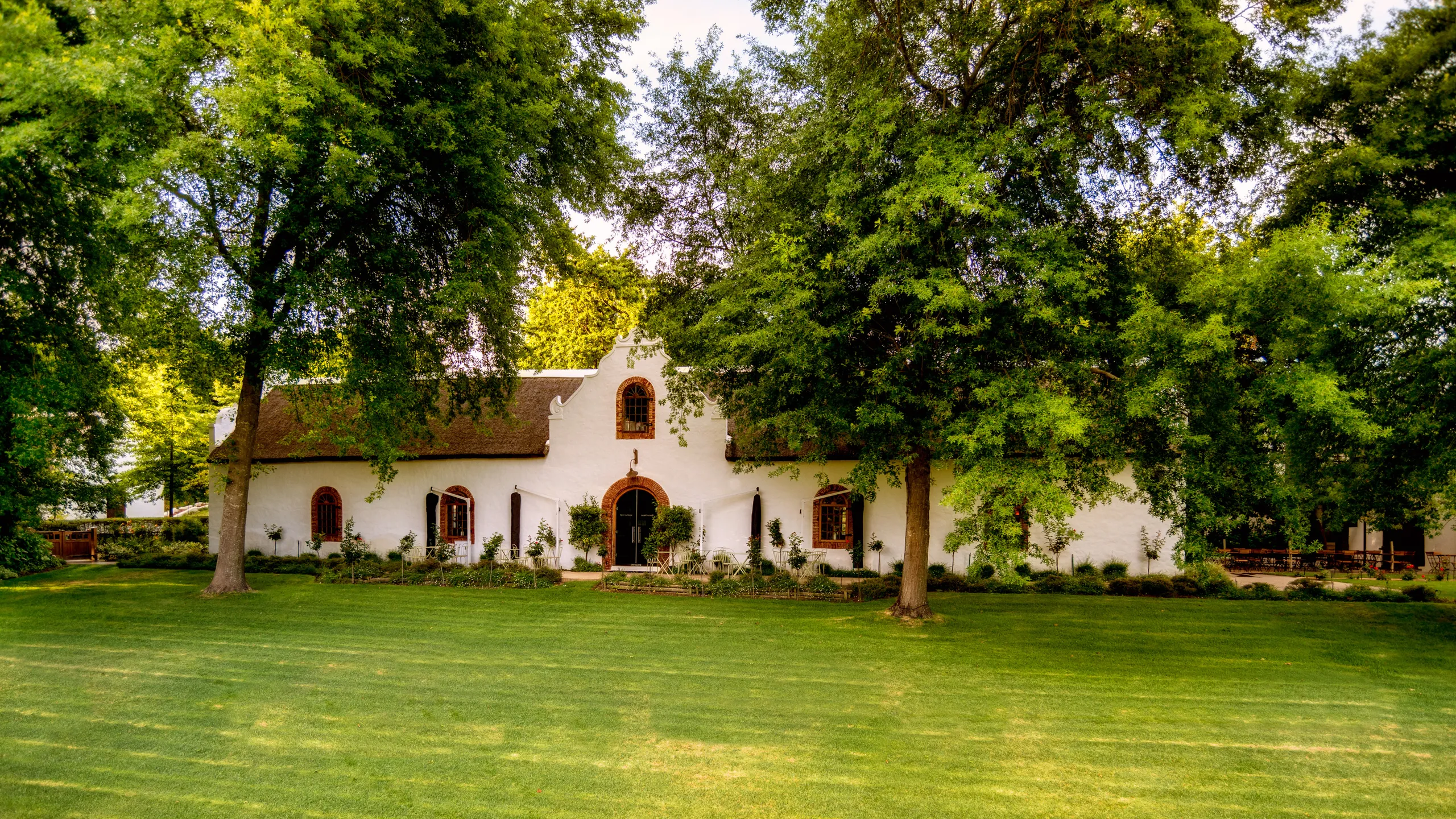
Vrede en Lust sits where the main road meets the Klapmuts road, and its vineyards are split between the Simonsberg for the reds and Elgin for the cool-climate whites. That makes the tasting more varied than a single-site estate can offer.
Tastings are guided, the flagship is a Bordeaux-style blend called Boet Erasmus, and there are cheese and chocolate pairings alongside. The bistro and bakery handle lunch and there is a play area for children. It is a Wine Tram stop and it has rooms, both of which shape how a day here runs.
Leopard’s Leap Family Vineyards
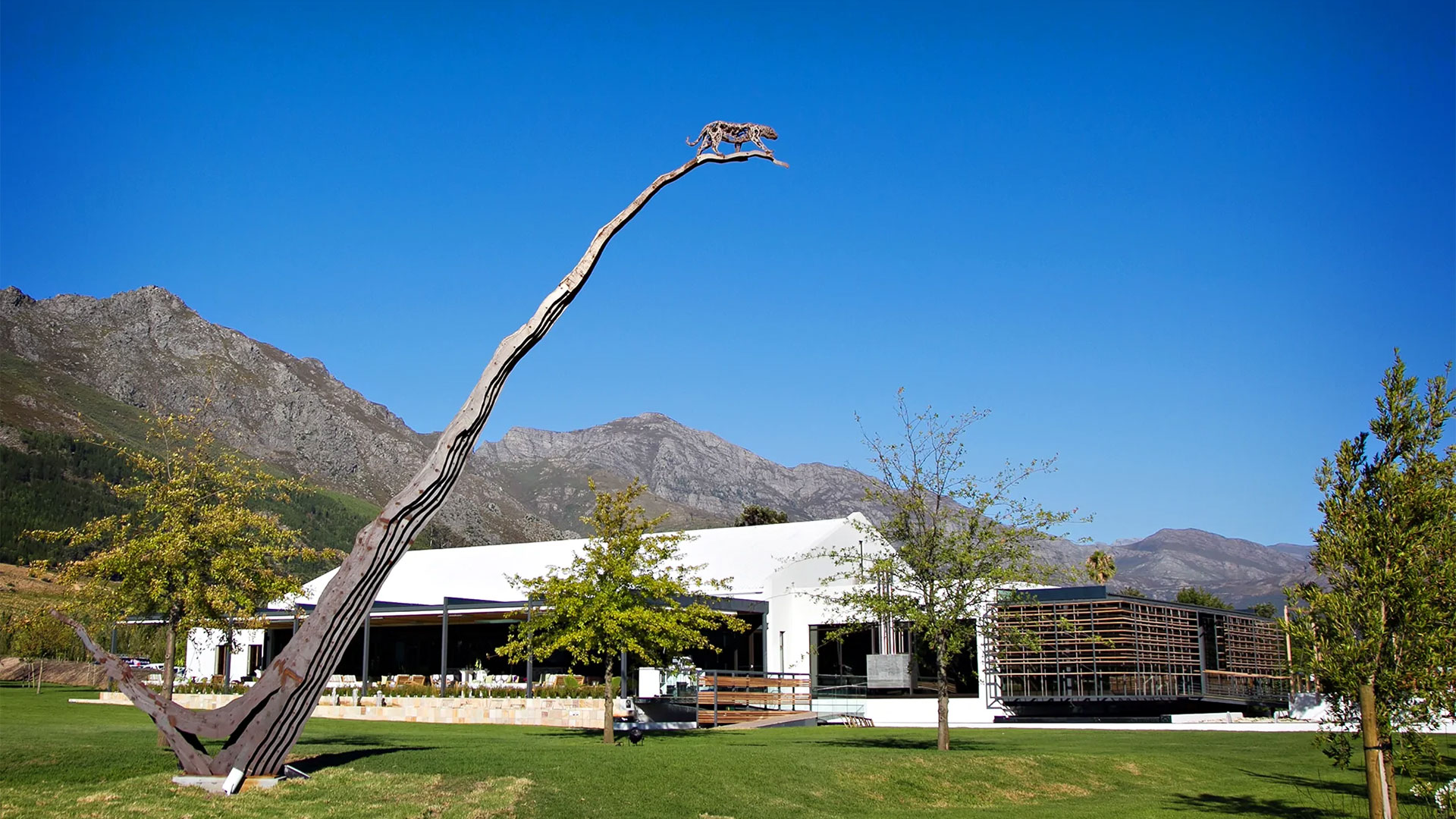
Leopard’s Leap is on the main road and is the most relaxed estate in this guide. The wines are approachable rather than austere, the Culinaria collection is made specifically to go with food, and the tastings are food-led rather than reverent.
There is a long veranda, generous lawns, a pump track, and a rotisserie lunch at weekends. Of the nine it is the easiest with children and the easiest to arrive at without a plan. The one thing to know is that it is closed on Mondays, which is not true of the rest of this guide.
La Motte
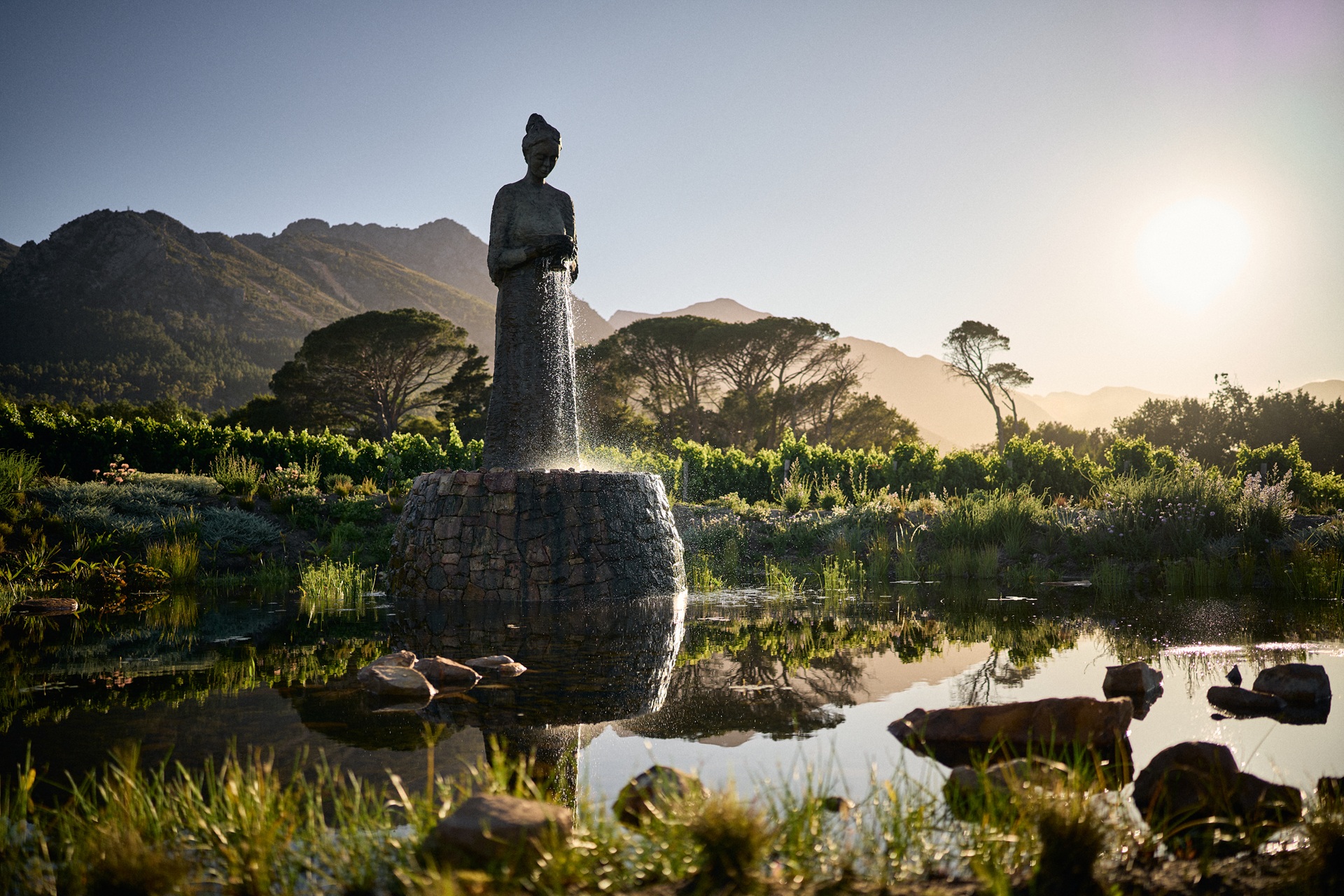
La Motte dates to 1695 and its Huguenot connection to 1709, and the estate has kept its Cape Dutch buildings under protection rather than under renovation. The Ateljee and the estate’s Pierneef association put art at the centre of a visit rather than at the edge of it.
The wines are led by the Syrah and the Millennium Bordeaux-style blend, with a well-regarded Sauvignon Blanc alongside. There is an artisanal bakery and garden cafe, L’Ami Brasserie for something relaxed, and JAN Franschhoek on the estate for something considerably less so.
Grande Provence
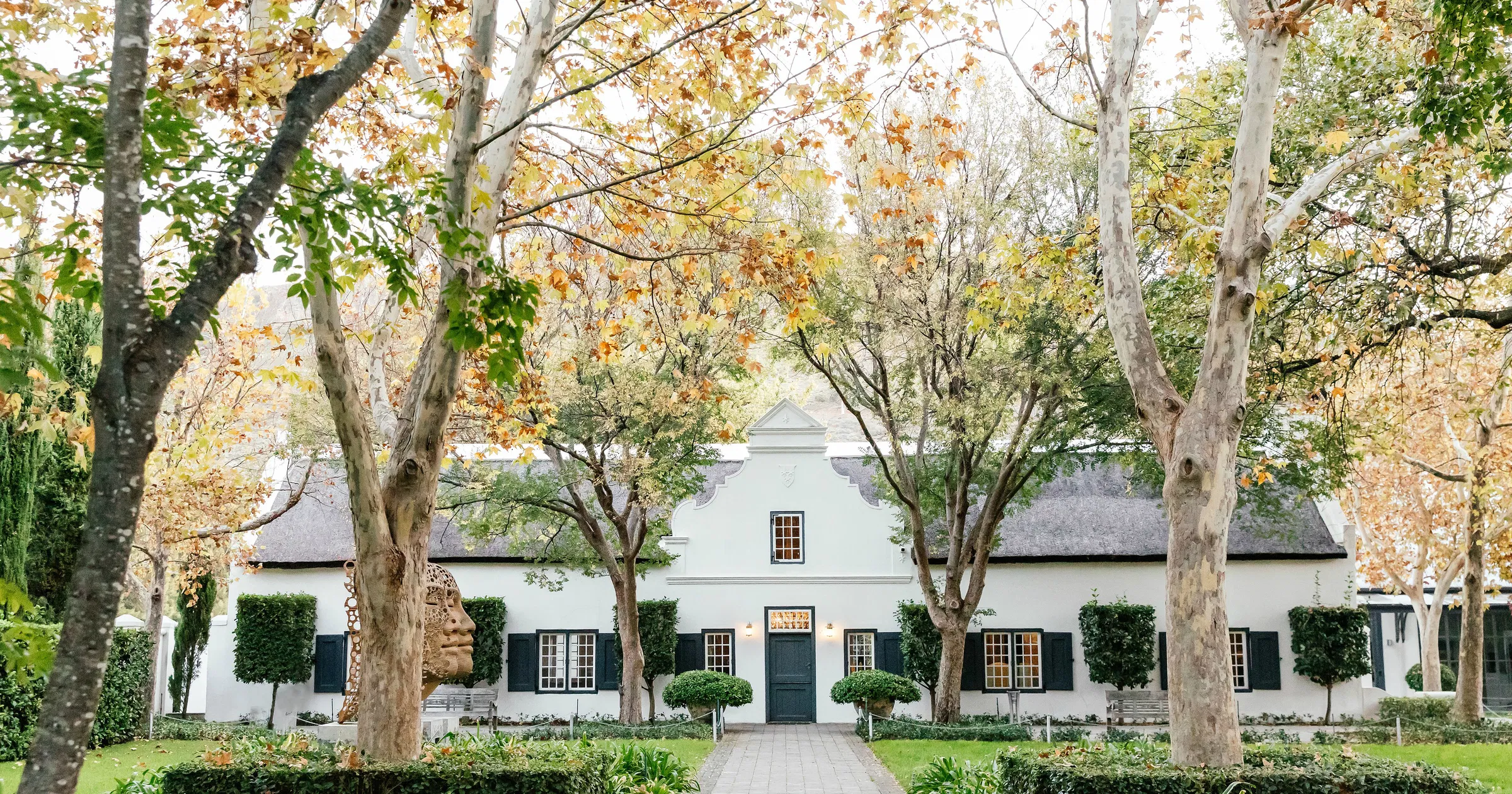
Grande Provence is at the village end of the main road, approached between vineyard rows and clipped hedges that lead to a thatched manor. The contemporary gallery and the sculpture garden are not a sideline, and you can walk both without tasting anything at all.
Tastings run from premium to flagship, with Cape Heritage and sensory pairings for anyone who wants the tasting structured. The Oak is the serious restaurant and there is a more relaxed Bistro alongside it. Lawns and a play area make it workable with a family, and there are rooms on the estate.