Boomslang Cave is one of the most enjoyable and unusual short hikes in the Kalk Bay mountains, tucked into the hills above the harbour village of Kalk Bay on the eastern side of the Cape Peninsula. Rather than a summit climb, the appeal here is a walk-through cave — a natural passage that runs right through the mountain — reached by a scenic ascent through the ferny gorge of Echo Valley.
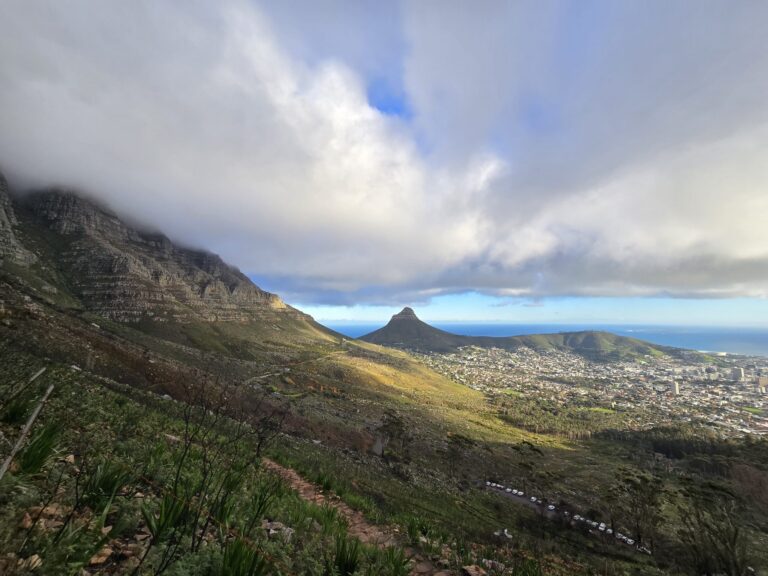
Approached from Boyes Drive, the route climbs steadily into the mountains above False Bay, rewarding hikers with sweeping views back over Kalk Bay, the harbour and the wide sweep of the bay below. The relatively short distance and modest time make it popular with families and casual hikers, though the cave itself adds a small sense of adventure that sets it apart from more conventional trails.
Because the cave is a genuine through-passage rather than a shallow overhang, part of the experience involves moving through darkened, low sections of rock — a headlamp or torch is essential, and there are spots where you will need to duck or crawl. It is this combination of an easy mountain walk with a hands-on cave passage that makes Boomslang such a memorable outing above Kalk Bay.
Trail Map
Trail Description
Most hikers start from Boyes Drive above Kalk Bay, following the path up into Echo Valley. The trail climbs through indigenous fynbos and shaded, fern-lined sections of the gorge, gaining height steadily as it works into the Kalk Bay range.
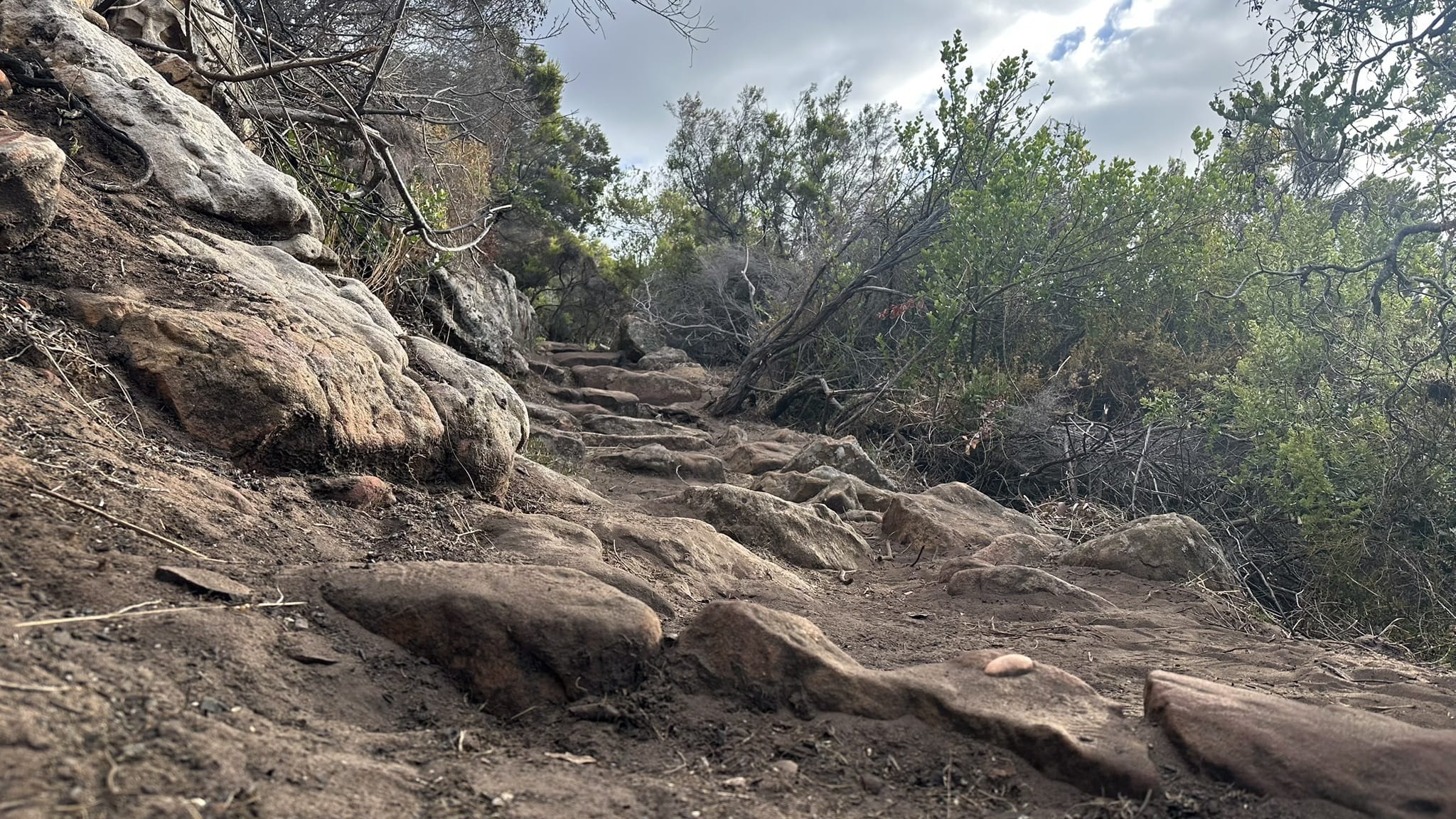
As the route nears the cave, the terrain becomes rockier and there are clear views back over Kalk Bay and across False Bay. The entrance to Boomslang Cave leads into a passage that runs through the mountain, so the walk continues underground for a stretch before emerging on the far side.
Most parties return the way they came, though the Kalk Bay mountains hold a network of paths and other caves, and more experienced hikers often link Boomslang with nearby routes to make a longer circuit.
Difficulty
Boomslang Cave is a moderate outing. The walk up through Echo Valley is straightforward for anyone with reasonable fitness, but the cave section is what to consider most carefully.
Inside the passage there are low sections where you will need to bend low or crawl, and the ground can be uneven and dark. Anyone uncomfortable in tight, enclosed or dark spaces should think carefully before entering, as parts of the cave may not suit those prone to claustrophobia.
The hike is not technical and requires no climbing equipment, but sure footing and a willingness to scramble through the cave are needed.
Best Time to Hike
The route can be walked throughout the year, with the cooler months of autumn, winter and spring often the most comfortable for the uphill sections.
Mornings are a good choice for softer light over False Bay and to avoid the heat on exposed parts of the climb. Conditions inside the cave can become slippery after rain, so it is worth choosing a dry spell and avoiding the mountains in strong wind or poor visibility.
Safety Tips
A headlamp or torch is essential for the cave passage — ideally one per person, leaving hands free for the low and crawling sections. Wear shoes with good grip, as the rock inside can be smooth and slippery, especially after rain.
Move carefully through the darker, low-clearance parts of the cave and take care with footing on the uneven floor. As with all Cape mountains, weather can change quickly, so carry a windproof layer and enough water, stay on established paths, and hike with a companion rather than alone.
Photography
The climb through Echo Valley and the ridges above Kalk Bay offer wide views over the harbour and across False Bay, which are at their best in the softer light of early morning or late afternoon.
The cave itself is a rewarding subject for those willing to work with low light — the passage, its openings and the play of light where the tunnel meets daylight all make for striking images. A torch or headlamp doubles as a light source for photographs inside.
Flora & Wildlife
The lower slopes pass through Cape fynbos, part of one of the world’s richest floral regions, with the ferny, shaded character of Echo Valley adding variety along the way.
Depending on the season hikers may see flowering fynbos species and the small birds that feed among them, while dassies (rock hyraxes) are often spotted basking on the rocks. As always in these mountains, stay on the paths and carry out everything you bring in to protect the environment.