Stellenbosch
A Walk Through Old Stellenbosch
The old centre of Stellenbosch is about twenty minutes end to end on foot. That is the whole point of it: you can see most of what matters here in half a day and still be on a wine farm by two. Six stops are worth making — a street, a powder magazine, three museums and a botanical garden — and five of the six stand within a few blocks of each other.
The thing to settle before you set out is which day you are here. Two of the six open on weekdays only, and the Rupert Museum closes on Mondays, so a Tuesday walk and a Saturday walk are genuinely different routes. What follows is the weekday version, which is the full one. The weekend route is at the end.
Start on Dorp Street
The oldest street in town runs downhill through the middle of it, and everything else on this walk is a few minutes off it.
01
Dorp Street
The second-oldest road in the country, and the spine of the walk

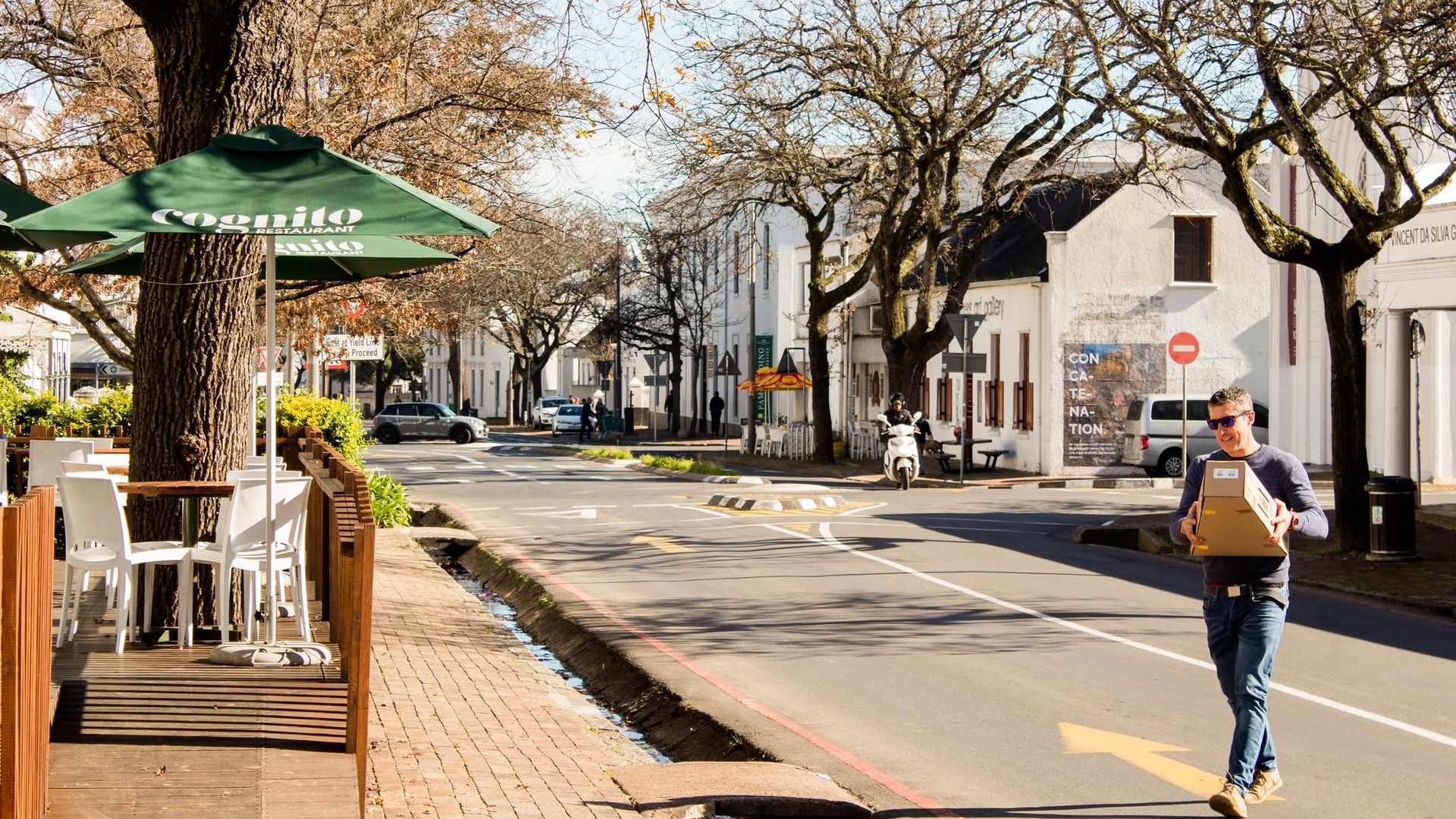
Start at the top end and walk down. Dorp Street is the second-oldest road in South Africa and carries the longest row of old facades in the country still standing together, which sounds like a plaque and reads much better in person: oaks down both sides, the water furrows still running, and a working street rather than a preserved one. An hour if you stop, half that if you do not.
Oom Samie se Winkel is at number 84 and has been trading on this street for more than a century. It is a shop rather than a museum, and it is the one door on Dorp Street you can walk through without paying for anything.
Across the Braak
The open square at the bottom of Dorp Street is where the town was garrisoned, marketed and churched, and one building on it is still worth going inside.
02
VOC Kruithuis
At the lower end of the Braak, the open square the walk crosses
Dorp Street delivers you to the Braak, the old military parade ground that is now simply the green in the middle of town. The Moederkerk stands a short way off on Drostdy Street and the Rhenish Church sits on the square itself. Both are working congregations rather than museums, so take them as architecture seen from the outside.
The Kruithuis at the lower end is the reason to cross. It was finished in 1777 to hold powder and shot for a town that was never attacked, and it spent the next two centuries as the site of the Friday market, then as a fire station, then as a national monument. It is the only Dutch East India Company powder magazine still standing in the country. Inside there are seventeenth-century signalling cannons, firearms and uniforms. Twenty minutes is enough.
Two museums on Ryneveld Street
Two very different collections, one block apart, and the pairing is the best half hour of walking in Stellenbosch.
03
Stellenbosch Village Museum
37 Ryneveld Street, four houses and two and a half centuries

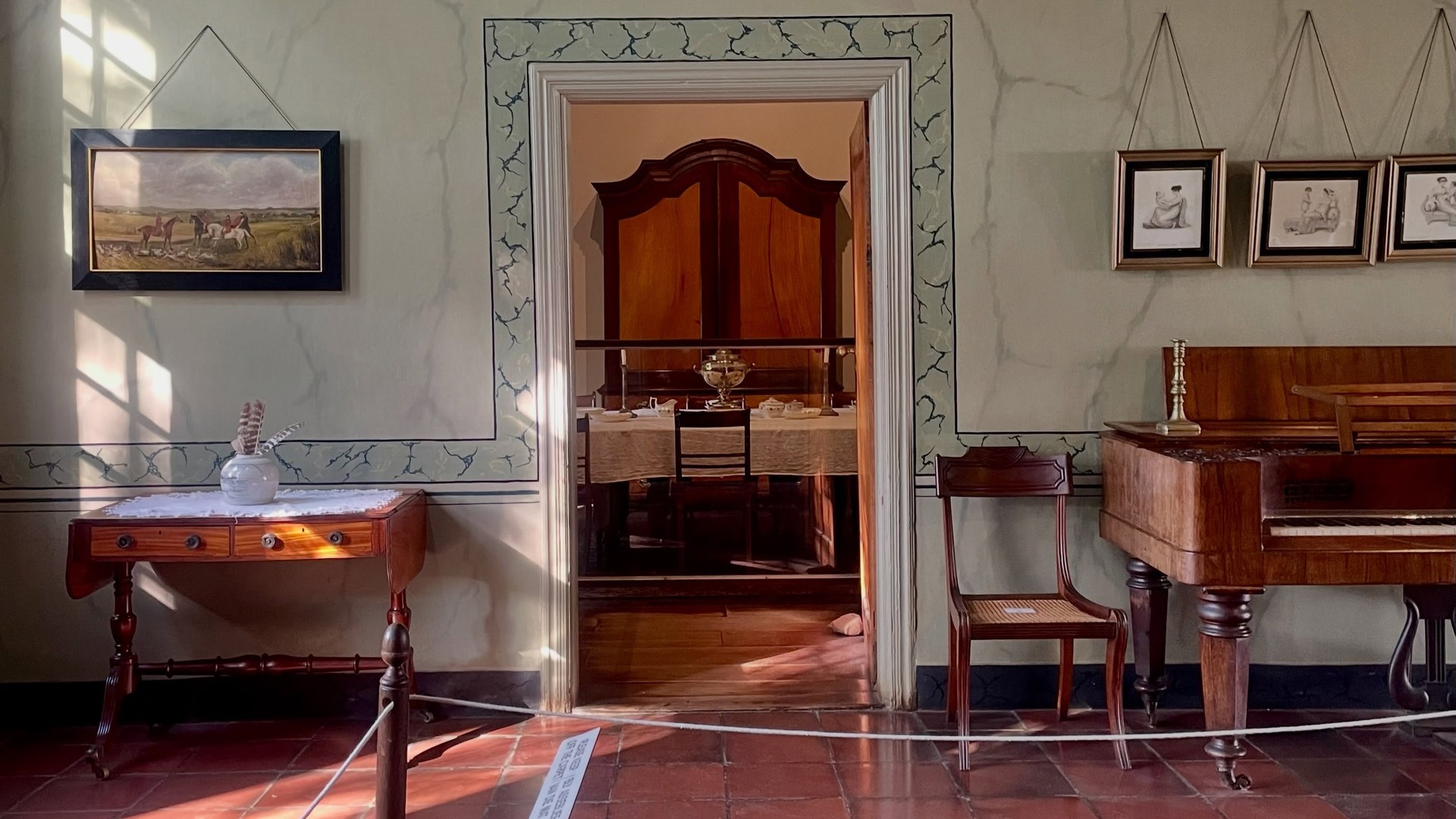
From the Braak it is a few minutes to Ryneveld Street, where the next two stops stand at opposite ends of the same block. The Village Museum is four restored town houses, dated 1709, around 1750, 1782 and the 1850s, shown as four separate households rather than one collection, with guides in period dress and the gardens planted to match each era.
It is the stop on this walk that most repays a full hour. The jump between the first house and the last is the clearest illustration anywhere in town of what happened to Stellenbosch in its first century and a half.
04
Stellenbosch University Museum
52 Ryneveld Street, two minutes up the same street
Almost nobody walks the extra block, and they should. The university museum holds more than six thousand pieces of traditional African art, masks and sculpture and textiles from across the continent, which makes it one of the largest collections of its kind in South Africa. There is no charge to walk in.
A changing programme of temporary exhibitions runs alongside the permanent holdings and turns over through the year, so it is worth seeing what is on before you go. Older guidebooks still call it the Sasol Art Museum.
Where the walk ends
One free gallery south of the centre and one garden back in it, either of which makes a reasonable last stop.
05
Rupert Museum
Stellentia Avenue, a short walk south of the centre

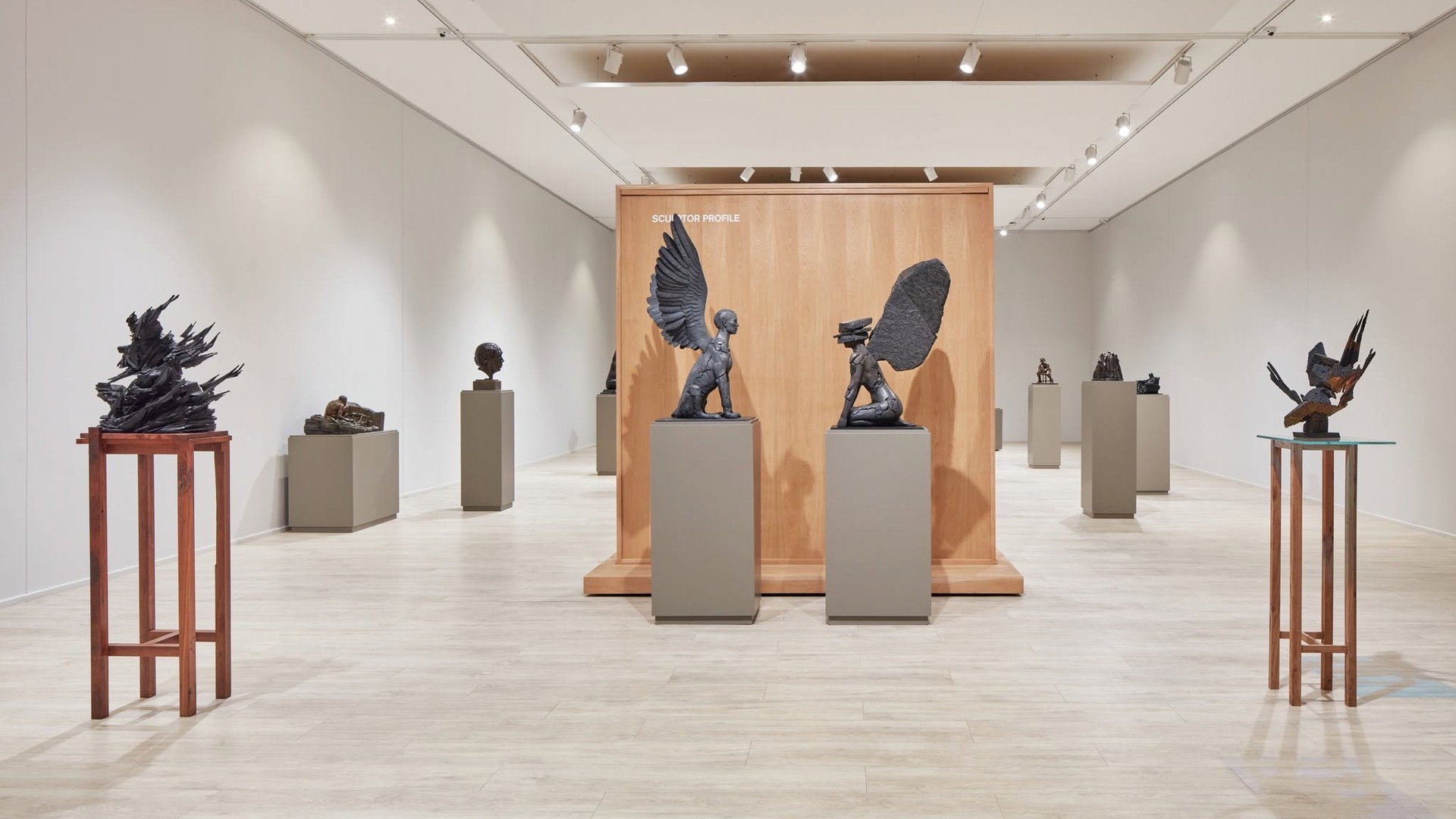
The most serious art in Stellenbosch, and it costs nothing to walk into, which is an unusual combination anywhere. The collection was built privately by Anton and Huberte Rupert from the 1940s onward, so it reads as one household’s taste rather than a survey: Irma Stern, Maggie Laubser and Alexis Preller carry the South African rooms, with Rodin and Kaethe Kollwitz sculpture and a set of French tapestries alongside them.
The building, opened in 2005, is quiet and well lit and does not fight the work. An hour is enough. It is the one stop here that is closed on a Monday.
06
Stellenbosch University Botanical Garden
Entrances on Neethling and Van Riebeeck streets, back in the centre

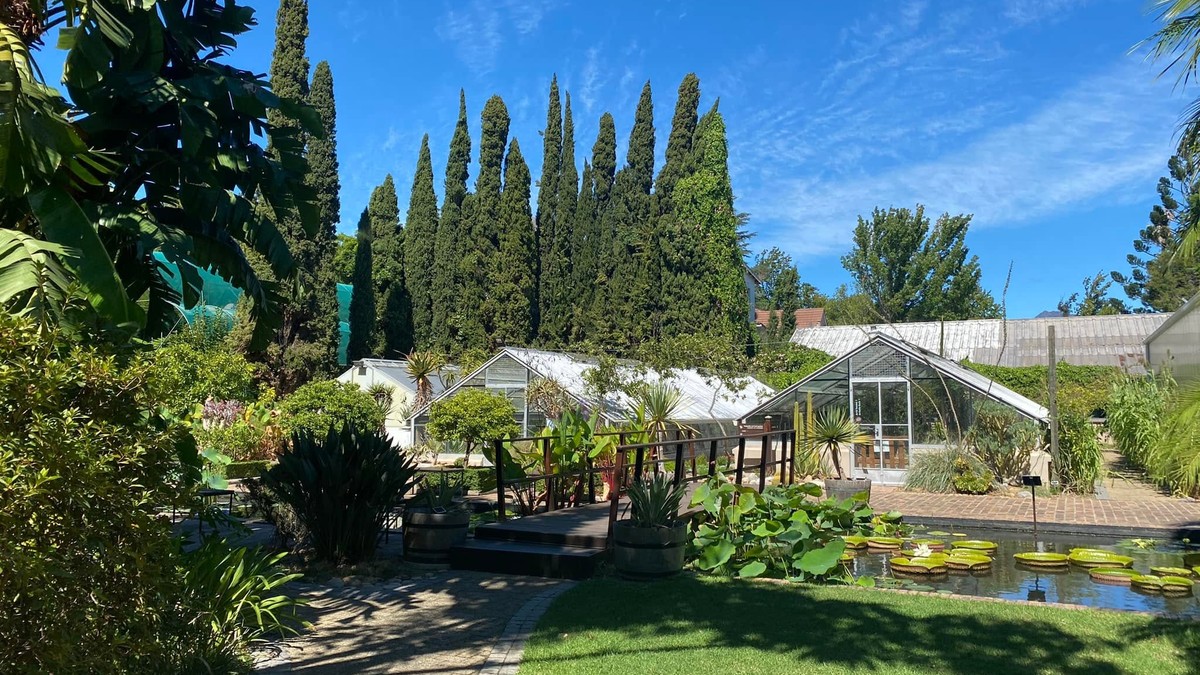
Finish here. It is the oldest university botanical garden in South Africa, it is small enough to walk in three quarters of an hour, and it is the only stop on this list that opens every day of the week. Welwitschia, a bonsai collection, glasshouses of tropical and arid plants, and a tea room under the trees.
It is also the reason this walk still works on a Sunday. When the Kruithuis and the university museum are shut and the town is quiet, the garden is open and two minutes from the square.
If you are here at the weekend
The full walk is a weekday walk. The Kruithuis and the university museum both close on Saturday and Sunday, and the Kruithuis closes on public holidays too, so a weekend visitor loses two of the six stops.
What is left still holds up. Dorp Street and the Braak keep no hours at all, the Botanical Garden opens every day of the year, the Village Museum opens on both weekend days with shorter Sunday hours in winter, and the Rupert Museum opens on Saturday and Sunday. That is a four-stop walk and still a good half day. Save the powder magazine and the African art for a weekday, when the museums are open and the street is quieter anyway.
Mondays have a catch of their own. Everything on this list is open on a Monday except the Rupert Museum, so if Monday is your only day, give that hour to the Botanical Garden instead and keep the rest of the route as it stands.
When you are done with the town, the rest of Stellenbosch is a short drive in almost any direction.