
Kloof Corner
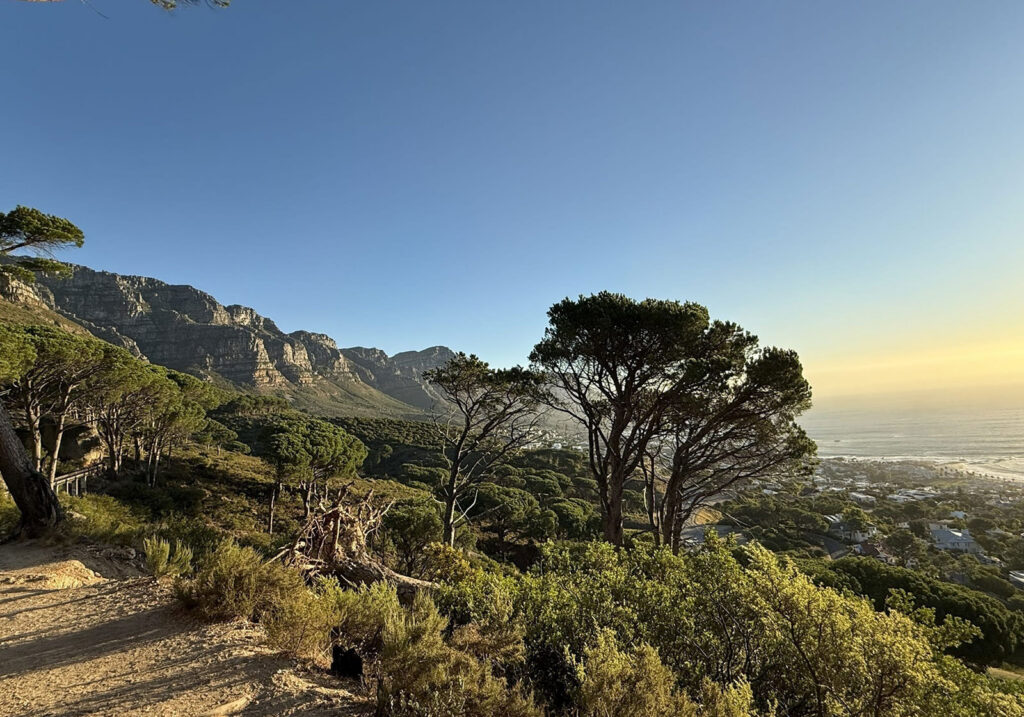
A short uphill walk from Tafelberg Road above Kloof Nek puts you on a ledge looking across Lion’s Head, Signal Hill and the whole City Bowl. No gate, no ticket, and the shortest route in the city to a serious view.
Kloof Corner is a viewpoint on the lower slopes of Table Mountain, reached on foot from Tafelberg Road just above Kloof Nek. It sits at the shoulder where the mountain turns from the city side towards the Atlantic, high enough to open up a genuine panorama but a long way below the summit. That position is the whole point of the place. You get one of the great Cape Town views without the cableway queue, the ticket price or the commitment of a full mountain day.
What you see from up here is the shape of the city itself. Lion’s Head stands close and unmistakable, with the long ridge of Signal Hill running out behind it towards the sea. Below and to the right the City Bowl spreads out in its natural amphitheatre, the streets and rooftops reading as a single pattern in a way they never do from ground level, with Table Bay and the harbour beyond. Swing your eye the other way and the Atlantic opens up past the mountain’s western flank. And above all of it, close enough to feel, the grey cliffs and buttresses of Table Mountain rise straight up behind you. That combination is what gives Kloof Corner its character: you are looking out over the whole city while still standing firmly on the mountain.
Cape Town has no shortage of viewpoints, and Kloof Corner earns its place by occupying the middle ground. The summit of Table Mountain gives you the definitive panorama, but you need the cableway or a serious climb to reach it. Signal Hill gives you a fine sunset with no effort at all, because you can drive to it. Lion’s Head gives you 360 degrees, at the cost of a proper summit hike with chains and ladders. Kloof Corner asks for a short uphill walk and gives back a view out of proportion to the effort. For a lot of visitors that is the best trade in the city.
You do have to walk, and it is worth being clear about that, because scenic viewpoint does not mean drive-up. The path leaves Tafelberg Road and climbs steadily on rocky ground to the viewpoint. It is short by Table Mountain standards and most reasonably fit people manage it comfortably, but it is uphill from the first step and it needs proper shoes rather than sandals. Our Kloof Corner hike page covers the route, the gradient, the timing and the trail conditions in detail, so use that if you want the full picture before setting out. There is no gate, no entrance fee, no kiosk and no facilities of any kind at the top: just the rocks, the fynbos and the view.
Late afternoon is the classic time, when the light turns gold across the City Bowl and the Atlantic side lights up as the sun drops. Plan it sensibly, though. The safest approach is to arrive with plenty of daylight in hand and to start back down before the light actually goes, since the path is rocky and much harder to read in the dark. If you do intend to stay for the sunset itself, carry a proper headlamp, go with company rather than alone, and be honest with yourself about the descent. Early morning is the quieter alternative, with clear air over the city and far fewer people. Wind is the other variable worth checking, because the shoulder here is exposed and the southeaster can make a still day in town feel very different up on the slope.
Neighbourgoods Market
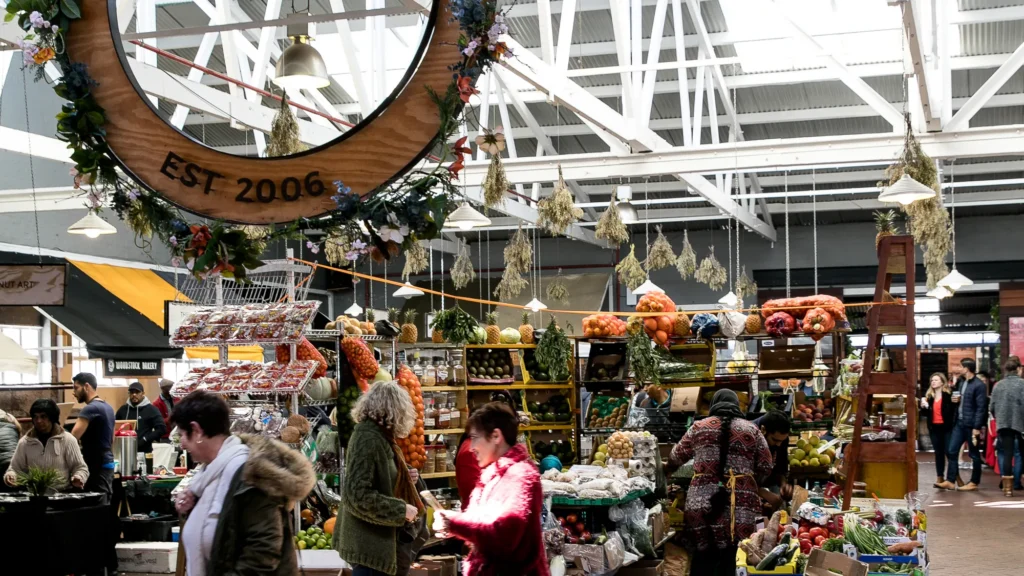
The weekend market at the Old Biscuit Mill that helped start Cape Town’s market culture. Walking in costs nothing. What you eat once you are inside is a separate question.
Few places have shaped Cape Town’s Saturday morning culture quite like the Old Biscuit Mill. Neighbourgoods Market opened inside the converted Woodstock mill and turned a working industrial yard into a weekend habit that much of the city still keeps.
What sets it apart from the other weekend markets is the neighbourhood around it. Woodstock is Cape Town’s creative quarter, a run of galleries, design studios and workshops along Albert Road, and the market sits inside that world rather than beside it. Plenty of visits carry on into the surrounding streets long after the last coffee.
It trades across the full weekend, and the two days are not the same market. Saturday is the busy one, shoulder to shoulder by mid-morning and best reached early. Sunday is shorter and considerably calmer, which makes it the better choice if you would rather browse than queue.
Market Experience
Food dominates the ground floor, with traders cooking to order along a tight run of stalls. Portions are small enough to justify three or four of them, which is the point: most people walk the row once to look and again to commit. Breakfast is the anchor, from pastries and eggs through to slow coffee taken standing up.
Around the edges the balance shifts towards things you take home. Small-batch pantry goods, ceramics, jewellery and prints are sold by the people who made them, and the range reflects Woodstock’s studios more than any single market category.
The building carries much of the character. Exposed brick, steel roof trusses and a courtyard that overflows by late morning give it a warmth that newer venues struggle to copy. Communal tables fill quickly, strangers share benches, and dogs on leads are a normal part of the crowd.
How to Get There
The Old Biscuit Mill sits on Albert Road in Woodstock, a short drive from the city centre. Parking is the main thing to plan for. Street parking runs along Albert Road and the side streets either side of the Mill, but it fills quickly on Saturdays. There is limited paid parking at the College of Cape Town across the road, charged at around R20 for the day.
MyCiTi route 261 stops at the Old Biscuit Mill, and route 102 stops about 100m away in Salt River Road. Albert Road has a dedicated cycle lane running past the market, and there are bicycle racks on site.
Green Point Urban Park
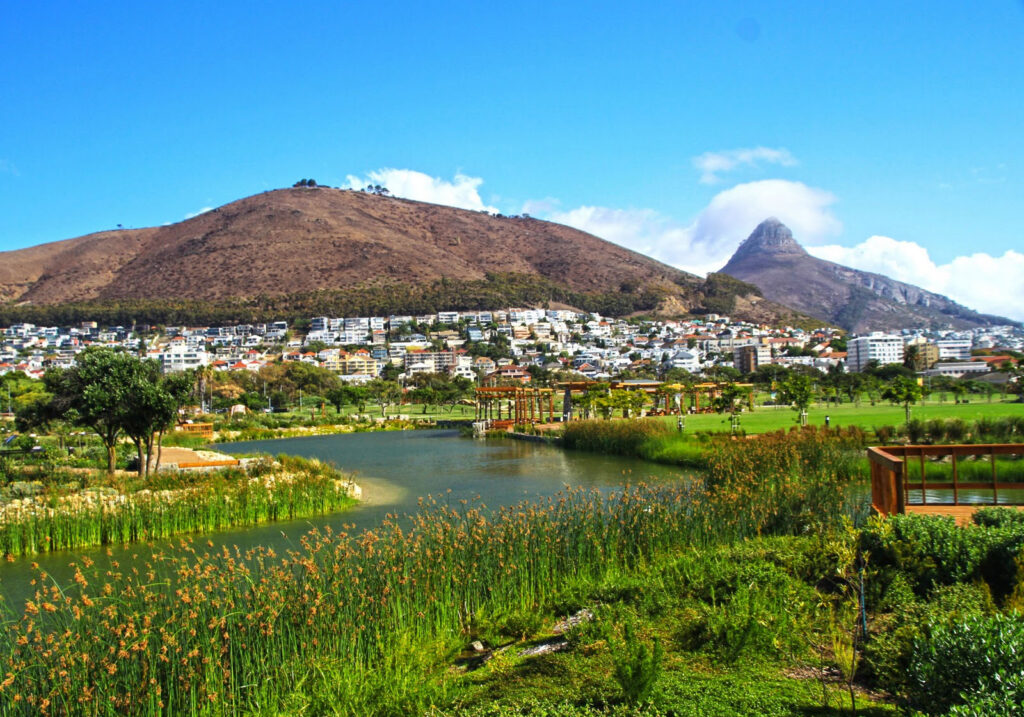
A public park below the stadium, minutes from the Waterfront and the Sea Point promenade, with a biodiversity garden inside it and no entrance of any kind.
Opened in 2011, Green Point Urban Park transformed a former public open space into one of Cape Town’s premier urban parks. Unlike a traditional botanical garden or nature reserve, it was designed as a modern urban green space where recreation and conservation exist side by side. Ecological principles shaped the layout, which incorporates indigenous landscaping, wetlands, open lawns and educational spaces that encourage visitors to experience the unique biodiversity of the Cape Floristic Region.
One of the park’s standout features is the Biodiversity Garden, where visitors can discover indigenous plants representing the natural vegetation once found across the Cape Peninsula. Interpretive displays, ponds and landscaped pathways make the garden both educational and enjoyable, while the surrounding lawns provide space for picnics, games and quiet relaxation.
Families are especially well catered for, with one of Cape Town’s best public playgrounds, generous open spaces and wide paved paths suitable for prams and bicycles. Fitness enthusiasts regularly use the walking and jogging routes, while visitors exploring the Atlantic Seaboard often combine the park with Cape Town Stadium, the Sea Point Promenade, Mouille Point Lighthouse or the V&A Waterfront.
Bay Harbour Market
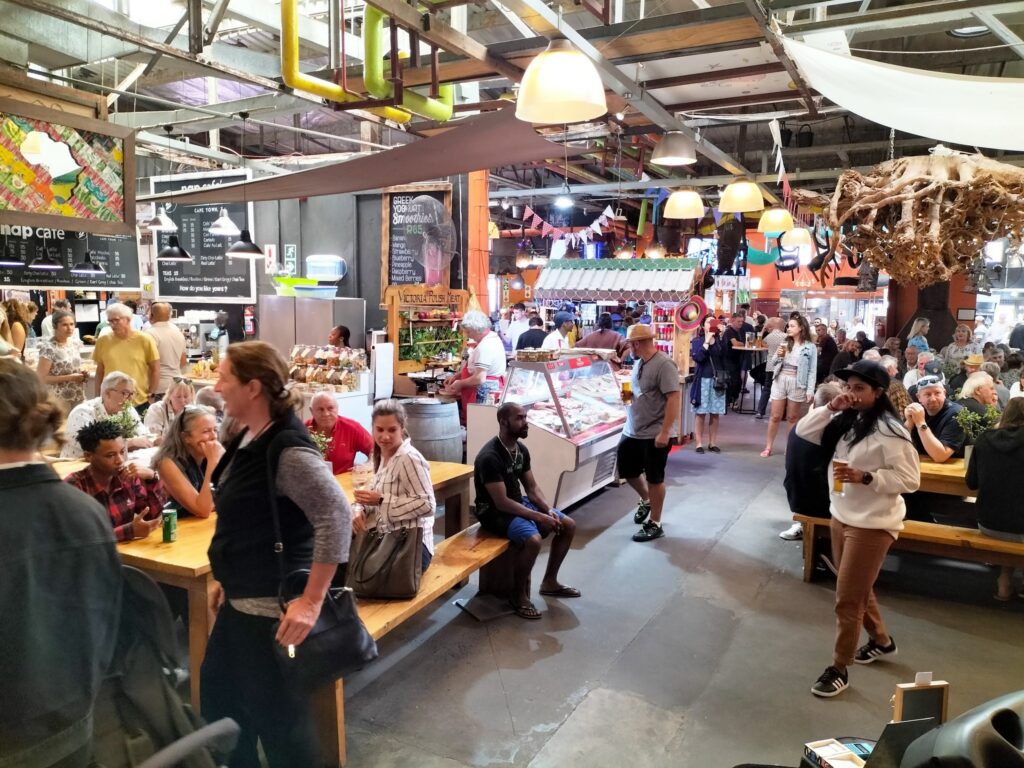
Hout Bay’s artisan market, set inside the working harbour rather than away from it, with live music running through the day and no charge at the door.
Located inside the historic Hout Bay Harbour, Bay Harbour Market is one of Cape Town’s most popular indoor attractions, bringing together local food, artisan shopping and live entertainment beneath one roof. Housed inside a converted fish factory, the market combines the character of a working harbour with a lively atmosphere that attracts both locals and visitors throughout the year.
Whether you’re stopping for lunch, looking for unique South African gifts or simply enjoying live music with a view of the harbour, the market offers an easy way to experience several sides of Cape Town in a single visit. Its indoor setting also makes it an excellent choice during colder, windy or rainy weather.
Combined with nearby attractions such as Hout Bay Beach, Chapman’s Peak Drive and Seal Island boat trips, Bay Harbour Market is an easy addition to any day exploring the Hout Bay area.
Market Experience
Bay Harbour Market brings together independent food vendors, local designers, artists and makers inside a beautifully restored industrial warehouse overlooking Hout Bay Harbour. The market offers an impressive variety of freshly prepared food, ranging from gourmet burgers, seafood and South African favourites to international street food, baked treats, desserts, locally roasted coffee, craft beer and other drinks.
Beyond the food, visitors can browse clothing, jewellery, artwork, ceramics, home décor and handcrafted gifts created by South African businesses and artisans. Many of the stalls are operated by the makers themselves, giving the market a more personal atmosphere than a traditional shopping centre.
Families are welcome, and the indoor layout provides wide walkways, level access and communal seating throughout the venue. Regular live music adds to the atmosphere, especially during busy weekend sessions, while the sheltered setting makes the market enjoyable throughout the year regardless of the weather.
Bloubergstrand Beach
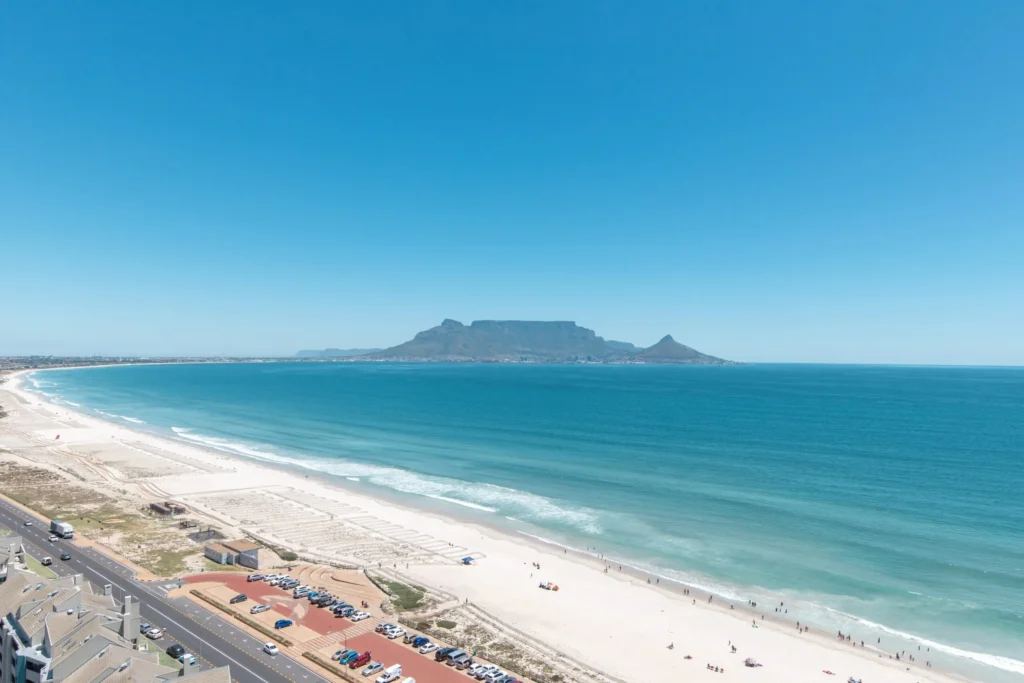
The long flat beach across the bay, and the angle on Table Mountain that most other viewpoints are quietly trying to be. Wind is the price of admission rather than money.
The classic Table Mountain view beach
Bloubergstrand Beach is one of Cape Town’s most recognisable stretches of coast, known for its panoramic view of Table Mountain across Table Bay. The City of Cape Town officially lists the facility as Blaauwberg Beach, on Otto du Plessis Drive in Bloubergstrand, and describes it as a renowned location for the perfect view of the mountain.
The beach is popular with surfers and kitesurfers, because the wind reliably brings a one to three metre surf for most of the year. Even without getting into the water, Bloubergstrand is a fine place for a beachfront meal, a long walk on the sand or a West Coast sunset.
Facilities are straightforward: parking, public toilets and partial disability access. The Atlantic here is cold and can be rough, so swim only in designated areas and when lifeguards are on duty.
University of Cape Town Upper Campus
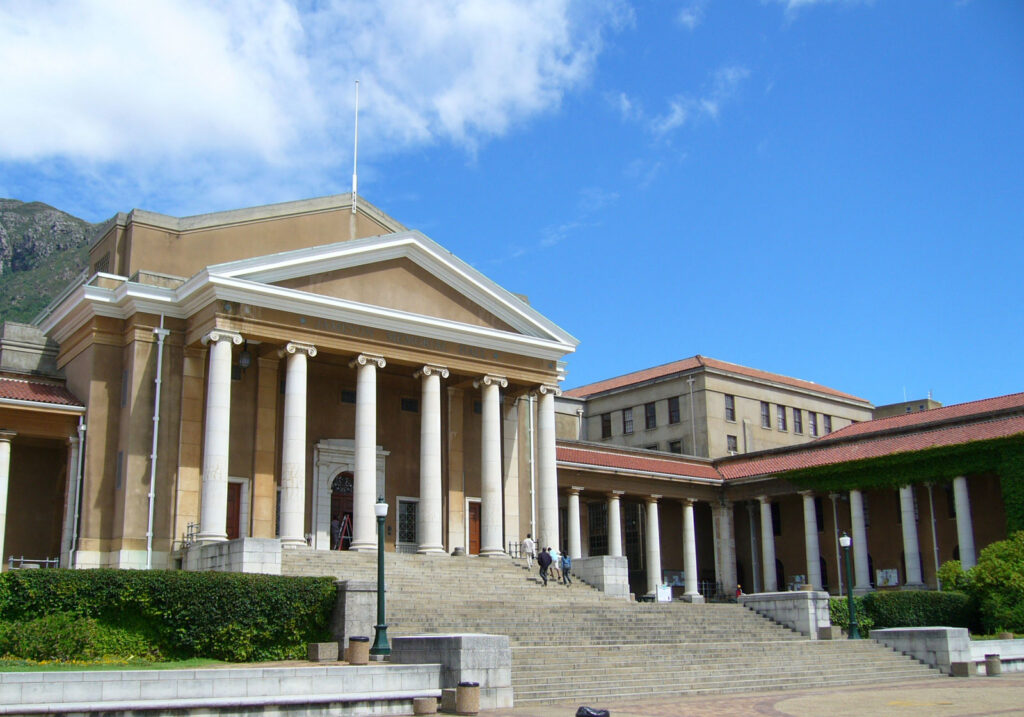
Ivy, Devil’s Peak and a monumental stair. The Upper Campus is open to walk through, and the view back down from the top of the steps is the reason to do it.
The University of Cape Town Upper Campus is one of South Africa’s most recognisable university settings, combining historic architecture, mountain scenery and broad views from the slopes of Devil’s Peak.
UCT traces its origins to the South African College, founded in 1829, and became the University of Cape Town in 1918. Upper Campus occupies part of the historic Groote Schuur Estate and is arranged around a formal axis leading to Sarah Baartman Hall.
Much of the campus plan was shaped by architect Sir Herbert Baker. Sandstone buildings, mature trees and the central plaza create a distinctive heritage landscape, while elevated viewpoints look across the city and Table Bay.
Visitors may explore outdoor public spaces and the campus landscape, but UCT remains a working university. Many academic buildings require authorised access, and access arrangements can change during examinations, events or periods of heightened campus security.
Allow one to two hours for a relaxed walk. Upper Campus combines naturally with nearby Rhodes Memorial, Mostert’s Mill and other Southern Suburbs attractions.
Uitkamp Wetland Nature Reserve
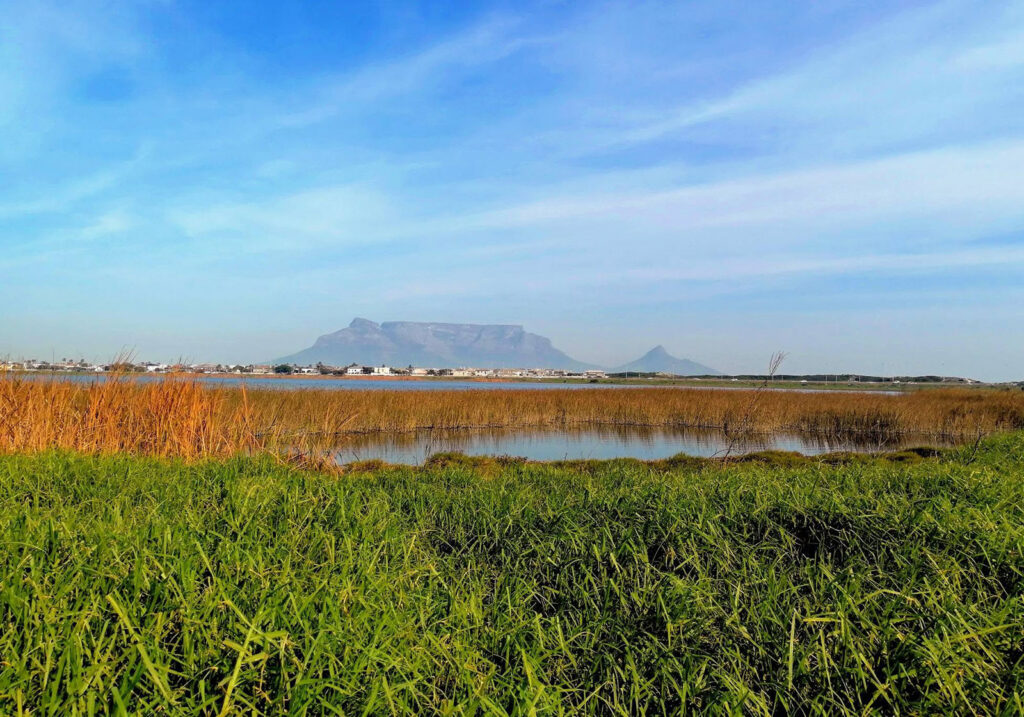
Thirty-two hectares of seasonal wetland on Mosselbank Road in Durbanville. It fills in winter and dries back in summer, so it is genuinely a different place depending on when you come.
Uitkamp Wetland Nature Reserve protects 32 hectares of seasonal wetland and surrounding lowland veld on Mosselbank Road, on the northern edge of Durbanville. It is a small reserve in a part of Cape Town that has been built over quickly, and the reason it exists has less to do with scenery than with what would otherwise have gone: a stretch of low ground that fills with shallow water in winter, dries out in summer, and supports the plants and birds that depend on that cycle.
The seasonal character is the thing to understand before you go. This is not a permanent lake. Through the wet Cape winter and into spring the low ground holds water, the reeds and sedges are green, and waterbirds are at their most visible. By late summer much of that water has usually gone and the same ground can read as dry, pale grassland with the wetland reduced to damp hollows. Neither state is the reserve looking wrong; both are how a seasonal wetland behaves. It does mean two people visiting a few months apart can come away with very different impressions of the same place.
Around the wetland are remnants of the threatened lowland vegetation that once covered this part of the Cape, the renosterveld and wetland plant communities that have been reduced to fragments by farming and then by suburban growth. Durbanville has expanded steadily across exactly this kind of ground, which is why a reserve of 32 hectares matters more than its size suggests. Small surviving patches now carry a disproportionate share of what is left, and in the wetter months they also produce the seasonal flowering that makes lowland veld worth slowing down for.
The City lists walking as the activity at Uitkamp, and that is an accurate summary of the visit. You come here for a short nature walk, to look at the wetland and the veld around it, and to watch birds. There is no hide, no boardwalk network, no picnic area and no visitor centre, and it would be misleading to describe it as a recreational park. Entry is free. The City publishes no opening hours for the reserve, so if you are making a special trip it is worth calling the reserve office on 021 814 1892 first to confirm access on the day.
Uitkamp suits birdwatchers, people interested in Cape lowland plants, photographers who like quiet subjects, and local walkers who want somewhere green nearby. It is not one of Cape Town’s major attractions and does not need to be. If you are visiting the city for a week, this is unlikely to make your list. If you live in the northern suburbs, or you are curious about what the landscape here looked like before the houses, a winter or spring morning at Uitkamp is well spent.
Wolfgat Nature Reserve
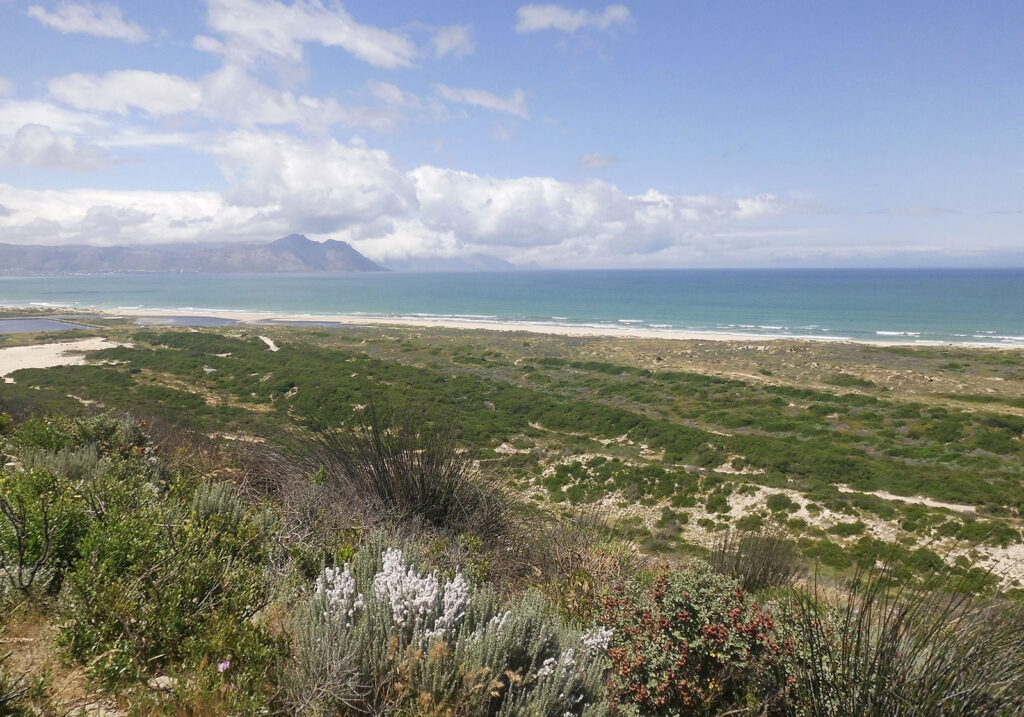
Limestone cliff, dune and coastal strandveld along the False Bay shoreline at Mitchells Plain, between Mnandi and Monwabisi, named after the brown hyena that once denned here.
Wolfgat is not a beach and it is not a hiking destination. It is 262 hectares of limestone cliff, dune and coastal scrub held between Mnandi and Monwabisi on the False Bay shore at Mitchells Plain, proclaimed in 1986 to protect one of the last undeveloped stretches of this coastline. The City describes the views from its limestone cliffs as spectacular, and those cliffs are the point of the place.
The name carries the reserve’s most remarkable story. Wolfgat refers to the strandwolf, or brown hyena, which still occurred around Cape Town in the 1840s. In 1962 a brown hyena fossil den was found in the Wolfgat cliffs and dated to roughly 45 000 years ago, which makes this an archaeological site as much as a scenic one. Shell middens along the same shoreline record much later human use of this coast.
Above the cliffs the reserve holds Cape Flats Dune Strandveld, the low, silvery, salt-tolerant vegetation that once covered this entire coast and now survives mostly in fragments. It flowers seasonally, it supports coastal birdlife, and it is what keeps the dune system standing. Much of Wolfgat’s value lies in what it has prevented rather than what it offers: this is one of the few places on the Cape Flats coast where the sequence of beach, dune, cliff and strandveld is still unbroken.
The City lists hiking and walking, picnics and educational programmes as the activities here, and describes the reserve as a destination for picnicking, fishing and paragliding, the last of which makes more sense once you have seen the cliffs. Facilities on site are modest and appropriate: paths and walkways, picnic areas and an environmental education centre. An education officer assists schools with field trips of thirty to forty learners, while larger groups can arrange coastal hikes and clean-up campaigns. Bookings for those are essential.
Access runs on office hours rather than daylight. The reserve is open Monday to Friday from 07:30 to 16:00 and entry is free, with no weekend hours published. The City asks visitors not to wander from the designated trails and pathways, never to walk or hike alone, and to confirm their presence or planned activities with reserve management before setting out. Those conditions are worth taking at face value: Wolfgat is a genuinely wild piece of coastline rather than a staffed visitor attraction.
Rondevlei Nature Reserve
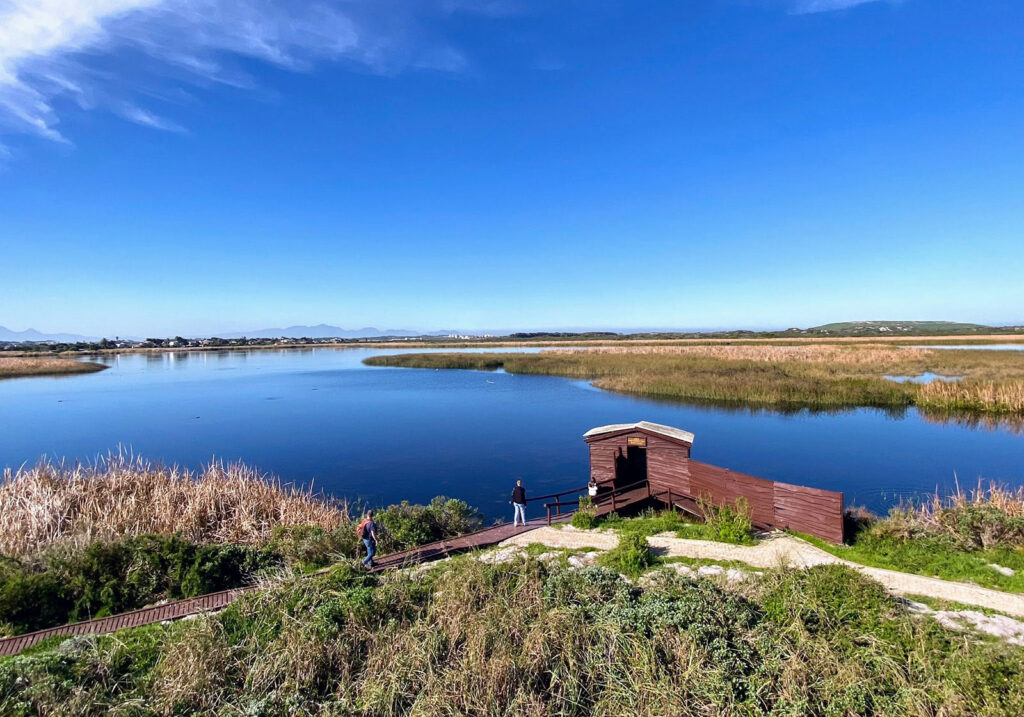
One of the city’s most important freshwater wetlands, and the entry on this list to choose if you want birds rather than a view. It sits inside the wider False Bay Nature Reserve.
Unlike Intaka Island’s constructed urban wetland, Rondevlei is a large natural freshwater reserve where visitors experience expansive reed beds, open water and indigenous wildlife in a much wilder setting. It is also the only place in the south-western Cape where hippopotamuses are still found.
Rondevlei is one of six sections of the False Bay Nature Reserve, alongside Zeekoevlei, the Strandfontein Birding Section, Pelican Park, Slangetjiebos and the Zandwolf coastal strip, and it forms part of the greater False Bay Ecology Park. Concerned bird lovers established Rondevlei as a bird sanctuary in 1952, and its 290 hectares today hold a permanent wetland fringed by Cape Flats sand fynbos in the north, with seasonal wetlands and Cape Flats dune strandveld in the south. The City of Cape Town describes the wider reserve as the fifth most important habitat for wetland birds in southern Africa.
About 250 bird species have been recorded across the False Bay Nature Reserve, and at times as many as 30 000 birds gather in the area, among them fish eagles, pelicans and flamingos. A network of footpaths, viewing towers and several bird hides, each named after a well-known birder, allows visitors to watch this activity without disturbing it, while a museum and auditorium at the reserve explain the ecology of the Cape Flats wetlands.
Rondevlei is also known for its hippopotamuses, the only ones remaining in the south-western Cape. They were introduced to the vlei in 1981 and 1983 and have lived here ever since, although the City itself describes them as elusive and sightings are never guaranteed. Patient visitors watching from the hides and viewing towers early in the morning have the best chance, and the possibility alone makes a walk here unlike any other wetland outing in the city.
St James Tidal Pool
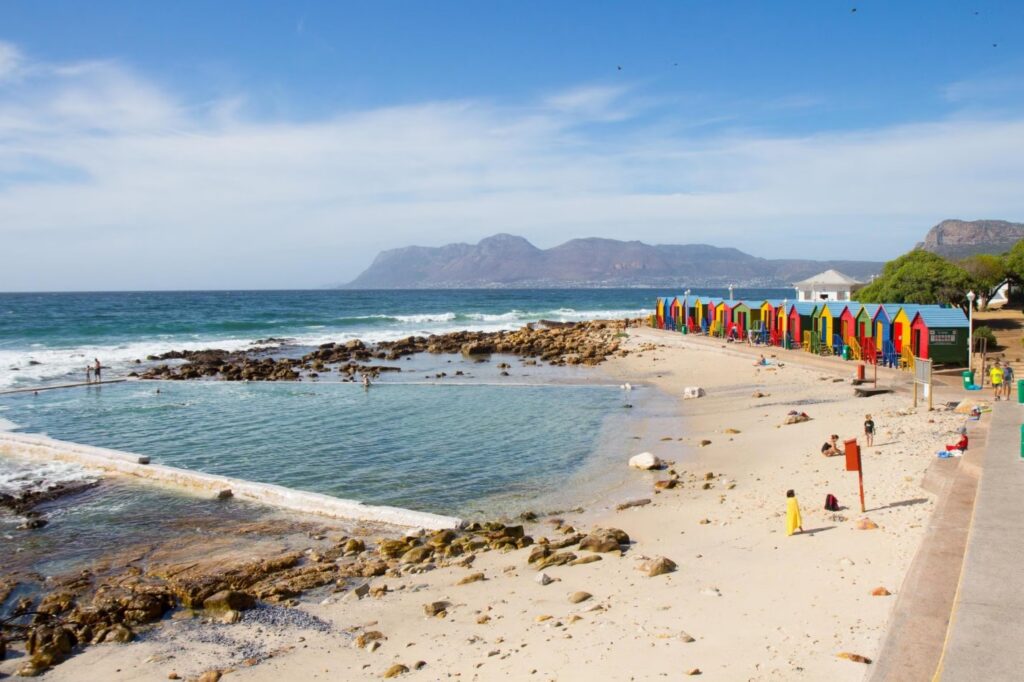
A sheltered pool on the False Bay coast between Muizenberg and Kalk Bay, calm enough for children, with beach access alongside and nothing to pay for either.
The St James Tidal Pool is one of the best places in Cape Town to get into the sea without actually taking on the sea. The City of Cape Town describes tidal pools as rocky pools that offer a chance to discover small marine life, and as safe, family friendly places to swim. This one covers a little over 1 200 square metres on the False Bay coast between Muizenberg and Kalk Bay.
The water is protected from the open sea and stays calm, which makes it a good choice for children and for anyone who prefers a gentle swim to a shore break. The rocks around the edges hold small marine life worth looking at closely at low tide, and there is beach access alongside for towels and picnics. The pool sits beside St James’s colourful bathing boxes.
Sunrise is the pool’s best hour. The water is at its stillest, the light comes in low across False Bay, and the pool is usually empty. Swim only when conditions are suitable and follow any lifeguard instructions or posted safety notices.